Laser Welding Cost per Job: What Affects the Price
Understanding laser welding cost per task starts with realizing that costs go beyond laser welding machine price. The cost of each weld relies on energy, equipment depreciation, worker expertise, and material needs. The cost structure varies greatly by application. When micro-welding small semiconductor parts, putting invisible lines on pricey jewelry, or deep-penetration welding large ship hulls, the cost structure alters. Welding costs depend on direct and indirect variables. Direct expenses include machine and supply purchases. Setup time, batch size, and quality are secondary issues. With this in-depth knowledge, procurement staff can accurately estimate and purchase equipment with the greatest ROI in a variety of production situations.
Understanding Laser Welding Cost per Job: Key Factors Explained
Looking at a number of linked factors that have a direct effect on your bottom line is needed to break down the cost per welding job. We've seen makers miss secret costs that add up over time, so being clear on these parts helps keep budgets from being shocked.
Machine Depreciation and Capital Investment
Understanding laser welding cost per task starts with realizing that costs go beyond the laser welding equipment pricing. The cost of each weld relies on energy, equipment depreciation, worker expertise, and material needs. The cost structure varies greatly by application. When micro-welding small semiconductor parts, putting invisible lines on pricey jewelry, or deep-penetration welding large ship hulls, the cost structure alters. Welding costs depend on direct and indirect variables. Direct expenses include machine and supply purchases. Setup time, batch size, and quality are secondary issues. With this in-depth knowledge, procurement staff can accurately estimate and purchase equipment with the greatest ROI in a variety of production situations.
Energy Consumption and Operational Efficiency
Laser welding is more energy-efficient than normal procedures, although power costs are high. Power consumption of continuous fiber lasers varies on wattage and duty cycle. A 1000W mobile system with a 60% duty cycle costs less per hour than a continuously working 3000W welding station. Energy expenditures account for 10-15% of operational costs in most industrial settings. Using effective cooling systems, following maintenance schedules, and adjusting welding conditions reduces power demand. Modern LCD control boards enable workers accurately adjust energy output depending on material thickness and joint geometry. Verify power usage throughout operational modes while assessing equipment to estimate monthly electricity costs.
Labor Expertise and Training Requirements
Laser welding is more energy-efficient than other methods, but electricity is expensive. Wattage and duty cycle affect continuous fiber laser power consumption. A 1000W mobile system with a 60% duty cycle costs less per hour than a 3000W welding station. Most industrial operations cost 10-15% in energy. Power consumption is reduced via cooling systems, maintenance, and welding adjustments. Modern LCD control boards let workers precisely adjust energy output for material thickness and joint shape. Assess equipment and power use during operation to determine monthly energy expenditures.
Material Specifications and Consumable Expenses
Products vary in price. Stainless steel dish welding differs from titanium aviation parts and gold jewelry repair. Cleaning, setting up, and preheating the material requires time and money. Safety glasses, nozzles, filler wires, and protective gases (argon is preferable for most purposes, helium in others) are consumables. Because flaws destroy valuable stock, rare metals and aerospace-grade alloys cost more. Consumable costs may vary from nearly nothing for simple steel welding to high percentages for rare metals that need particular care. To estimate material costs, you must know your application demands and maintain detailed records of its usage.
Job Complexity and Quality Standards
Complex systems need numerous weld passes, precise alignment, and quality control, whereas simple butt joints on homogenous materials cost more. Work hours are increased by tight inspection standards in aerospace and medical device production. These methods involve non-destructive testing, documentation, and tracking. Automotive applications generally need high-strength welds with particular penetration levels and minimal heat-affected zones. This requires careful parameter management and potentially correction. Complexity factors are calculated by comparing the typical time it takes to accomplish a task to the true time, including any additional effort. Perfect Laser's high-precision systems and clean welding surfaces save post-weld finishing work, lowering project costs.
Laser Welding Machine Price: Comparing Options for Different Business Needs
When choosing the right equipment, you need to make sure that its skills match your work needs and that you can effectively manage your capital expenditures. We've helped a huge number of makers make this choice, and the key is to know how price levels connect to performance features.
Entry-Level Systems for Small Operations
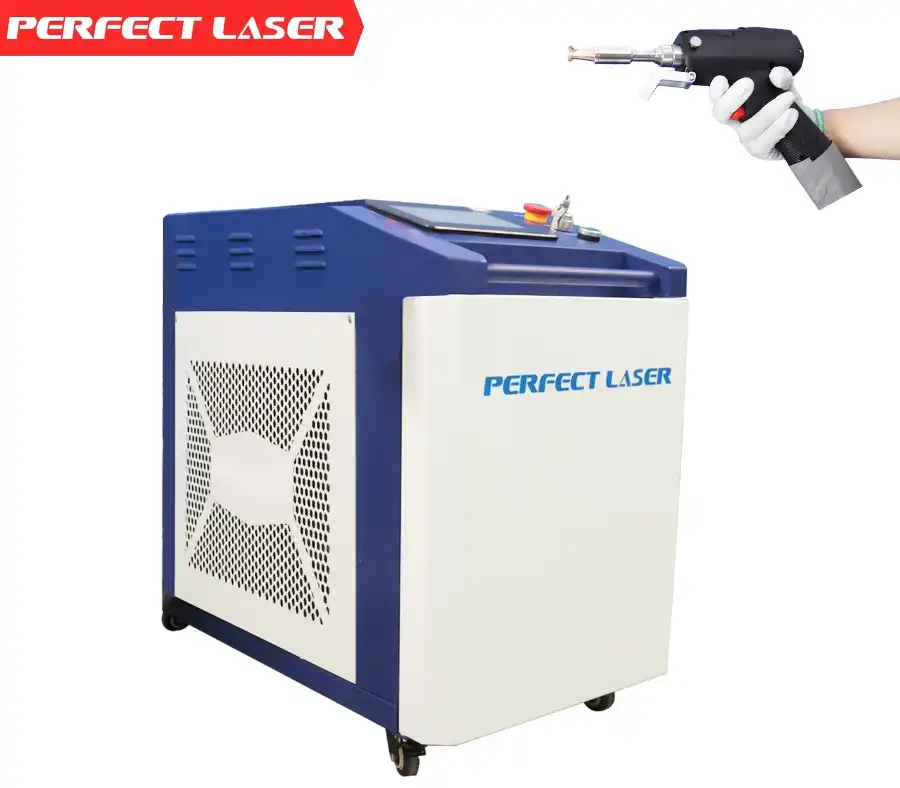
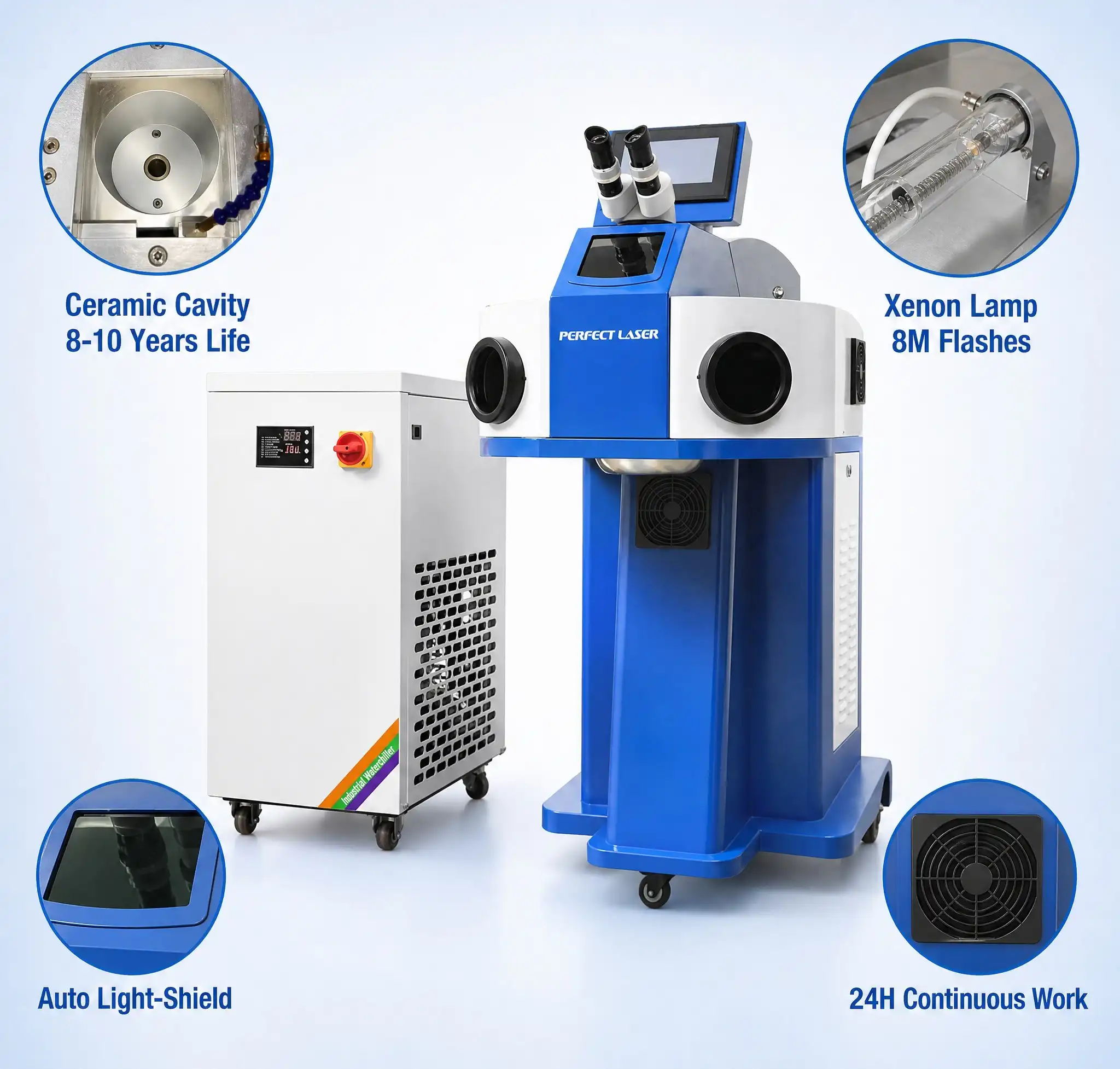
Small, light handheld laser cutters are ideal for repair businesses and small enterprises that create few items. Most devices have 500W to 1500W of power, which is sufficient for thin materials and simple joints. Since tools are tiny and light, operators may transfer them to workpieces instead of large assemblies. Excellent spot jewelry laser welding systems like Perfect Laser's are precise for complicated designs and economical for small enterprises that create items, especially when considering laser welding machine price as part of their budget planning. Entry techniques are good for channel letters, jewelry, miniature molds, and prototypes. Businesses exploring laser technology or servicing small markets whose production volumes don't justify larger expenditures might decrease capital risk. These devices are simple to set up and maintain. Workers with little technological understanding may utilize them.
Mid-Range Systems for Growing Manufacturers
Mid-range equipment includes additional power, automation, and material and size possibilities. From auto assembly to industrial electronics, 1500W to 3000W may be used for most industrial welding operations. These systems usually include LCD control boards with predefined welding processes to ensure production quality. Modern facilities need quick speeds and minimum pollution, therefore Perfect Laser's continuous laser welding technology helps manufactures advance beyond manual processes. The mid-range price range offers greater beam quality, quicker processing, and manufacturing line connectivity. At this level, firms have many shifts and require dependable, low-cost equipment to minimize downtime.
Industrial-Scale High-Power Solutions
Heavy industries like shipbuilding, massive steel production, and aircraft structural assembly need sturdy, long-lasting systems. Over 3000W continuous fiber laser sources offer the energy density required to weld thick materials rapidly and effectively. Advanced automation, multi-axis positioning, and quality control are common in these installations. When production was strong, the significant investment increased output and lowered unit costs. Perfect Laser's 4-in-1 welding, cutting, cleaning, and weld cleaning technologies are cutting-edge because they maximize floor space and capital. When assessing these solutions, we consider the whole cost of ownership, including setup, training, and professional support.
New Equipment Versus Used Market Considerations
Budget-conscious people consider purchasing old equipment to save expenses. Used machines may be 40-60% less than new ones, but they may not perform as well and need more maintenance. After a warranty expires, consumers must pay for repairs, which may wipe out any initial savings. Consider how technology is evolving. Five-year-old laser systems may not have control features or efficiency enhancements to minimize running expenses. For mission-critical operations where downtime is costly, we recommend new gear. However, secondhand computers may be suitable for backups or low-volume operations with periodic service outages. When buying anything secondhand, verify the maintenance records, inspect laser sources and sights, and put aside money for immediate repairs.
Laser Welding Cost Comparison: Traditional Welding vs Laser Welding
When switching from traditional welding methods to laser technology, you have to weigh the higher initial cost against the clear operating benefits that build up over the equipment's lifetime.
Initial Investment Analysis
Traditional welding equipment like MIG, TIG, and resistance systems usually cost less upfront than laser systems. A decent TIG welder may cost a fraction of a mid-range laser system. Standard-method manufacturers are wary about this pricing discrepancy. However, concentrating on initial expenditure misses the wider picture of money. We advise our customers to consider the five-year total cost of ownership rather than simply the purchase price. Laser welding is generally cheaper in consumables, energy usage, worker productivity, and quality, despite its higher startup cost. When making more, lasers' speed and accuracy advantages build up over thousands of welds, favoring them even more.
Operating Cost Advantages
Laser welding reduces several operating expenses. Unlike arc procedures, which heat a vast region, focused laser energy warms the weld zone, loosing minimal power. Laser welding requires less filler material and shielding gas than traditional methods, lowering consumable costs. Fewer parts to replace simplifies maintenance. Our research shows that switching to laser systems reduced monthly welding consumables costs by 40-50%. Non-polluting welding eliminates the expenses of fume cleanup and environmental compliance. These monthly savings eventually offset the larger initial outlay, making the laser welding machine price more justifiable over time.
Quality and Rework Reduction
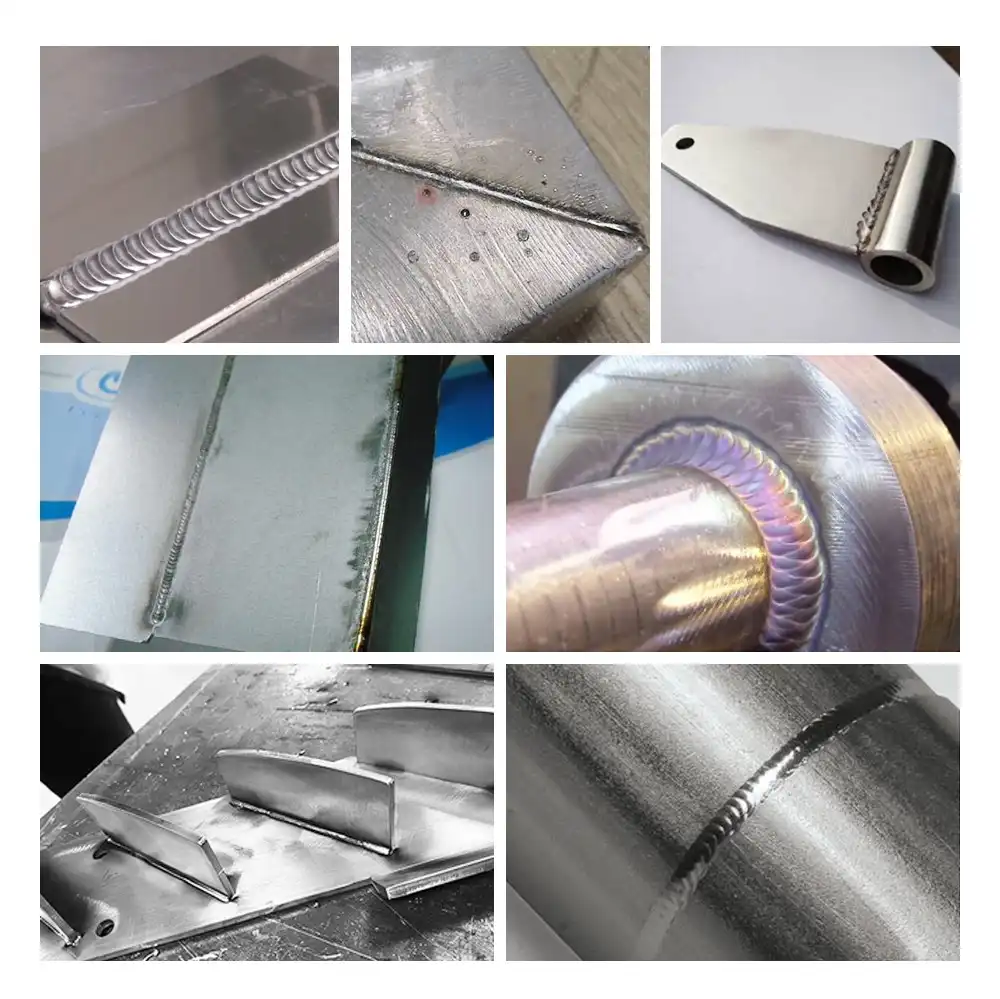
Laser welding may be the most cost-effective for quality uniformity. The high-precision beam control reduces heat-affected zones, preventing warping and mechanical faults seen in prior systems. Smooth sections after welding don't require time-consuming grinding and finishing. When manufacturers use laser welding on the correct applications, failure rates reduce 60-80%. Avoiding defects saves money on materials, time, insurance claims, and customer returns. Lasers' ability to manufacture identical high-strength joints benefits industries with rigorous quality requirements, including as aviation, medical equipment, and automotive safety parts.
Speed and Throughput Improvements
A major advantage of laser welding is speed. Concentrated energy speeds the heating and cooling cycles, making welding quicker. In the correct scenarios, cycle times may be shortened by 50-70%, increasing production capacity without shifts or floor space. Spreading fixed expenses over more units changes task cost with this processing benefit. A business that manufactures 1000 components a week might create 1500 units a week with the same machines and manpower, lowering unit cost. Speed is particularly beneficial when creating a lot of items since even a few seconds saved every turn adds up to huge capacity advantages.
Procurement Strategies: How to Get the Best Price for Laser Welding Machines
Strategic ways of buying tools have a big effect on how much it actually costs, so you can save thousands of dollars while still getting the right features and support.
Identifying Reputable Suppliers and Evaluating Credentials
Building trust with manufacturers and distributors is the first step to purchasing. We recommend Perfect Laser because it has been creating lasers since 1995, has 20 models and 300 kinds of equipment, and has CE, TUV, and SGS certifications. These certifications ensure safety and performance and allow customers to get their money back if technology fails. We recommend checking the supplier's credentials with other sources, reading customer reviews from comparable firms, and ensuring the vendor can give technical support in your region. Partnerships or suppliers with a long history in the U.S. are better for contact, parts supply, and service response than direct imports.
Negotiation Tactics and Volume Purchasing
Many purchasers don't negotiate equipment prices. Before talking to suppliers, know what you need, how much you anticipate to generate, and when. Suppliers can tailor solutions to your needs using this information. You may bargain better by promising to buy a number of units at once or putting up framework arrangements for future purchases. Customers may save 10-15% by placing big purchases or becoming references. When you combine similar equipment, such laser cutters with cutting systems or other instruments, you may receive better costs. Perfect Laser offers a number of items that may be combined to satisfy industrial demands.
Financing Options and Capital Management
Buying big pieces of tools can put a strain on a business's cash flow, especially if it is growing. Leasing plans help you keep your operating cash and spread the costs of equipment over its useful life. Operating leases may be better for your taxes because the payments are tax-deductible as costs instead of capital purchases. Another option is to get equipment credit from a specialized loan. Terms of five to seven years are common, and interest rates are usually low. We carefully look at all of our financial costs, since interest charges can add 15–30% to the real cost of the tools over the life of the loan. Some makers, like Perfect Laser, keep in touch with financing partners. This makes the approval process easier and could help them get better rates through big deals. The best way to finance your business relies on its current financial state, its growth plans, and other investment possibilities.
Timing Purchases Around Industry Events
The prices and choices that are offered are affected by strategic time. Industry trade shows and fairs bring together equipment makers who are all fighting for orders. This makes it easier for them to offer better terms and lower laser welding machine price. New products are often released at yearly events that focus on industrial technology, metal fabrication, or specific industries like aircraft or automotive, and there are often deals to get people to buy them. We suggest that you go to relevant exhibitions so that you can not only directly compare tools but also build relationships with multiple sellers at the same time, which creates competitive pressure that helps buyers. As companies try to meet their sales goals, the end of the quarter or year can sometimes give them more freedom. Perfect Laser keeps global show plans and attends major industry events where potential buyers can look at equipment capabilities and talk to technical experts about custom needs.
Case Studies and Real-World Examples of Laser Welding Costs per Job
Looking at specific situations on different business levels helps you see how cost factors work in real life, which is useful for estimating costs for your own case.
Small Business Implementation: Jewelry Workshop
Old-fashioned adhesive exposed seams and heat damaged gems at an elite jewelry manufacturer. After reviewing various options, they picked an entry-level Perfect Laser spot metal laser welding machine. They skillfully cut intricate patterns on pricey metals using modest studio equipment. The machine was expected to do 40–60 repairs and unique fabrications weekly. The average weld costs $8-12, depending on complexity, depreciation, energy, and time. Nearly imperceptible seams satisfied purchasers and allowed tool cost-based pricing increases. Training covered expert-outsourced duties, thus it paid for itself in 18 months. The mobile welding gun's small size and rapid weld cycles saved energy and let the operator work quickly without expensive fixtures.
Mid-Scale Manufacturing: Automotive Component Production
An auto and exhaust system components manufacturer improved weld quality and speed to meet demand. Previous MIG welding created uneven entry and polishing. Perfect Laser continuous laser welding with an LCD control board for accurate parameter monitoring was tested. A detailed cost study showed that the pricey equipment would pay for itself in three years owing to higher quality and productivity. Adoption cut per-job expenses 30% despite equipment deterioration. The welded flat surface needed half the energy and grinding of prior approaches. Workers produced 1300 components daily instead of 800, displaying efficiency. Decreased quality failure rates from 5% to 0.5% reduced warranty claims and expensive repairs. Its flexible system design enabled it to adapt when production plans changed, enhancing its value.
Industrial-Scale Application: Shipbuilding Fabrication
Manufacturing large structural elements welded to steel sections needs strong performance in deep industrial environments. Traditional arc welding worked, but it was energy-intensive, needed regular repair, and generated welds that needed careful covering. The business bought a powerful Perfect Laser 4-in-1 to weld, cut, clean and weld cleaning, simplifying chores. Consolidation lowered demand for cutting and cleaning equipment, lowering net capital even while industrial systems had the highest equipment costs. The cost of welding each job reduced considerably. Instead of 12 minutes, integrated welding, cutting, and cleaning require 7 minutes at structural connections. The continuous fiber laser source cut thick materials without thermal distortion, making component alignment challenging. Because welding used 40% less power, construction saved more energy than expected yearly. Maintenance was cheaper than expected, and replacing the protective lens cost most.
Lessons from Used Equipment Acquisition
Laser welding maintenance and modification were too expensive for food mold producers. A closing facility offered a five-year-old machine for 55% less. Their substantial savings allowed them to try laser welding safely. However, the experience revealed considerable hidden costs. The secondhand equipment had no warranty, and the laser source had to be fixed within six months for 20% of the purchase price. Operator training takes longer with previous control systems since they were harder to use than LCD boards. It used more energy than modern options owing to obsolete efficiency standards. After two years, purchase expenses matched new equipment prices, but performance and dependability declined. This example shows the need of appraising used equipment, being ready for unforeseen changes, and being honest about whether savings are worth sacrificing practical goals.
Conclusion
The cost per job of laser welding requires a comprehensive investigation beyond the initial laser welding machine price variables. We've examined how tool loss, energy usage, worker competence, material needs, and task complexity impact welding costs. Comparing entry-level, mid-range, and industrial equipment helps match abilities to production demands and maximize capital. Reduced energy, materials, rework, and output make laser welding cheaper than conventional processes. For many purposes, the larger initial expenditure pays off. Strategic procurement approaches include supplier evaluation, negotiation, financing, and scheduling impact equipment pricing. Real-world case studies explain how these characteristics influence various organizations and sectors, helping you prepare.
FAQ
1. What factors most significantly influence laser welding cost per job?
Depreciation on equipment and staff costs are usually the biggest parts of costs, but how important they are depends on the application. Depreciation is spread out over many units in high-volume operations, so tool costs per job are very low. Instead, labor and material requirements are what matter the most. Equipment costs make up a bigger part of low-volume, specialized work. Energy use, materials, and setup time all make important but usually small inputs. Costs go up a lot when a job is complicated because it takes longer to handle and requires more quality checks.
2. How does laser welding machine price correlate with long-term operational savings?
More expensive systems usually have better energy economy, dependability, and accuracy, which lowers operating costs over the life of the equipment. We have seen that focusing only on lowering the laser welding machine price often results in higher total ownership costs due to more upkeep, higher energy use, and quality-related losses. To find the real value, a full financial study should look at the total costs over five years, not just the original investment.
3. When does laser welding become cost-effective compared to traditional methods?
The break-even study is based on the amount of output, the quality standards, and the types of materials used. Laser welding usually pays for itself quickly, usually within two to three years, in high-volume businesses with strict quality standards. Even though the payback times may be longer for lower volumes, they can still benefit from quality improvements that allow higher prices or more market possibilities. No matter the number, lasers are especially useful for jobs that need little finishing after the weld or that involve working with heat-sensitive materials.
Partner with Perfect Laser for Competitive Laser Welding Machine Price and Superior Technology
As a laser welding machine price supplier and supplier of laser welding machines since 1995, we have a lot of knowledge and can offer great value in a wide range of industrial settings. Perfect Laser has a wide range of products, such as channel letter laser welding machines, double path channel letter welders, spot jewelry laser welding systems, continuous laser welding machinery, and specialized welders for the mold and kitchenware industries. This way, we can make sure that the equipment we sell fits your needs perfectly, without forcing you to settle for less than ideal options. Our systems have continuous fiber laser sources and LCD control boards. Handheld welding guns with small volumes, high accuracy, and fast speeds make them mobile and adjustable. Because of these benefits, smooth welding surfaces and pollution-free operation are possible in steel, aircraft, jewelry, electronics, cars, and ships. Email our team at [email protected] to talk about your unique welding problems and get detailed quotes for equipment that fits your budget and output goals perfectly.
References
1. Dawes, C. (2019). Laser Welding: A Practical Guide. Woodhead Publishing Series in Welding and Other Joining Technologies. Cambridge, UK: Woodhead Publishing.
2. Ion, J.C. (2017). Laser Processing of Engineering Materials: Principles, Procedure and Industrial Application. Oxford, UK: Butterworth-Heinemann.
3. Katayama, S. (2020). Handbook of Laser Welding Technologies. Welding Society Series. Cambridge, UK: Woodhead Publishing.
4. Meijer, J. & Verheij, W.J. (2018). Cost Analysis and Comparison of Laser Welding Processes in Manufacturing. International Journal of Advanced Manufacturing Technology, Vol. 95, pp. 2847-2861.
5. Steen, W.M. & Mazumder, J. (2020). Laser Material Processing: Fourth Edition. London, UK: Springer-Verlag.
6. Zhang, Y. & Chen, G. (2021). Economic Evaluation of Laser Welding Technology Implementation in Industrial Manufacturing. Journal of Manufacturing Processes, Vol. 63, pp. 148-159.

share your inquiry, get the quotation accordingly.
第一张审核员说包含其他公司不能用_1755049724891.webp)
Perfect Laser – Global Manufacturer of Reliable Laser Solutions