Best Places to Buy a Laser Cleaner for Industrial Use
When procurement managers look for the best places to buy an industrial laser cleaning machine, they should focus on makers with a history of success, full licenses, and strong customer service after the sale. The best provider not only has high-quality tools with fiber laser technology, but they also have a track record of successful setups in the industrial, aerospace, and automobile industries. When you compare providers based on technical specs, guarantee coverage, and customer reviews, you can be sure that your investment will last and work reliably in tough industrial settings.
Introduction
Industrial laser cleaning technology has changed the way that maintenance and production teams prepare surfaces and get rid of contaminants. Laser-based systems clean precisely while having less of an effect on the environment than traditional methods that use rough materials, harsh chemicals, or time-consuming human processes. In many fields, rust removal, paint cleaning, and covering removal used to take a lot of time and resources. But things have changed amazingly in recent years. When engaging in this advanced technology, picking the right provider is very important because the performance of the equipment, compliance with regulations, and ongoing expert support all have a direct effect on how efficiently the production runs. This complete guide talks about the important things that purchasing managers, building engineers, and equipment distributors need to think about when they are looking for reliable sources for industrial laser cleaning machines. Our main goal is to make the buying process easier while also giving you useful information that you can use to make smart choices in competitive B2B markets around the world.
Understanding Industrial Laser Cleaning Machines
Core Technology and Operational Principles
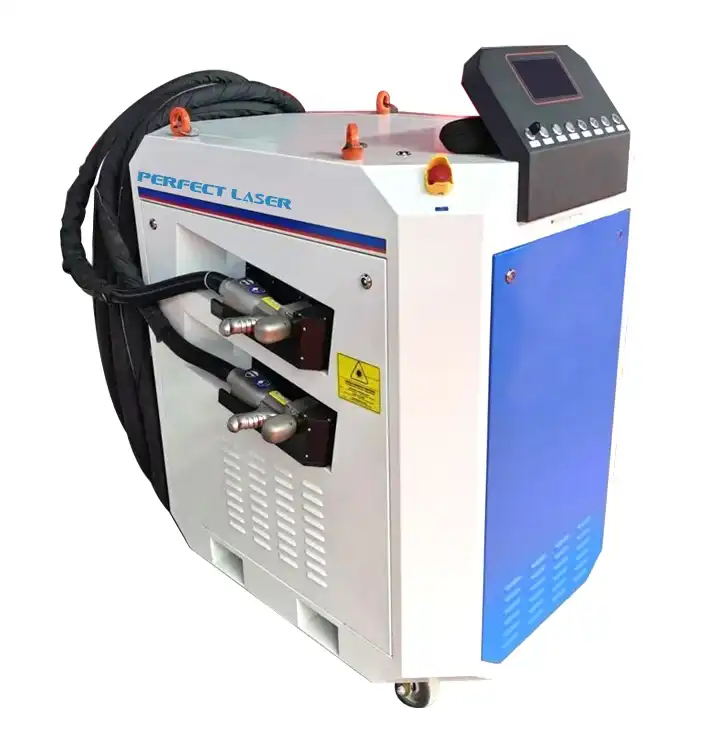
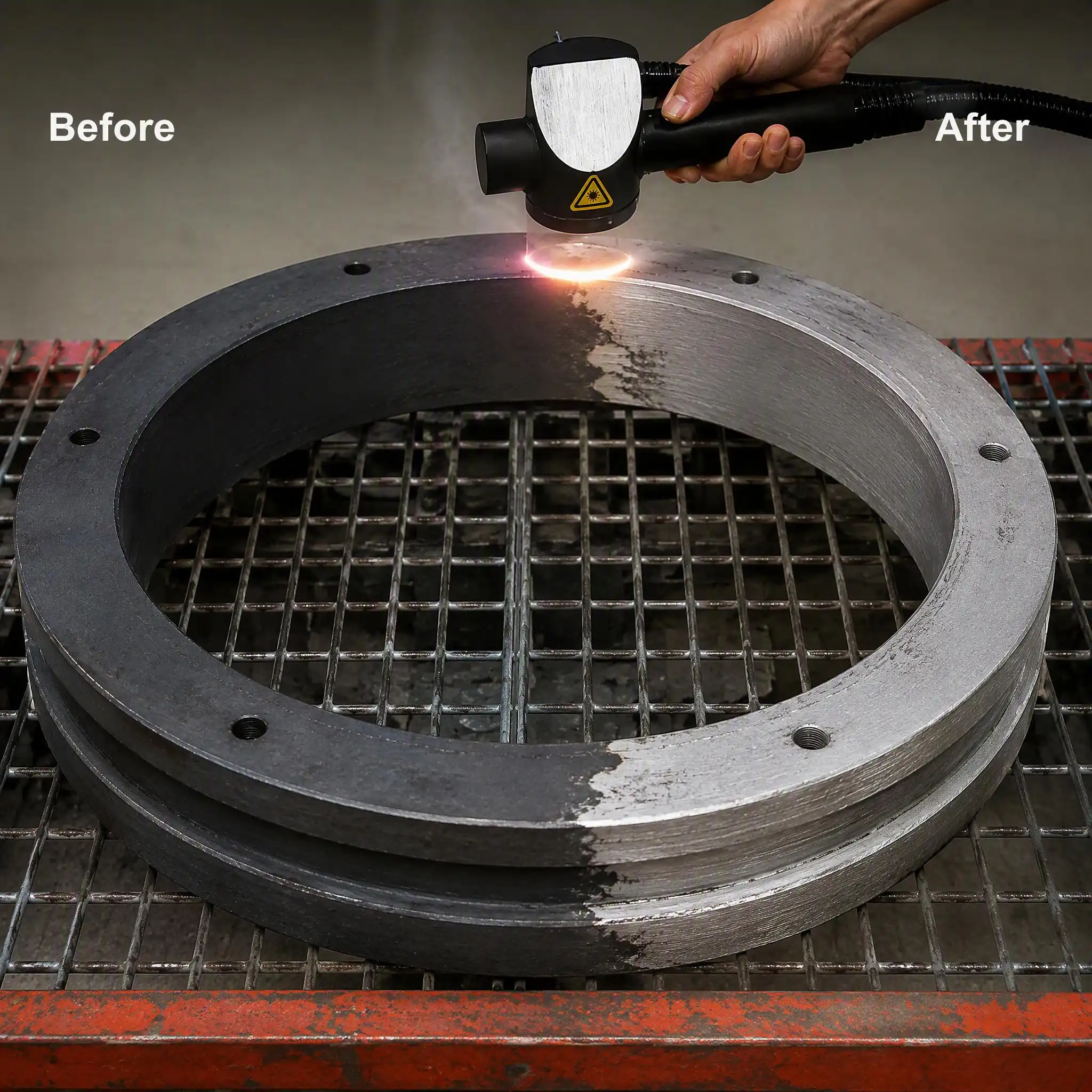
Laser cleaners for factories use directed light energy to get rid of unwanted substances on the surface without using chemicals or physical touch. Mostly, fiber lasers and CO2 lasers are used in this technology. Each has its own benefits based on the needs of the application. Because of their wavelengths and high energy economy, fiber laser systems are great at getting rid of rust and making metal surfaces ready for painting. When the focused laser beam hits a dirty surface, it quickly heats up and burns off the unwanted layer, leaving the base below it whole and unharmed.
How Laser Ablation Replaces Traditional Methods
Sandblasting and other traditional methods of cleaning make a lot of trash, release particles into the air, and damage delicate base surfaces through mechanical abrasion. Chemical treatments are bad for the environment, need to be thrown away in the right way, and put workers in contact with chemicals that could be dangerous. By turning electrical energy straight into exact surface treatment, laser cleaning gets rid of these problems. The process doesn't make a lot of waste—mostly gaseous contaminants that can be collected by extraction systems—and it doesn't need anything else besides electricity to work.
Common Industrial Applications
Laser cleaning has become an important part of the production processes at many types of factories. These systems are used in auto companies to prepare the surfaces of aluminum and stainless steel parts before they are welded. This makes sure that the weld is of the highest quality and the structure is strong. Lasers are used by aerospace repair teams to remove coatings from airplane parts without damaging the underlying materials, which are often delicate aluminum alloys and composite structures. Heavy equipment makers use laser cleaning to keep their molds in good shape. This gets rid of the rubber dust and release agents that build up during production cycles. Shipbuilding companies can remove rust and prepare the surface before adding protective coats more quickly and easily than when they used to grind the surfaces by hand.
Criteria for Choosing the Best Laser Cleaner Supplier
Assessing Your Industrial Cleaning Requirements
Before you call possible providers, be very clear about what you need and how well you expect them to do it. Power capacity is one of the most important specs. Industrial systems range from 50 watts for fine, precise work to 500 watts or more for heavy-duty tasks like removing rust and coatings from large areas. The requirements for portability change based on whether you need to integrate a fixed production line or make it possible to clean on the go for field repair. Material compatibility is very important. Make sure that the potential tools can work with the substrates in your building, such as ferrous metals, aluminum alloys, stainless steel, copper, or more specialized materials like titanium.
Evaluating Brand Reputation and Supplier Credibility
Companies that have been around for a long time and have a lot of experience in the field usually make more reliable tools and offer better expert support. Do some research on the company's history, looking for long-term experience in laser manufacturing, patent files that show innovation, and published case studies that show successful operations. Certification standards set concrete standards for quality. For example, CE marking makes sure that products meet European safety standards, and ISO certifications show that quality management systems are following the same rules. When compared to renamed equipment, genuine OEM makers have more control over where parts come from, how they are put together, and how well they are tested for quality.
Importance of After-Sales Service Infrastructure
Your relationship with your provider goes far beyond just getting the tools, including when you invest in an industrial laser cleaning machine. Full help after the sale is what sets great providers apart from average ones. Maintenance plans should include regular preventative maintenance, extra parts that can be ordered with acceptable wait times, and technical help that can be reached by phone, email, and remote tests, among other ways. Training helps operators get the most out of their tools while still following safety rules. Look for suppliers who offer on-site training, full operating manuals, and resources for ongoing education. The length of the warranty shows how confident the seller is in the product's trustworthiness. Standard coverage lasts for one to two years, but longer protection is available for important work settings.
Top Places to Buy Industrial Laser Cleaning Machines
Direct From Leading Manufacturers
Industrial buyers can get a lot of benefits from buying straight from well-known makers. Companies like Perfect Laser, which has been making laser tools since 1995, have a wide range of products that can be used in many different commercial settings. Because these relationships are direct, there are no markups for middlemen. This means that you can get the newest technologies and make them fit your needs. Companies that sell their products all over the world keep area service centers open. This lets customers get expert help and spare parts more quickly. When judging a maker, look at how much they spend on research and development. Companies that have dedicated R&D offices and patent portfolios show that they are committed to always making technology better.
Authorized Dealers and Distributors in the Area
Authorized distribution networks bring together assistance from the maker with local knowledge and support systems. Regional wholesalers know the local rules, power standards, and industry-specific needs that affect the choice of tools. They often keep test units on hand so that you can try them out before deciding to buy, and their expert teams get training from the manufacturers to make sure they can help you with installation and problems. Make sure the dealer is authorized by checking the manufacturer's website or getting proof directly. This ensures that the equipment is real, that the warranty is still valid, and that you can get official extra parts. Established distributors build long-term ties with their clients, which gives them useful information about the best ways to use their products based on their own experiences.
Secure B2B Online Platforms
Digital outlets for buying things have come a long way, now giving clear comparison shopping and checked seller credentials. Reliable B2B platforms have ways to check the legitimacy of sellers, such as checking their business licenses, inspecting factories, and looking over past transactions. These platforms let you talk directly with makers and distributors around the world, so you have more choices than just local suppliers. When using online platforms, give more weight to sellers who have trade assurance programs that protect payments and make sure products meet specs. Look over product lists that are very thorough and include technical specs, certifications, and customer feedback. Video demonstrations and virtual plant tours give you more confidence in a supplier's skills without having to fly abroad.
Customized Solutions for Specialized Needs
When an industrial business has special cleaning needs, providers who offer engineering advice and custom equipment design can help. When a company has its own expert staff, it can change standard platforms to meet specific power needs, work with current production lines, or create custom handling systems for parts with odd shapes. Custom solutions are especially helpful for high-volume processes where improved routines make the engineering investment worth it. Laser cleaner technology is one area where such tailored approaches are increasingly applied. Talk about your application needs in detail and give providers examples of contaminated parts and parts that need to be cleaned so that they can suggest the right setups and show that they work by doing test runs.
Comparing Buying Options: How to Make the Right Choice
Understanding Price Structures and Investment Returns
Industrial laser cleaning tools are big investments that cost a lot of money. The price depends on how much power they have, how complicated their features are, and how well-known the maker is. Handheld units for repair work and small-scale operations that are easy to use start at around four figures, while high-power automatic systems for integrating into a production line cost six figures. Beyond the initial purchase price, you should also look at the total cost of ownership, which includes the cost of energy, upkeep, and consumables. Laser systems get rid of many standard consumables, but optical components still need to be replaced every so often. Find the return on investment by comparing the current costs of cleaning (labor hours, chemicals, dumping fees, and equipment wear) with the expected costs of running the laser system and the extra work that will be done.
Performance Metrics That Matter
How fast you clean has a direct effect on how much you can make and whether laser technology can keep up with your operating pace. Coverage rates are usually given in square meters per hour in specifications, but the real performance depends on the type of contamination, the thickness, and the material of the base. Power output is related to cleaning ability. Systems with higher power can get rid of heavy rust layers and thicker coatings more quickly, but they may be too strong for delicate jobs. The system's ability to clean complicated shapes and small areas is affected by the quality of the beam and the size of the focus spot. The energy distribution profile is controlled by the pulse frequency and length. Parameters that can be changed let you find the best settings for different materials and types of contamination.
Comprehensive Supplier Services
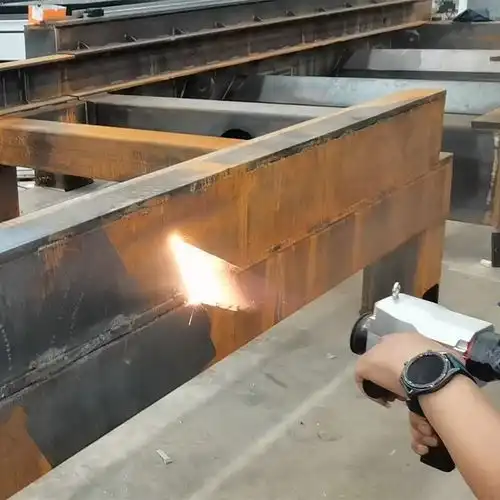
The industrial laser cleaning machine is easy to use. All you have to do is plug it in and turn it on. It will clean without using chemicals, media, dust, or water. Laser rust removers that you can hold in your hand can automatically focus and clean the surface. These systems are good at getting rid of surface resin, grease, dirt, spots, burn marks, coats, and paint on iron, carbon steel, stainless steel, tracks, aluminum, mold steel gears, steel pipes, and copper alloys. Mechanical processing, cleaning molds, making electronic circuits, restoring history, food processing, aerospace, rail transportation, ships, tire molds, making cars, electronics, and high-end machine tools are just some of the uses. Better suppliers increase value by managing operations, taking care of customs paperwork for foreign shipments, and setting up safe shipping for fragile optical parts. On-site installation services make sure that the equipment is set up correctly, that the electrical connections meet safety standards, and that the new equipment can be used with current extraction systems or production processes. Safety rules, operational processes, setting parameters for different uses, regular upkeep tasks, and basic troubleshooting are all covered in operator training classes. Using these all-in-one services speeds up production while reducing the time needed to learn how to use new technology.
Ensuring Safe and Efficient Use Post-Purchase
Routine Maintenance Protocols
Laser cleaning systems don't need as much care as other types of equipment, but following the manufacturer's instructions will make them last longer and work better every time. Every day checks should be made to make sure the protected lens is clean, the cooling system works, and the drainage system works. As part of weekly maintenance, the wire connections are checked, the laser head is checked for damage or contamination, and the focus distance is made sure to be correct. Every month, more thorough checks of the optical parts are done, protected windows are cleaned or replaced, and the usefulness of the safety interlock is confirmed. Manufacturers give detailed upkeep schedules for each type of equipment and how it is usually used. Following these instructions keeps parts from wearing out too quickly and keeps the guarantee valid, so if you need to buy laser cleaner, always choose one from a reputable brand that provides clear maintenance guidelines.
Common Troubleshooting Scenarios
Knowing about common operating issues can help keep downtime to a minimum when small issues arise. Less effective cleaning is usually caused by dirty safety lenses or wrong focus distance settings, not by laser degradation. Problems with the cooling system could be indicated by beam output that changes all the time. Check the water levels, look for blockages in the cooling lines, and make sure the room temperature stays within the recommended ranges. When errors show up on control interfaces, they usually refer to specific system tasks. For diagnostic codes and suggested fixes, look in operations manuals. Build connections with technical support contacts during the initial installation. This will allow for quick resolution when an operator's knowledge of fixing isn't enough.
Safety Standards and Protective Measures
When lasers are used for cleaning, strict safety rules must be followed to protect users and people close. Laser safety classes (usually Class 4 for industrial cleaning systems) require certain safety steps, such as no-go zones, warning signs, and emergency stop buttons. Normal safety glasses don't protect against laser radiation, so operators must wear laser safety glasses that are rated for the wavelength and power output of their equipment. At high power levels, touching the skin can cause burns. Long sleeves and gloves are better for protecting your hands when using the device in hand. Vaporized toxins are caught by extraction systems, so people don't have to breathe in floating particles that could contain heavy metals or other dangerous substances. Regular safety training helps people remember how to do things right and makes sure they follow health and safety rules at work.
Conclusion
To get the right industrial laser cleaning machine, you need to carefully consider the machine's powers, the supplier's dependability, and the machine's support system. We've talked about some important selection factors, such as technical specs, suitability for the job, and total cost, that help people make smart buying decisions. Partnerships with well-known makers or approved distributors that offer not only tools but also ongoing professional support and quick service lead to the most successful implementations. As laser cleaning technology keeps getting better, companies that use it first get a competitive edge through higher quality products, higher speed, and less damage to the environment. By investing in this game-changing technology, you are committing to modern manufacturing methods that are in line with stricter environmental rules and standards for operating excellence.
FAQ
1. What industries benefit most from laser cleaning technology?
Laser cleaning systems are immediately helpful in manufacturing fields that work with metal production, surface finishing, and precise assembly. The technology is used in auto plants to prepare for welding and remove paint, and in aircraft repair teams it is used to remove coatings without damaging the substrate. Shipbuilding companies benefit from getting rid of rust quickly, and mold makers like getting rid of waste in a way that keeps the hole dimensions accurate. Heritage repair experts like how gentle, controlled cleaning can help protect fragile objects and historical buildings.
2. How does laser cleaning compare to the old ways of cleaning?
Traditional cleaning tools cost more to buy at first, but in the long run, operating economics favor laser systems. For chemical cleaning to work, you have to keep buying supplies, paying to get rid of waste, and paying to follow the rules. When you sandblast, you have to change the gritty media, clean up a lot of debris, and fix any problems that come up. Laser systems don't have these ongoing costs because they only need electricity and sometimes need to have their optical parts replaced. When an organization needs to clean regularly, improvements in labor efficiency usually pay off within 18 to 24 months.
3. Can laser devices safely clean all kinds of things?
Laser cleaning works great on metals like steel, aluminum, copper alloys, and titanium, and the settings can be changed to accommodate different material sensitivity levels. Clear things like glass and some metals receive laser energy in different ways, so they need special techniques or can't be cleaned with a laser. When lasers are used on composite materials, the core and reinforcing parts react in different ways. Reliable providers try the cleaning solution's fit for your specific parts and types of contamination before you commit to buying it. This way, you can be sure that it will work well and safely.
Partner With Perfect Laser for Your Industrial Cleaning Needs
If you need an industrial laser cleaning machine, Perfect Laser is a reliable company that has been making them since 1995. Our wide range of products meets a wide range of cleaning needs in the automobile, aerospace, manufacturing, and repair industries. Our equipment is approved to meet foreign standards such as CE, TUV, and SGS. Our focused research and development centers work together on 63 patents to make sure that our technology offers cutting-edge performance backed by proven dependability. Every system goes through a lot of tests using high-tech measuring tools. This makes sure that the quality is always the same, whether you need a portable system or one that works with an automatic production line. Our global service network includes Germany, Japan, Italy, Russia, Brazil, India, Saudi Arabia, and the United Arab Emirates. We offer professional help and regional knowledge 24 hours a day, 7 days a week. Email our engineering team at [email protected] to talk about your unique application needs, ask for example videos, or get detailed quotes from a provider who is dedicated to your business success.
References
1. Laser Institute of America. (2022). Industrial Laser Cleaning: Technology and Applications Handbook. Orlando: LIA Publications.
2. Chen, G., & Kwee, T. J. (2021). Advances in Fiber Laser Technology for Surface Treatment Applications. Journal of Manufacturing Science and Engineering, 143(8), 081-095.
3. European Committee for Standardization. (2020). Safety of Machinery – Laser Processing Machines – Safety Requirements. Brussels: CEN Technical Report.
4. Zhang, W., et al. (2023). Comparative Analysis of Surface Preparation Methods in Automotive Manufacturing. International Journal of Advanced Manufacturing Technology, 126(3), 1247-1262.
5. American Welding Society. (2021). Laser-Based Surface Preparation for Welding Applications: Best Practices Guide. Miami: AWS Technical Standards Committee.
6. Industrial Cleaning Association. (2022). Environmental Impact Assessment of Modern Cleaning Technologies. ICA Annual Research Report, 18, 34-67.

share your inquiry, get the quotation accordingly.
第一张审核员说包含其他公司不能用_1755049724891.webp)
Perfect Laser – Global Manufacturer of Reliable Laser Solutions