Laser Die Cutting Benefits for Corrugated and Carton Die Boards
When companies that make boxes need to make die boards quickly, accurately, and reliably, laser die cutting machine technology changes the whole process. Focused laser beams are used to cut corrugated and carton die boards with amazing accuracy. This new method gets rid of the flaws and limits of traditional sawing methods. In contrast to mechanical cutting, which relies on direct touch and has problems with tool wear, laser systems produce consistent results over thousands of cuts while keeping very tight tolerances. When companies buy this technology, it makes their production much more efficient, gives them more design options, and lowers their total costs across all of their manufacturing processes.
Understanding Laser Die Cutting Technology for Corrugated and Carton Die Boards
Precision laser die cutting machine technology is a big step forward in technology for factories that make packages. Focused laser energy is used to melt or burn materials along predetermined lines. This makes clean cuts through die board materials that are 15 mm to 25 mm thick. This frictionless method keeps the purity of the material and achieves levels of accuracy that mechanical methods just can't match.
How CO2 Laser Technology Works for Die Board Cutting
The beam from a CO2 laser comes from an electrically energized mixture of gases. This makes infrared light with a wavelength of about 10,600 nanometers. This wavelength works really well with natural materials like wood and plywood, which are used to make die boards. By focusing this energy on the surface of the material, it quickly heats up to the point where it can be vaporized, removing the material with medical accuracy. For die board uses, Perfect Laser's systems use sealed CO2 laser tubes with power levels from 300W to 600W. These systems offer the best mix between cutting power and cost of operation.
Key Components That Enable Precision Cutting
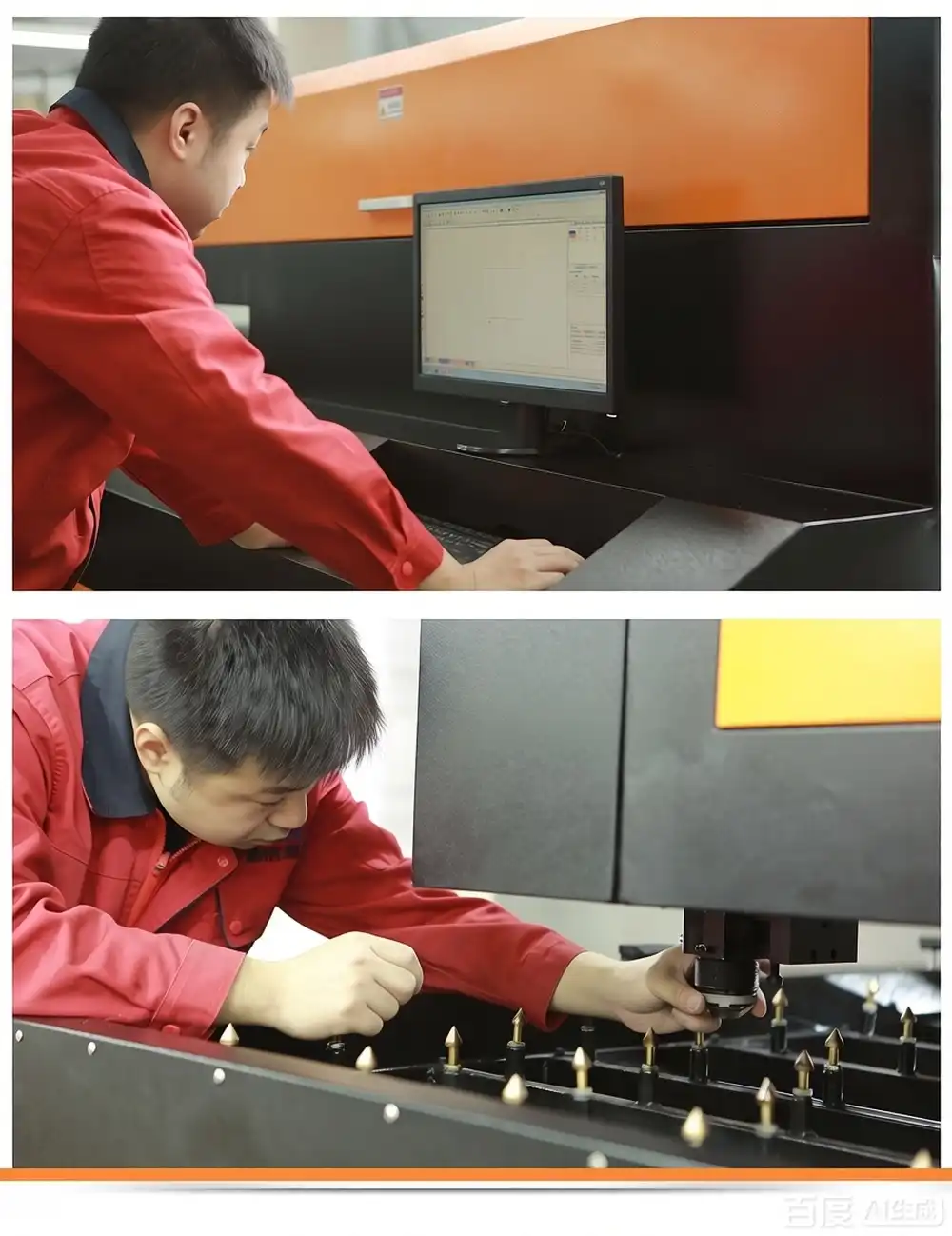
Modern laser die cutting machine systems have a number of important parts that work together. Precision mirrors and focused lenses are used by the beam delivery system to keep the quality of the beam high along the cutting path. Our Auto Following and Focus System constantly checks the distance between the cutting head and the surface of the material. If the width of the material changes or the surface isn't smooth, the system automatically changes the focal point to make up for it. This smart method makes sure that the quality of the cuts is the same from the first piece to the thousandth. This stops the quality loss that happens when machines cut.
Material Compatibility and Thickness Capabilities
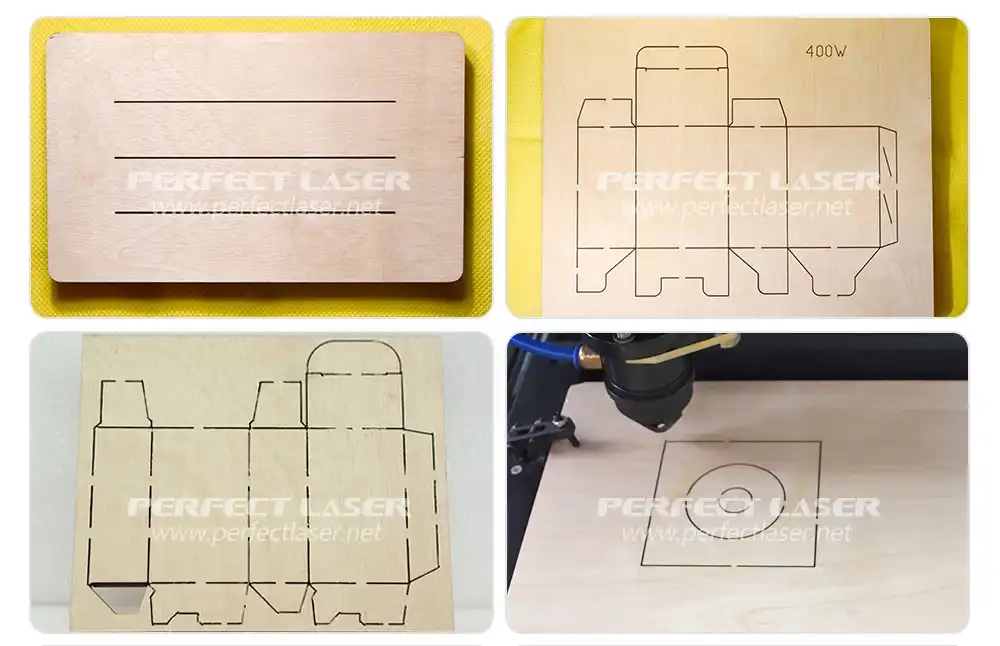
Die board makers use a variety of surfaces, and knowing which materials work with each other is important for making decisions about what to buy. Laser systems that are set up correctly can work well with corrugated fiberboard, plywood, and composite die board materials that are up to 25 mm thick. The Perfect Laser die board cutting machine can handle kerf sizes of any size, such as 0.45mm, 0.71mm, 1.05mm, and 1.42mm. This gives it the flexibility needed for different package design needs without having to change the tools.
Key Benefits of Laser Die Cutting for Corrugated and Carton Die Boards
When you switch to laser die cutting machine technology, you can see real gains in many areas of operations. Businesses that are thinking about making this investment should know how these benefits can be turned into real business value.
Superior Precision and Repeatability
laser die cutting machine tools can place things with an accuracy of less than 0.01 mm, which is something that can't be done with regular saws. Because of how accurate these files are, design files can be turned straight into physical goods, without the errors that happen over time in mechanical systems. This level of accuracy is very important when making complicated die designs with lots of small details. When paired with Panasonic servo motors, our systems' imported ball screws and linear guide rails ensure steady performance, even when running at high speeds for long production runs.
Dramatic Reduction in Setup and Changeover Time
For traditional die cutting, you have to physically set up, choose the tools, and make changes by hand, which takes time that could be used for other tasks. When using a laser system, all the user has to do is load the design file, place the material, and start the cutting process. The change from one design to another takes seconds instead of hours, which allows for small production runs to be cost-effective. Because of this, packaging companies can meet the needs of a wide range of customers without having to worry about the high costs of setup that used to stop small-batch production.
Elimination of Tool Wear and Replacement Costs
Mechanical cutting tools get dull over time and need to be sharpened, adjusted, and eventually replaced. The prices of these everyday items add up over time. When you use a laser die cutting machine, the tools never touch each other, so there is no wear. The laser tube is the only part that needs to be replaced, and it can usually work for thousands of hours without needing any repairs. This trait drastically lowers ongoing operating costs while keeping the quality of output stable.
Enhanced Design Flexibility and Complexity
The style of packaging keeps getting more complicated and customizable. Laser systems can handle complex patterns, tight radius curves, and fine details that would be hard or impossible to do with older methods. Design changes can be made in software without having to make new tools, which speeds up the product creation cycle. This feature lets companies that make packaging react quickly to customer needs and market trends, without having to wait for and pay for traditional mold production.
Environmental and Economic Sustainability
One big benefit of current laser die cutting machine technology is that it uses less energy. Perfect Laser systems use about 10% as much energy as high-powered industrial lasers, which cuts down on electricity costs by a large amount. Also, the accuracy of laser cutting keeps material waste to a minimum by making nesting more efficient and getting rid of the extra material loss that comes with mechanical cutting. The system runs on compressed air instead of expensive inert gases, which lowers operating costs even more and helps meet environmental sustainability goals.
Comparing Laser Die Cutting to Traditional Die Cutting Methods
Knowing the pros and cons of the different cutting technologies helps procurement workers make smart choices about where to spend their money.
Traditional Sawing Equipment Limitations
Sawing tools remove material physically through mechanical force. This is how most die boards are made. Operators use pencils or pens to mark cutting lines by hand, which introduces error into the process. The sawing process itself causes the material to vibrate and stress a lot, which could lead to dimensional warping. Moving die boards from one marking station to another cutting station can cause them to become misaligned, which makes accuracy problems worse. The whole process moves rather slowly because of the limits of the tools and the need for constant operator input.
Speed and Efficiency Comparisons
When it comes to output throughput, corrugated die cutting and laser die cutting machine units are clearly better than traditional sawing. In traditional sawing, the cutting speed is limited by the machine, and the tools have to be repositioned often. Laser systems can keep going at very fast speeds because they are only limited by the material's thermal properties and not by mechanical ones. Because laser processing doesn't involve touching anything, it can be done 24 hours a day, seven days a week, if there are enough jobs to warrant it. This ability to keep running at high speed without stopping to fix or maintain tools directly leads to more work being done each day.
Quality Consistency Over Production Runs
The quality of traditional cutting methods goes down as the tools wear out during output. Dimensional consistency and edge quality will be very different between the first piece and the hundredth piece. laser die cutting machine tools always make the same cuts, from the first one to the ten-thousandth. This makes sure that every piece meets the requirements. This stability gets rid of the need for frequent quality checks and lowers the number of rejects, which boosts production efficiency and lowers waste.
Initial Investment Versus Long-Term Value
It is normal for procurement choices to weigh up-front costs against long-term value creation. The starting cost of laser die cutting machine systems is higher than the beginning cost of basic sawing tools, but the total cost of ownership is lower. Getting rid of the costs of replacing tools, hiring fewer people, spending less on repairs, and making more things all add up to a good return on investment. When businesses look at these factors, they usually find that laser systems pay for themselves quickly through cost saves.
Best Practices for Laser Die Cutting Machine Operation and Maintenance
To get the most out of your equipment's performance and lifespan, you need to follow the right operating methods and maintenance plans. These steps protect your investment and make sure that the quality of the result is always the same.
Initial Setup and Calibration Procedures
Installing a laser die cutting machine correctly sets it up for long-term success that you can depend on. To make sure the tempering heat-treated machine bed stays stable in terms of size, the system needs to be put on a stable, level surface. Initial optical path alignment should be checked according to the manufacturer's instructions, making sure the beam goes through the middle of all optical parts. The Auto Following and Focus System needs to be set up to work with the die board thickness ranges you'll be working with most often. By taking the time to do these steps right during installation, quality problems can be avoided in the future.
Daily Operational Checks and Procedures
Before starting each shift, workers need to check a number of important factors. Make sure that the laser tube is working at a normal temperature and that the water chiller keeps the coolant at the right temperature. Check the cutting head lens for dirt or damage, and clean it if it needs it with the right tools. Make sure that the source of compressed air keeps up the right pressure for cutting and clearing the smoke. You can use the Advanced LCD Touch Screen with USB port and DSP Offline Control to load your design file and make sure that the cutting settings match the material requirements.
Routine Maintenance Schedules
Preventive repair keeps technology working well and makes it last longer. Cleaning optical parts once a week keeps the beam quality from slowly dropping, which could affect the quality of the cut. Every month, parts of the motion system like ball screws and guide rails are checked to make sure they are working properly and to find any wear before it becomes a problem. The flexible structure of Perfect Laser systems makes upkeep easier, taking less time and requiring less technical know-how. By following the manufacturer's suggested maintenance routine, you can avoid unplanned downtime and go longer between big service needs.
Troubleshooting Common Operational Issues
Systematic fixing quickly finds the root causes when cut quality doesn't meet standards. Inconsistent cut depth is often a sign of a problem with the focus point, which means the Auto Following and Focus System may need to be re-calibrated. Most of the time, rough or burned edges are caused by using the wrong cutting speed or power settings for the object being worked on. Issues with dimension accuracy could be caused by technical issues in the motion system or mistakes in the design file, such as an incorrect carton die layout. Our systems' single-head cutting and flight optical path design makes it easier to check and make changes to the optical alignment when needed.
Selecting and Procuring Laser Die Cutting Machines for Corrugated and Carton Board Production
To choose the right equipment, you need to carefully compare your unique output needs to the capabilities of the laser die cutting machine models that are offered.
Assessing Your Production Requirements
First, look at your standard die board specs, such as the sizes, width ranges, and types of materials used. Find out what your output ability needs to be by figuring out how much you produce each day and each month. Think about the level of complexity you need for your design, especially the smallest feature sizes and cutting limits your goods need. Check to see how much floor room, electricity, and compressed air your building can provide. These things can limit the types of tools you can use.
Evaluating Machine Specifications
The size of your working area is one of the most important factors that determines what kinds of goods you can make. Perfect Laser has different working area sizes, such as 900mm x 900mm, 1200mm x 1200mm, 1200mm x 1500mm, and 1200mm x 1800mm, to meet the needs of different production needs. The choice of laser power between 400W and 600W relies on the thickest material you'll be working with usually and how fast you need to cut for your production volumes. Higher power levels make it faster to cut through thick materials, but they also raise the cost of both buying and running the equipment.
Understanding Perfect Laser's Competitive Advantages
Perfect Laser has been making laser and CNC tools for 30 years and has helped more than 10,000 people around the world. This a lot of experience leads to better machine designs that can handle output problems in the real world. The business has a mindset that puts the customer first, so they offer free coaching services during the equipment selection process to make sure that buyers choose systems that meet their needs perfectly. Engineers are available for installation abroad, so you can be sure that everything is set up correctly no matter where you are. The lifetime service promise means that technical help will be available for as long as your equipment is in use. This will protect your investment in the long run.
Service and Support Considerations
Not only does the quality of the machine itself affect how reliable it is, but so does the system that supports it. The warranty protects you in case something goes wrong without warning, and Perfect Laser covers all of the important parts. How quickly you can fix business problems and get back to production depends on how quickly you get answers to your technical help questions. How long the downtime is when a part needs to be replaced depends on how quickly the parts can be delivered and how available they are. How well your workers can use the tools to its full potential depends on how well they were trained.
Making the Procurement Decision
You can make confident choices about what to buy if you have a full understanding of your needs and the tools options that are available. Ask possible laser die cutting machine providers for detailed quotes, making sure that all costs are included, such as shipping, installation, and training. To make sure that success claims are true, ask for examples from current customers in similar fields. If you can, you might want to visit existing sites to see how the equipment works and talk to current users about their real-life experiences. These steps lower the risk of purchase and make it more likely that you'll choose equipment that meets your needs.
Conclusion
Laser die cutting machine technology has huge advantages for businesses that make cardboard and carton die board. When you combine high accuracy, working freedom, lower consumable costs, and environmental friendliness, you get a strong value offer for package makers. Traditional mechanical cutting methods are still useful in some situations, but it's getting harder and harder to ignore the benefits of laser systems as the needs for output grow and become more complicated and personalized. Companies that buy good laser die cutting machine units from reputable makers set themselves up well for future market needs while also improving their present operating efficiency and product quality.
FAQ
1. What materials can laser die cutting machines process effectively?
laser die cutting machine devices are great at cutting biological materials that are often used to make die boards. When the right parameters are set, corrugated fiberboard with different flute configurations can be processed smoothly. Medium-power CO2 lasers are a good way to cut plywood die boards that are 15 mm to 25 mm thick. Composite materials that are made of both wood and plastic materials usually work well, but you should try your specific materials to make sure they are compatible. It doesn't work as well with metals or manufactured materials that aren't mixed with other materials. These materials need different types of lasers or different ways to cut them.
2. How does laser cutting affect production turnaround time?
Compared to old ways of making things, laser technology speeds up the whole production process by a huge amount. The time it takes to go from design to production is cut down by a large amount because digital files go straight to the cutting system without having to be made into tools first. The time it takes to set up for each job goes from hours to minutes, which makes it possible to afford to make small batches. The real cutting process works faster than mechanical methods while still being more accurate, which immediately raises the daily capacity.
3. What maintenance does a laser die cutting machine require?
As part of routine repair, optical parts are kept clean and motion systems are properly oiled. Cleaning the lenses once a week only takes a few minutes but keeps them from slowly losing their effectiveness. By checking motor parts once a month, problems can be found before they become major problems. laser die cutting machine systems use sealed CO2 laser tubes that can work for thousands of hours without needing to be serviced. This means that big repair events happen less often.
Partner With Perfect Laser for Your Die Board Cutting Solutions
Perfect Laser has tools built especially for making cardboard and carton die boards that can help you make the switch to more advanced laser die cutting machine technology. Our experience as a laser die cutting machine maker spans 30 years of constant improvement, providing packing companies around the world with dependable, high-performance systems. Email our technical team at [email protected] to talk about your unique production needs and get personalized advice on what tools to buy. We offer free sample cutting services to show you how well we can work with your real materials before you decide to buy. To help you get the most out of your investment, we offer full support that includes application engineering help, operation training, and expert support for life. With work areas of up to 1200mm x 1800mm and laser power choices of 400W or 600W, we can set up machines to meet a wide range of production needs. Let Perfect Laser help you get better cutting accuracy, more efficient output, and a leg up on the competition in the tough packaging business.
References
1. International Journal of Advanced Manufacturing Technology, "Comparative Analysis of Laser and Mechanical Die Cutting in Packaging Production," Volume 98, 2019.
2. Smith, Robert J., "Laser Processing Technologies for Industrial Applications," Industrial Press, 2020.
3. Packaging Technology and Science Journal, "Precision Cutting Methods for Corrugated Die Board Manufacturing," Volume 33, Issue 4, 2018.
4. Chen, William and Rodriguez, Maria, "Cost-Benefit Analysis of Laser Systems in Die Making Operations," Manufacturing Engineering Research, 2021.
5. European Packaging Federation, "Technical Standards for Laser-Cut Die Boards in Commercial Production," Industry White Paper, 2020.
6. Anderson, Patricia L., "Modern Die Cutting: From Traditional Methods to Laser Technology," McGraw-Hill Professional, 2019.

share your inquiry, get the quotation accordingly.
第一张审核员说包含其他公司不能用_1755049724891.webp)
Perfect Laser – Global Manufacturer of Reliable Laser Solutions