Best Laser Marking Machines for Small and Large Businesses
Getting the right laser marking machines can change how your business handles branding, identifying, and tracking products. Modern fiber laser systems can leave lasting, high-contrast marks on metals, plastics, and ceramics without the need for products like ink or solvents. This is true whether you run a small jewelry workshop or high-volume military production lines. Focused rays, usually CO2, UV, or fiber types, are used by these non-contact machines to make codes like serial numbers, barcodes, logos, and safety codes that don't wear off or corrode. When you know which technology works best for your material mix, throughput goals, and budget, you can be sure that the tools you buy will grow with your business while still being precise and reliable during all shifts.
Understanding Laser Marking Machines and Their Industrial Applications
Learning about laser marking machines and how they are used in industry relies on focused light energy used to change the properties of surfaces by oxidation, melting, ablation, or staining. Fiber lasers work at a frequency of 1064 nm, which makes them perfect for metals like titanium, copper, stainless steel, and aluminum. At 10,600 nm, CO2 lasers work best on biological things like rubber, wood, and some plastics. UV lasers, which have wavelengths around 355 nm, don't damage heat-sensitive materials like glass and delicate plastics.
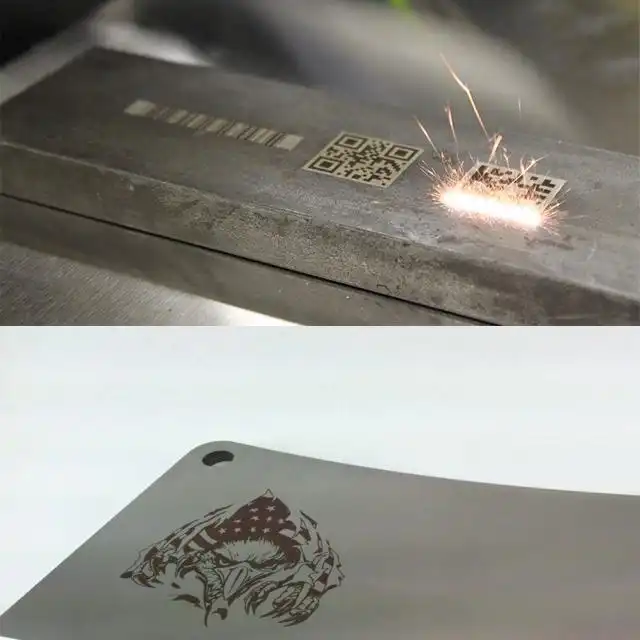
Marking is not the same as carving or etching in terms of depth and loss of material. Marking changes the color or pattern of the surface without going too deeply, so the structure stays intact. When you engrave, you remove material to make lines that you can feel. When you etch, you make shallow holes. Each method is used for a different reason: annealing makes stainless steel stand out by adding a dark contrast without harming the protected coatings; ablation removes paint or anodizing to show the base metal; and foaming makes plastics have raised marks.
Key Applications Across Industries
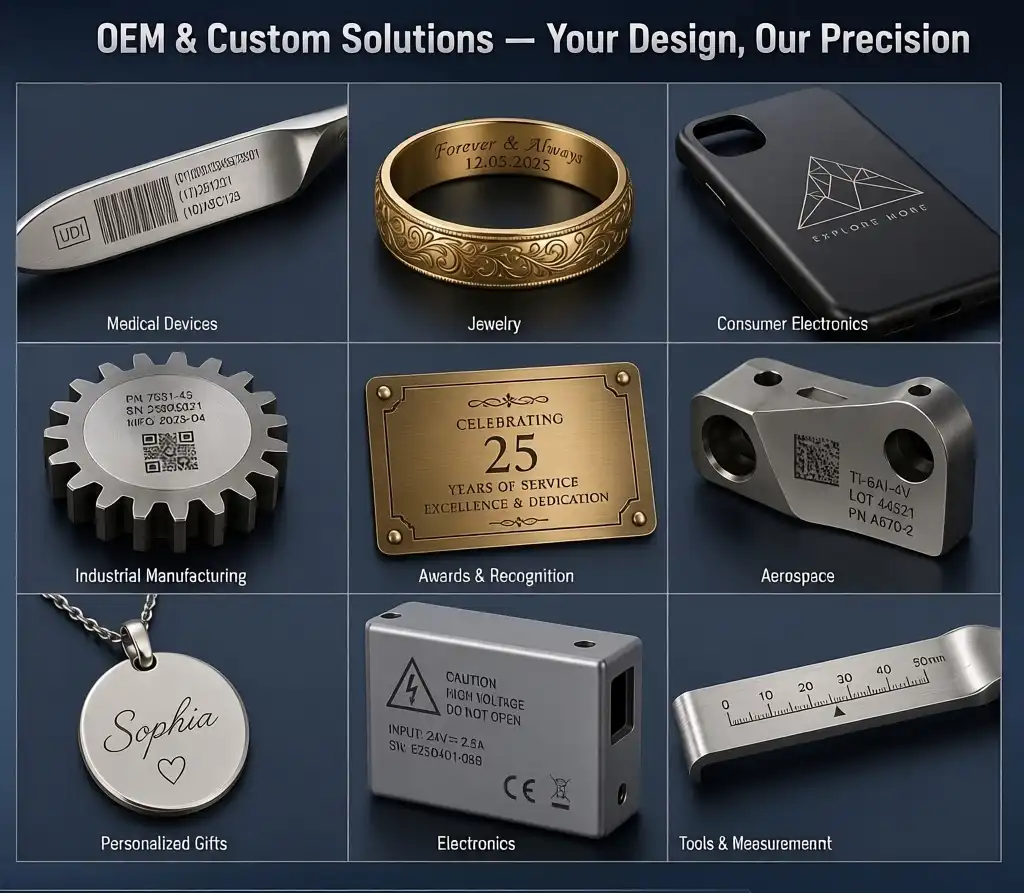
Fiber systems are used by auto and aerospace companies to track important parts through production and repair processes. Traceability rules are followed by putting permanent part numbers and batch tags on engine blocks, turbine blades, and safety-critical bolts. Electronics companies put QR codes on printed circuit boards and chip packages so that customers can track their warranties and avoid fakes. Medical device companies put UDI numbers on surgery tools and implants to follow FDA rules. At speeds of more than 600 items per minute, packaging lines put lot numbers and expiration dates on bottles, cans, and boxes.
Lasers are grouped by amount of danger in safety standards like EN 60825-1. Class 4 systems, which are popular in factories, need enclosed workspaces with doors that lock and warning signs to keep people from getting their eyes or skin exposed. Checking the beam routes, cleaning the lenses, and making sure the galvanometer is calibrated are all part of routine maintenance. When you buy from approved providers, you can be sure that you can access training programs that cover lockout-tagout procedures, proper ventilation for fume extraction, and emergency shutdown protocols. These programs will help you avoid accidents and downtime at work.
Comparing Laser Marking Machines for Small vs. Large Businesses
Small businesses care about flexibility and cost savings with a small laser marking machine. Desktop 20W fiber units fit on countertops and handle diverse jobs without occupying floor space for a small laser marking machine. Portable models with flexible arms let workers mark large items onsite, eliminating custom fixturing needs for a small laser marking machine. Entry-level small laser marking machine systems start in the mid-four-figure range, balancing price and performance for jewelry shops, prototype labs, and contract engraving services. Low power consumption and minimal maintenance reduce operating costs for a small laser marking machine, while user-friendly software aids non-technical operators.
Throughput and technology are important to large businesses. With the help of robotic arms, vision systems, and moving lines, industrial systems can mark thousands of units an hour without any help from a person. High-wattage sources (30W, 50W, or more) can quickly and deeply engrave tough steels and thick coats. Continuous job cycles in harsh settings can be handled by redundant cooling loops and ruggedized enclosures. Network connection through advanced control interfaces allows for centralized production tracking, statistical process control, and distant diagnostics, which reduces the number of unplanned stops.
Fiber vs. CO2: Performance and Economics
Fiber lasers are used a lot in metalworking because their beam quality is better and their electro-optical conversion efficiency is higher than 30%, while CO2 tubes' efficiency is only 10%. With solid-state diode pumps, you don't have to replace flashlamps, so you can go longer between service times. CO2 systems can still be used with organic surfaces and thick acrylic, but the total cost of ownership goes up because they need to be serviced more often and use more expensive energy. Fiber galvanometers can read at speeds of 7,000 mm per second or faster, which makes it possible to work twice as fast on complex patterns.
New technologies introduced in 2024 include 3D dynamic focusing heads that keep sharp marks on curvy surfaces like cylinders, hemispheres, and contoured molds without the need for human refocusing. AI programs improve pulse parameters in real time, taking into account changes in the reflection or thickness of the material. Copper and gold absorb light better with green laser sources at 532 nm. This is important for electronics and high-end goods. These improvements let people in charge match the machine's skills to changing production needs, from small runs of prototypes to large orders of a million units.
How to Select the Best Laser Marking Machine for Your Business?
Material research is the first step in picking out the best tools. Fiber systems can work with both iron and non-iron metals, as well as industrial plastics like polycarbonate and ABS. Flexible circuits, glass bottles, and rubber keypads can all be used with UV lasers. Different types of CO2 deal with leather, papers, and coated sheets. By looking at your material portfolio, you can make sure that they work with each other and avoid costly mistakes.
The amount of production determines the speed and duty cycle needs. Marking 50 pieces every day lets a single shift run on a small amount of power. When you sell more than 500,000 units a year, you need industrial-grade platforms with multiple parts and automatic loading. The level of accuracy is important. For example, medical implants need consistency of ±10 microns, but packaging can handle ±50 microns. Performance gaps can be avoided by setting these values up front.
Reliability, Warranty, and Support
The mean time between failures (MTBF) shows how reliable something is. Industrial units have a 30,000-hour MTBF because their parts are thermally stable and they don't vibrate. Models at the lower price range come with a one-year warranty, while systems at the higher end offer two or three years of coverage with the choice of a service plan. Full help includes setting up the equipment on-site, teaching operators, and quick access to spare parts. OEM relationships and local dealers can help you with jig design, software training, and compliance paperwork that are specific to your business.
Customer reviews for laser marking machines show how things really are. Procurement platforms and industry groups collect comments on software usefulness, service speed, and uptime for laser marking machines. Pricing options include outright purchase, lease-to-own, and pay-per-mark plans for new businesses. Professional installation ensures proper grounding, ventilation, and network setup for laser marking machines. Long-term maintenance agreements include scheduled preventive visits, calibration checks, and priority technical support, maximizing uptime and return on investment for laser marking machines.
Top Laser Marking Machines in 2026: Features and Use Cases
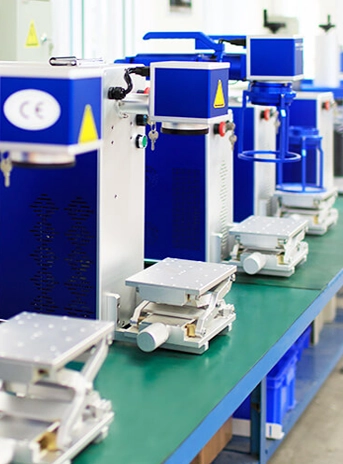
Perfect Laser's 20W Tabletop Mini Fiber Laser Marking Machine (Model PEDB-100A) is a great example of a versatile, low-cost option for small companies. This small unit has a 1064 nm fiber laser source built into an integrated design that makes it both portable and strong. Here are some of the best things about this device:
1. Adjustable Architecture: The laser path and column can be taken apart for storage, which lets workers change the position of the markings on the spot. This adaptability lets shops work with a range of part shapes, from flat nameplates to cylindrical shafts, without having to buy extra tools.
2. Optical Excellence: The high-quality laser source keeps the power level the same across the beam shape, so the mark depth stays the same from edge to edge. When painting polished metals, high reflection resistance saves the optics and output stability keeps the contrast from fading or changing over long runs.
3. User-Friendly Controls: Software that works with Windows can accept DXF, PLT, AI, JPG, and BMP files, so graphic artists can post logos without having to worry about changing the file format. Sequential numbering and date stamps are done automatically by batch processing, which makes the job of the user easier.
Galvanometer precision in industrial laser marking systems features a metal-bodied double red-light scanning head that stops temperature shift. Red-light indicators built into industrial laser marking systems make setup easier by showing markings before the laser fires. Industrial laser marking systems offer upgrade paths to high-speed digital galvanometers, protecting the investment when production scales up. These precision components ensure consistent mark quality across high-volume manufacturing environments for industrial laser marking systems.
These benefits make it easier to make things like electronics, where tiny parts need to be placed exactly right, and jewelry, where lines on silver or gold need to be almost transparent to keep the jewelry's aesthetic value. The system's small size fits on a 500 mm × 500 mm benchtop, making it perfect for workshops in cities that don't have a lot of floor room. Stainless steel, iron, copper, aluminum, and industrial plastics like PC and ABS are all compatible with each other. This is useful for a wide range of industries, from making car parts to making gifts.
Industrial-Grade Solutions for High-Volume Operations
Large businesses can benefit from 50W fiber platforms that have rotary clamps for cylindrical parts, automatic feeds for small parts, and built-in vision systems that match marks to features that are already there. Shipbuilders use deep carvings that don't rust in saltwater to mark hull plates and bulkheads, and semiconductor makers use etching to make wafer IDs with a detail of just a few microns. Aerospace companies use numbered codes that can stand up to high temperatures and vibrations to track turbine blades. Case studies show that non-contact processing increases output by more than 40% compared to dot-peen or chemical etching methods and lowers the number of defects.
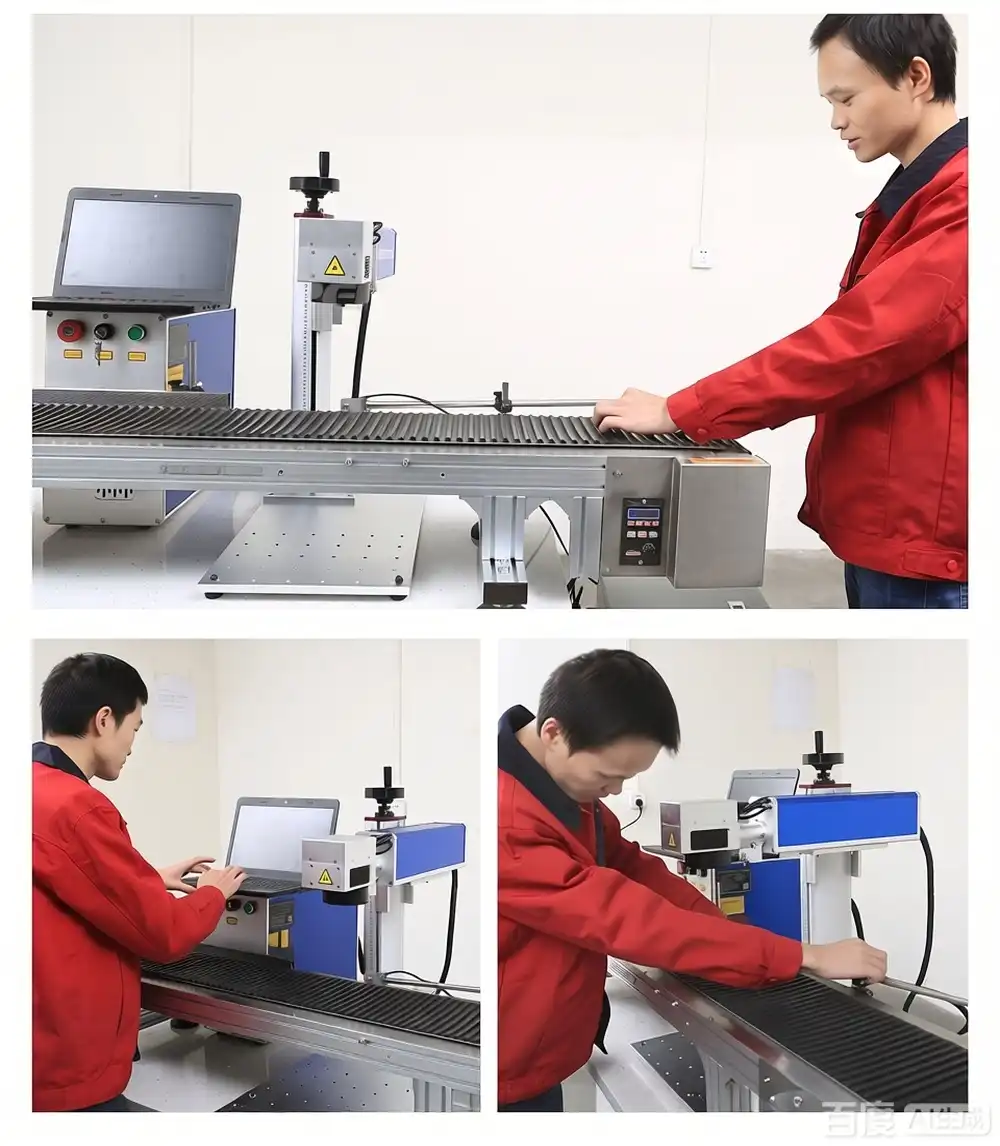
Scalability can be seen in real-world deployments. A precision electronics company combined a two-head fiber system with automatic pick-and-place, which allowed them to mark 2,000 circuit boards per shift without having to do any touch-up work. A high-end watch company used a low-power UV system to engrave on sapphire crystal, making lines 5 microns wide, which are unnoticeable to the naked eye but can be read with a magnifying glass. These examples show how useful benefits can be used to meet different business needs, such as making prototypes more flexible and making mass production more efficient.
Conclusion
When you buy laser marking machines that are right for your business, you gain long-lasting competitive benefits. Small businesses can be more flexible when they use portable, low-cost fiber devices that give them professional results without the need for expensive equipment. By using automated platforms designed for ongoing service, large producers get output and traceability that can't be beat. By looking at material fit, throughput needs, and support communities, you can make sure that the choice you make meets both current needs and plans for future growth. Permanent laser marks get rid of consumable trash and make compliance easier as regulations get stricter on product tracking and sustainability. When you work with experienced providers who know the specifics of your industry, like the strict certifications needed in flight or the aesthetic concerns of jewelry, you can turn technology acquisition into a strategic tool for quality, efficiency, and brand differentiation at every stage of the product lifecycle.
FAQ
1. What materials can laser marking machines process?
Metals like stainless steel, aluminum, titanium, brass, and harder tool steels can all be marked with fiber systems. Plastics like ABS, polycarbonate, and PEEK can also be marked. Glass, pottery, flexible circuits, and heat-sensitive plastics can all be worked with by UV lasers. Different types of CO2 can work with coated surfaces, leather, wood, and plastic. Material testing makes sure that the right factors are used for your alloys or formulas.
2. How do fiber and CO2 technologies differ?
Fiber lasers use solid-state diodes and bands of 1064 nm. They are more efficient, last longer, and work faster on metals. CO2 lasers use gas-filled tubes to send out infrared light with a wavelength of 10,600 nm. These lasers work well with biological materials but need to be refilled more often and use more power. Fiber systems are used a lot in industrial welding, and CO2 is still useful for packing and signs.
3. What safety measures must operators follow?
Class 4 lasers need enclosed workspaces with doors that lock and unlock, beam stops, and warning signs. Operators wear glasses or contacts that are rated for the frequency of the laser. Fume extraction gets rid of gaseous matter, which is good for your lungs. To keep people from getting accidentally exposed, training includes lockout-tagout processes, emergency shutdown, and maintenance practices.
Transform Your Marking Capabilities with Perfect Laser
With custom fiber and UV laser marking options, Perfect Laser is ready to help you improve the accuracy and speed of your industrial processes. We've been sending CE-certified equipment backed by TUV and SGS qualifications to over 60 countries since 1995. This gives you a way to measure how reliable our equipment is. Our 20W Tabletop Mini Fiber system is a great example of how small businesses need to be cost-effective, and our industrial platforms can be easily expanded to create automatic lines for big names in aerospace, cars, and electronics. Get in touch with our knowledgeable gurus at [email protected] to talk about your material needs, throughput goals, and interface needs. We can make packages that fit your business's needs, whether you need a laser marking machines seller with flexible finance, demo units for proof-of-concept tests, or full two-year warranties with 24-hour expert support. Get reasonable quotes from Perfect Laser right away, and find out why buying teams all over the world trust our OEM partnerships to make adoption easy and performance last.
References
1. Smith, J. R., & Thompson, L. M. (2023). Industrial Laser Systems: Technology and Applications. Advanced Manufacturing Press.
2. Chen, Y., Rodriguez, A., & Patel, K. (2024). "Comparative Analysis of Fiber and CO2 Laser Marking Performance in Metal Processing." Journal of Manufacturing Technology, 45(3), 217-234.
3. European Committee for Standardization. (2022). EN 60825-1:2022 Safety of Laser Products – Part 1: Equipment Classification and Requirements. Brussels: CEN Publications.
4. Williams, D. E. (2023). Precision Manufacturing: Laser Marking and Traceability Solutions. Technical Insights Publishing.
5. National Institute of Standards and Technology. (2024). Guide to Laser Safety in Industrial Environments. U.S. Department of Commerce.
6. Anderson, M. K., & Liu, H. (2024). "Emerging Trends in 3D Laser Marking Technology for Complex Surface Applications." International Review of Advanced Manufacturing, 12(1), 88-105.

share your inquiry, get the quotation accordingly.
第一张审核员说包含其他公司不能用_1755049724891.webp)
Perfect Laser – Global Manufacturer of Reliable Laser Solutions