Why Subsurface 3D Laser Engraving is the Gold Standard for 3D
When subsurface laser engraving machines are observed in operation, it becomes clear that a major shift is taking place in how precision goods are manufactured. Surface etching typically damages the outer layer of a material through burning or scratching. In contrast, this technology creates detailed three-dimensional images deep within transparent materials without affecting the surface at all. The subsurface laser engraving machine works by directing a high-intensity laser beam beneath the material’s surface, forming controlled micro-fractures that generate intricate designs while preserving the material’s strength and appearance. This capability has transformed how industries approach branding, customization, and part identification.
Understanding Subsurface 3D Laser Engraving Technology
How the Technology Penetrates Material Surfaces?
Precise control of the laser's focus point is the core principle behind subsurface etching. When discussing this technology with procurement managers, it is often described as creating tiny air bubbles inside crystal or glass. The laser beam concentrates its energy at a specific depth while passing through the material's surface without causing damage. At the focal point, intense heat forms microscopic cavities, or “dots,” that stand out against the transparent background. By arranging thousands of these dots in a precise three-dimensional pattern, the machine produces complex images that appear to float inside the material.
Key Components Driving Precision Performance
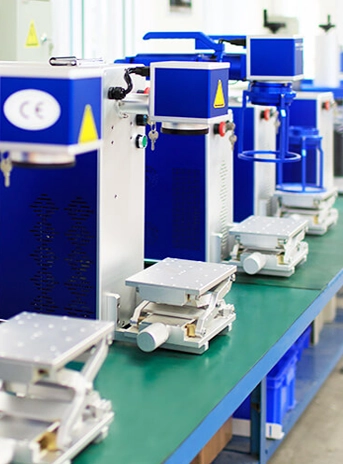
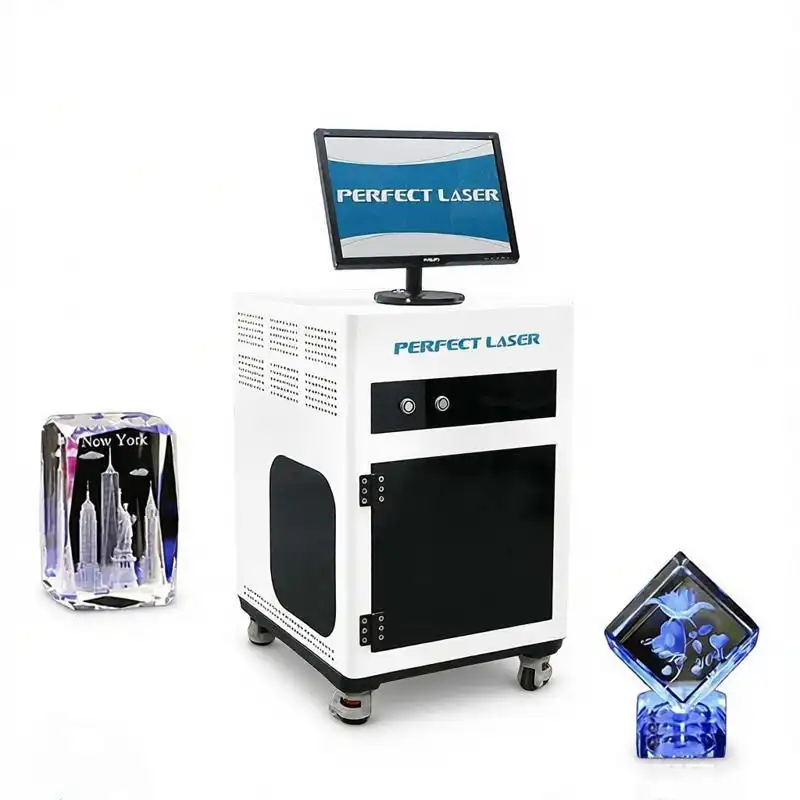
Several important parts are built into modern subsurface laser engraving machines. With its carefully built high-power diode pump laser system, the Perfect Laser PE-DP-C1 model is a good example of this combination. The high-precision motion control system makes sure that every engraving dot falls exactly where it's supposed to, and the automatic laser placement system keeps track of the optical path at all times. Pulsed laser power constant technology makes sure that the same amount of energy is delivered all the way through the engraving volume, which directly leads to the same picture quality. The flexible design of the equipment I've seen makes it easy to maintain and allows it to run continuously 24 hours a day, which is necessary in high-volume production settings.
Material Compatibility and Practical Limitations
Crystal is still the best material for subsurface etching because it is clear and has a uniform density. Glass works really well, but the effects can be different depending on the makeup. Acrylic is cheap and doesn't weigh much, which makes it perfect for bigger displays. When I talk to business-to-business clients, I stress that the end results are affected by the width of the material, its optical quality, and its internal stress. The results of experiments with materials that have bubbles, particles, or uneven densities are hard to predict. The technology only works with materials that are clear or almost clear. Materials that are dark just soak up the laser at the top and don't let it focus on the inside.
Why Subsurface 3D Laser Engraving Outperforms Traditional Engraving Methods?
Protection from Physical Wear and Environmental Damage
Surface etching has a basic weakness it is open to the elements Any mark you put on the outside of something can be scratched worn away or broken down chemically A 3d laser engraving machine creates subsurface designs that stay safe inside the material itself forever I have seen crystal awards etched by a 3d laser engraving machine ten years ago still looking brand new because the pattern lies below an untouched surface This protection proves invaluable for valuable items where preserving appearance directly correlates with perceived worth A 3d laser engraving machine offers particular benefit to the jewelry industry where intricate branding or authenticity marks remain legible indefinitely.
Achieving Unmatched Design Complexity and Depth Perception
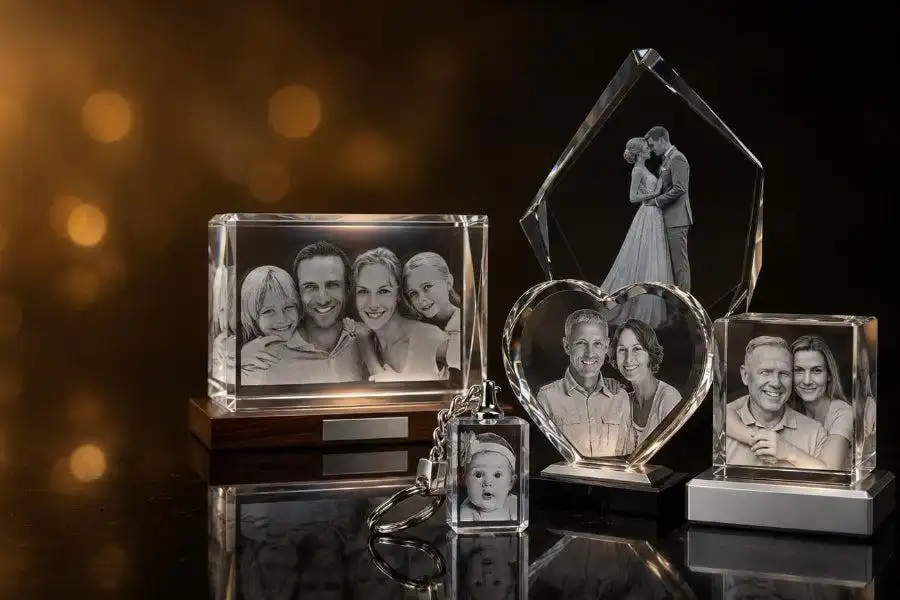
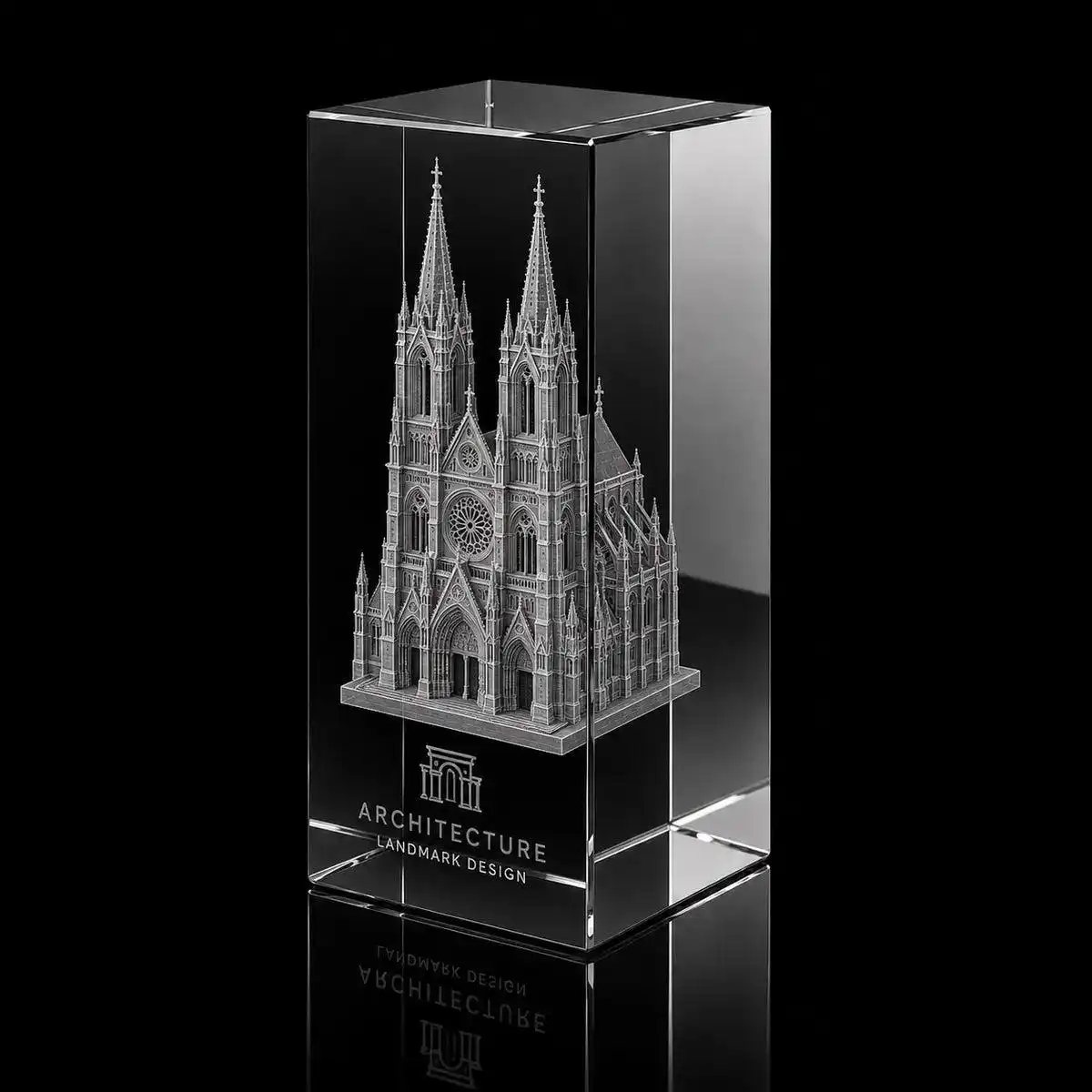
In traditional etching, there aren't many changes in depth between the two dimensions. The subsurface laser engraving machine gives designs real three-dimensional room. When you look at a well-done subsurface carving from different angles, things seem to move around in relation to each other. This is true parallax, which our brains read as depth. With this skill, you can be creative in ways that you can't with surface methods. I've seen samples of products that had all the internal mechanical details perfectly modeled, models of buildings that showed different floor levels clearly, and portrait carvings that looked so real that they could show the smallest details of people's faces.
Highly advanced image processing techniques are used by Perfect Laser to turn 2D photos into 3D coordinate maps. The "zero width" splicing technology gets rid of seams that can be seen when combining different engraving parts. This makes it possible to do large-format work up to 120x120x100mm without any breaks. This technology success gives the company a big edge in the market for high-end gifts.
Case Applications Demonstrating Industry Leadership
Take the wedding photography business as an example. As a high-end keepsake, companies offer 3D crystal photos. The subsurface laser engraving machine does a great job of capturing a couple's picture, making keepsakes that will last much longer than printed photos. This technology is used by tourist spots to make gifts that are unique to that place, like crystal cubes with tiny versions of sites engraved inside them that people love. Crystal awards with company logos and success details that are kept internally forever have become the norm in corporate honor programs. These awards project a sense of quality and permanence that fits with the company's values.
Choosing the Right Subsurface 3D Laser Engraving Machine for Your Business
Evaluating Machine Specifications Against Production Requirements
To choose the right tools, you need to be honest about what your operating needs are. I help my clients make decisions about a number of things, starting with the amount of output. Businesses that make less than 50 items a week might do well with a laptop setup, but tourist shops that take hundreds of orders every day need industrial-capacity systems. The laser's power decides how fast it can work and how thick of a material it can etch. The PE-DP-C1 uses high-power diode pump laser technology that can be used for both quick production runs and more detailed work that needs more time to be exposed.
The ability to be precise is very important. The precision of the motion control system has a direct effect on how sharp the picture is and how well the dimensions are met. When engraving pictures of people, even small mistakes in placement can change the way the faces look, and customers notice right away. I suggest systems with closed-loop placement that check and fix head location all the time. The automatic laser placement feature in high-quality machines fixes any temperature drift that happens during long periods of use, so the results are the same from the first piece to the thousandth.
Comparing Desktop and Industrial Configurations
Businesses testing markets can use desktop 3D crystal engraving machines for crystals up to 100mm, ideal for retail or events. Industrial 3D crystal engraving systems feature multiple laser heads and auto loading for 24/7 production. Perfect Lasers modular design simplifies repairs. When evaluating industrial configurations for 3D crystal engraving, consider warranty, parts availability, and technical support factors affecting total ownership cost beyond purchase price
Procurement and After-Sales: Ensuring Smooth Acquisition and Use
Identifying Reliable Subsurface Laser Engraving Machine Suppliers
The first step in the buying process is to qualify the suppliers. I tell my clients to check badges that show they meet safety and performance standards. Find Reliable Suppliers of subsurface laser engraving machines. The laser cutting, marking, and engraving tools made by Perfect Laser is CE certified. The company's quality control methods are also TUV and SGS certified. These certificates show that the company tests its goods independently and keeps production standards consistent.
Check to see what other technical skills the seller has besides selling tools. Perfect Laser has 63 patents covering different laser technologies and runs two research and development labs. This ability to innovate means that the company isn't just sticking to fixed designs for its goods; instead, it's always making them better. Longevity is important for suppliers. Perfect Laser has been in business since 1995, which shows that the market is stable and that they have gained experience that younger companies don't have.
Service coverage by geography affects the level of help. Suppliers who have been in your area for a while can respond more quickly and better understand the rules and regulations in your area. Perfect Laser has exported to Germany, Japan, Italy, Russia, South Korea, Turkey, Brazil, India, and the United Arab Emirates. This shows that they can handle foreign operations and meet the needs of a wide range of markets.
Securing Comprehensive After-Sales Support
The buying of equipment is only the start of the business connection. During talks, I stress the terms of the guarantee because I know that full coverage lowers the risk to my finances. Perfect Laser's two-year warranty on marking machines goes above and beyond what is required by the business. The one-year guarantee for larger equipment is more in line with what is normal. If you know what these guarantees cover—parts, labor, on-site service, or repair at the depot—you can avoid costly mistakes.
The provision of technical support has a direct effect on the uptime of operations. Perfect Laser's online service is available 24 hours a day, 7 days a week. This way, any problems that come up during night shifts or weekend production runs are fixed right away. When I'm looking at support options, I test reaction times by sending technical questions before I buy something and seeing how quickly and fully the supplier answers them. This easy task can often tell you more about the level of help than any marketing materials could.
Training classes help your team get the most out of the tools they have. Comprehensive training includes how to use the software, do simple repairs, and run the machine. Modern subsurface laser engraving machines have a "one-click" control system that makes them easier to use and lessens the chance of mistakes that come from doing things by hand. Even if the design is easy to use, proper training speeds up skill development and stops mistakes that cost a lot during the learning curve.
Future Outlook and Industry Trends in Subsurface 3D Laser Engraving
Technological Advancements Expanding Capabilities
New technologies in 3D crystal engraving are making things possible in more ways. The 3D crystal engraving industry keeps changing quickly. Main goals of current 3D crystal engraving research are to speed up engraving without lowering quality, expand material compatibility, and simplify robotics integration. AI-assisted design optimization for 3D crystal engraving analyzes three-dimensional models and determines optimal laser settings for each material region. This intelligence lowers expertise requirements for 3D crystal engraving, enabling operators to achieve expert-level results faster.
Improvements to laser source technology make it possible to put more power into smaller packages while using less energy. These improvements raise productivity while lowering running costs. The pulse laser power constant technology used in high-quality machines like the PE-DP-C1 is the best way to do things right now. But new laser designs offer even better energy control, which will let you use different materials and create new effects.
Market Expansion Into Emerging Applications
Subsurface etching is being used in new ways in industry, in addition to its traditional uses in gifts and souvenirs. I've talked to aerospace companies about finding ways to mark internal parts that can withstand high temperatures and harsh conditions. Medical gadget makers are looking into safe crystal parts that have tracking information built in. For these specific uses, subsurface technology is needed because it is permanent and doesn't pollute.
The car industry looks at internal engraving for luxury vehicle trim parts, which are clear parts with brand logos or model names moving inside plastic or glass panels. Companies that make consumer goods are looking at this technology as a way to make their high-end products stand out by adding unique design features that can't be made any other way. As production costs go down and machine capabilities grow, I expect fixed, protected marking options to continue to gain market share across all businesses that value them.
Conclusion
Experience with industrial laser systems shows that subsurface technology consistently delivers advantages that justify its reputation as the gold standard for three-dimensional etching. Subsurface laser engraving machines are essential for businesses seeking differentiation and high-quality competition, as they protect designs from environmental damage while maintaining permanent clarity. As the technology continues to advance and become more cost-effective, adoption is expected to increase as more businesses recognize the long-term value of permanently embedding information and artwork into materials. With strategic procurement guidance, B2B buyers can more easily evaluate suppliers, match technical specifications, and secure appropriate support services, ensuring that their equipment investment delivers sustained competitive advantage.
FAQ
1. What makes subsurface engraving different from surface laser marking?
Laser etching below the surface of a material makes designs inside it without changing the outside. The focused laser beam goes through the surface of the material and focuses its energy at a certain depth. This creates tiny holes that are what you can see as the design. Surface printing takes away or changes the color of things on the outside. The main difference is protection: carvings that are below the surface are protected by the material around them and can't be worn down like surface marks can.
2. Which materials work best with subsurface laser engraving machines?
What kinds of things do subsurface laser engraving machines work best with? Crystal gives the best results because its optical qualities are constant and it is clear. Good glass works really well, especially lead crystal and optical glass types. Acrylic offers cheaper options for bigger projects and needs that need to be lighter. Choosing the right material relies on what it will be used for. For example, crystal is best for high-end gifts, glass is best for building elements, and acrylic is best for signs and displays.
3. How long do subsurface laser engraving machines typically last?
How often and how well you maintain your equipment have a big impact on how long it lasts. With the right care, good tools like the PE-DP-C1 that are built in modules and have closed-loop control systems usually last ten years or more. The laser source is the part that wears out the fastest. Depending on power levels and job cycles, it can last anywhere from 10,000 to 50,000 hours of operation.
Partner with Perfect Laser for Your Subsurface Laser Engraving Machine Needs
Picking the correct subsurface laser engraving machine maker determines how well your production goes and how much money you make in the long run. Perfect Laser has been working with lasers for 30+ years and has 63 patents and a lot of certifications, such as those from CE, TUV, and SGS. Our PE-DP-C1 model has the best engraving technology in the world. It has automatic placement, pulse laser power constant systems, and "zero width" splicing, which means that there are no obvious lines in large-format work.
The modular design makes upkeep easy and allows for 24-hour continuous running in high-volume production settings. We offer in-depth consultations that look at your unique production needs, material preferences, and price limits in order to suggest the best configurations. In addition to delivering equipment, we also offer full training, expert help 24 hours a day, and a strong warranty. Contact Perfect Laser at [email protected] right away to talk about your project needs and get sample prints that show how consistently high-quality our subsurface laser engraving machines are.
References
1. Anderson, M. & Thompson, R. (2022). Advanced Laser Engraving Technologies: Principles and Industrial Applications. Manufacturing Technology Press.
2. Chen, L. (2023). "Subsurface Laser Marking in Transparent Materials: Process Optimization and Quality Control." Journal of Laser Applications, 35(2), 142-158.
3. European Laser Institute. (2021). Safety and Best Practices for Industrial Laser Systems. Brussels: ELI Publications.
4. Harrison, P. (2023). Precision Manufacturing with Laser Technology: A Procurement Guide for B2B Decision Makers. Industrial Press Inc.
5. International Society for Optical Engineering. (2022). "Three-Dimensional Laser Engraving: Material Science and Engineering Perspectives." Proceedings of SPIE, Vol. 12145.
6. Williams, S. & Rodriguez, J. (2024). The Business Case for Advanced Engraving Technologies in Luxury Goods Manufacturing. Market Analysis Group.

share your inquiry, get the quotation accordingly.
第一张审核员说包含其他公司不能用_1755049724891.webp)
Perfect Laser – Global Manufacturer of Reliable Laser Solutions