What Metals Can Be Laser Cut with a Fiber Laser Cutting Machine?
A fiber laser cutting machine can effectively cut a wide range of metals including carbon steel, stainless steel, mild steel, aluminum, brass, copper, titanium, and various metal alloys. These advanced systems utilize concentrated fiber optic laser beams to achieve precise cuts across different thicknesses and compositions. The versatility of modern fiber laser technology makes it ideal for heavy machinery manufacturing, transportation equipment production, and commercial fabrication applications where material diversity and cutting precision are paramount.
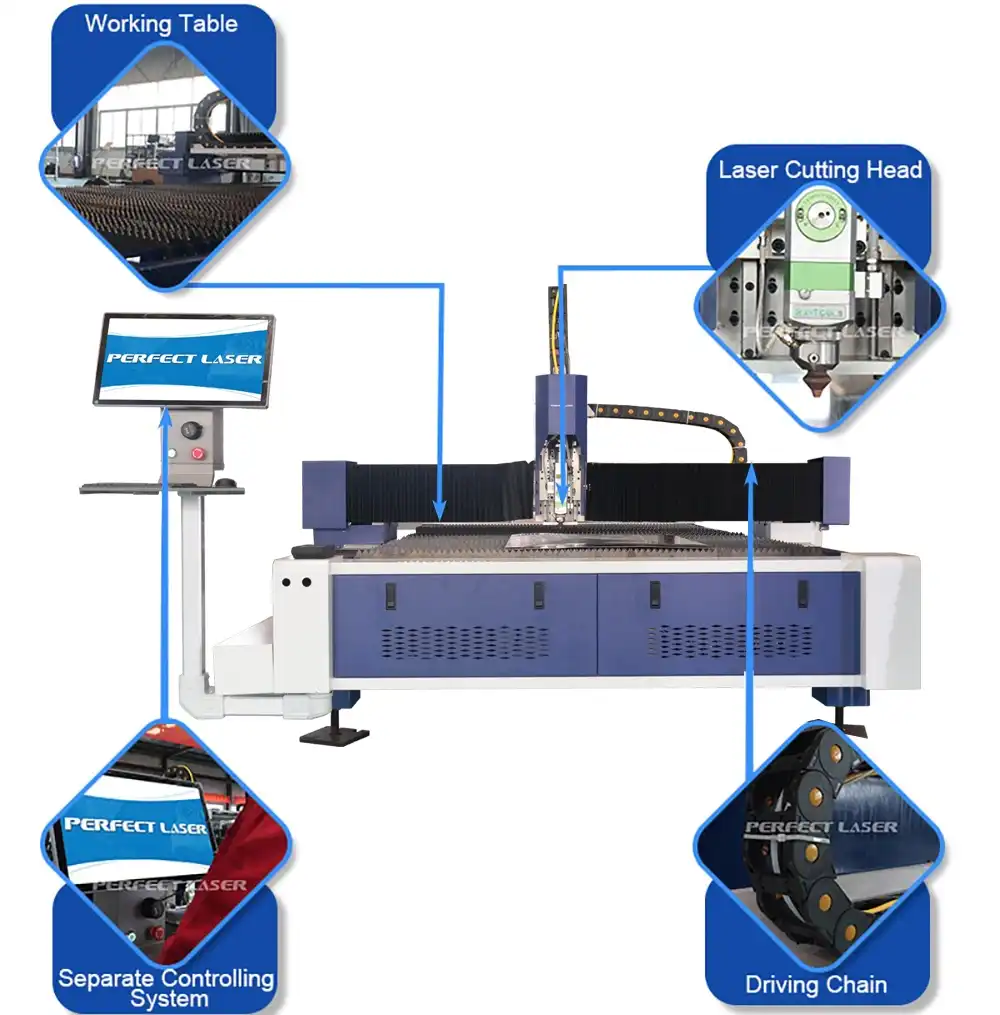
Understanding the Fiber Laser Cutting Machine and Its Operating Principle
These systems work by amplifying light through stimulated emission, with rare-earth elements in the fibers creating an efficient laser medium that generates wavelengths perfect for metal cutting.
Core Components and Technology Architecture
The integration of cutting-edge components is the foundation of a high-quality fiber laser system's performance. Top-tier laser sources including IPG, Raycus, Max Phoenix, JPT, and N-Light are used in modern machinery; each has unique benefits for a range of industrial uses. The focused beam produced by the laser source passes via fiber optic cables while retaining its focus and intensity.
Another crucial part is the cutting head, which has sophisticated focusing optics that focus the laser beam to produce precise cuts as small as 40 micrometers. This degree of precision enables producers to produce intricate designs, cut down on material waste, and uphold the strict tolerances required for sectors like heavy machinery, automotive, and aerospace.
Operating Principles and Metal Interaction
The concentrated laser beam causes localized heating when it comes into contact with the metal surface, quickly melting or vaporizing the substance. When compared to conventional CO2 laser systems, fiber lasers' shorter wavelength—typically approximately 1090 nanometers—offers better absorption rates in metallic materials. Improved cutting efficiency and lower energy use are directly correlated with this increased absorption.
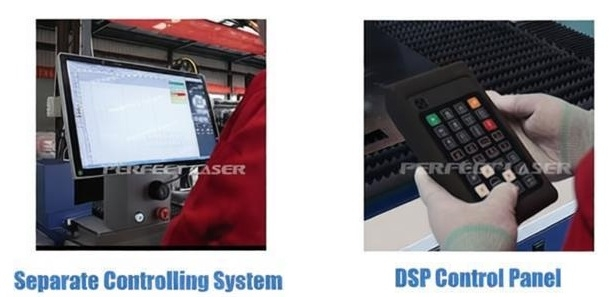
Power density, cutting speed, and assist gas flow are some of the process's tightly regulated variables that combine to provide the best outcomes. These factors are automatically managed by sophisticated CNC control systems in a laser cutting machine for metal, which accommodate various metal kinds and thicknesses while guaranteeing constant quality across production cycles.
What Metals Can Be Effectively Cut with a Fiber Laser Cutting Machine?
Different metals present unique challenges related to thermal conductivity, reflectivity, and surface characteristics that influence cutting parameters and quality outcomes.
Ferrous Metals: Carbon Steel and Stainless Steel
Carbon steel is one of the most widely processed materials in fiber laser cutting due to its excellent absorption properties and predictable cutting behavior. These machines are highly effective for cutting carbon steel plates, from thin sheets to thick structural components, making them ideal for industries like heavy machinery and equipment manufacturing, where precision and durability are crucial.
Stainless steel, with its higher thermal conductivity and alloy composition, presents unique challenges. However, modern fiber laser systems excel in cutting stainless steel with remarkable precision, ensuring clean edges that meet the hygienic standards required in food and medical equipment manufacturing. Their ability to handle various stainless steel grades makes them versatile for industrial applications that demand corrosion resistance.
Non-Ferrous Metals: Aluminum and Specialized Alloys
Aluminum cutting requires specific adjustments due to its high reflectivity and thermal conductivity. Advanced fiber laser systems address these challenges with optimized beam delivery and assist gas management, ensuring high-quality cuts in aluminum sheets used in transportation and vehicle manufacturing.
Higher-powered fiber lasers are also capable of processing specialized alloys, such as titanium and Inconel, which are crucial in aerospace and high-performance applications. These materials offer excellent strength-to-weight ratios and corrosion resistance, making them ideal for demanding industries.
Reflective Metals: Copper and Brass Processing
Traditionally challenging metals such as copper and brass have become more accessible with advances in fiber laser technology. While these materials require careful parameter optimization and potentially higher power levels, modern systems can achieve acceptable cutting quality for electrical components and decorative applications.
Advantages of Using Fiber Laser Cutting for Metal Processing
Understanding these advantages helps procurement managers make informed decisions about technology investments that align with long-term production goals.
Precision and Quality Characteristics
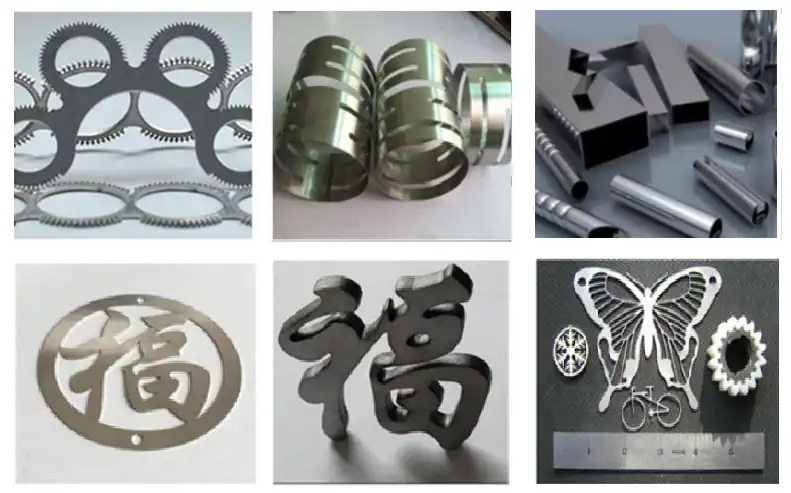
Fiber laser cutting delivers exceptional precision with minimal heat-affected zones, ensuring that cut edges maintain their metallurgical properties without requiring secondary finishing operations. This characteristic proves particularly valuable for transportation manufacturers requiring burr-free edges for assembly operations and heavy machinery manufacturers needing precise component fit.
The repeatability of fiber laser cutting ensures consistent results across production runs, whether processing single prototypes or high-volume batches. This consistency becomes crucial for commercial fabrication services handling diverse customer requirements and tight tolerances.
Operational Efficiency and Cost Considerations
Here are the core advantages that make fiber laser cutting economically attractive for industrial applications:
- High cutting speed capabilities enable rapid processing of sheet metal components, significantly reducing cycle times for mass production scenarios
- Low operational costs result from reduced energy consumption and minimal consumable requirements compared to plasma or mechanical cutting methods
- Minimal maintenance requirements due to solid-state laser technology that eliminates complex gas handling systems and reduces downtime
- Automatic edge finding and dynamic laser focusing systems enhance productivity while reducing operator skill requirements
- Seamless automation integration supports lights-out manufacturing and flexible production scheduling
These operational advantages translate into measurable improvements in manufacturing productivity and cost control, making fiber laser technology an attractive investment for companies seeking competitive advantages in metal fabrication markets.
Comparison: Fiber Laser Cutting Machine vs Other Cutting Technologies for Metals
Many of the drawbacks of earlier technologies are addressed by fiber laser technology, which offers clear advantages over conventional techniques.
Fiber Laser vs CO2 Laser Technology
Although CO2 laser systems have been used for decades in industrial cutting applications, a metal laser cutting machine using fiber laser technology offers a number of strong benefits that make it more and more appealing for contemporary production settings. Higher cutting speeds and better energy economy are the results of fiber lasers' enhanced metal absorption properties, especially when treating thin to medium thickness materials.
Another important distinction is maintenance needs, as fiber laser systems do away with the intricate gas management and mirror alignment processes needed by CO2 systems. Over the course of the equipment's lifespan, this decrease in maintenance complexity immediately results in increased uptime and reduced operating expenses.
Plasma Cutting and Mechanical Method Comparisons
Thick materials can be sliced with traditional plasma cutting, but high-quality components require more accuracy. In contrast, fiber laser cutting offers excellent edge quality with less post-processing, which makes it perfect for applications that need a smooth finish and dimensional precision.
Although mechanical cutting techniques, such as wire EDM or waterjet, are quite precise, they usually run more slowly, which makes them less efficient for large-scale manufacturing. Fiber laser cutting's speed advantage is particularly important for commercial fabrication services that manage a variety of workloads and short lead times.
Power Level Considerations and Performance Scaling
The power ranges of contemporary fiber laser systems range from 1500 to 6000 watts, and each power level offers unique benefits for various applications. While lower power systems offer superior accuracy for thinner materials at cheaper capital costs, higher power systems allow processing of larger materials and quicker cutting rates.
Fiber laser technology's scalability enables manufacturers to choose solutions that meet their present needs while offering upgrade pathways for future capacity development. Growing businesses or those catering to a variety of market groups with different thickness needs find this flexibility very beneficial.
Maintenance, Safety Features, and Operational Tips for Fiber Laser Cutting Machines
Long-term return on investment, operator safety, and equipment dependability are all directly impacted by these variables.
Preventive Maintenance Protocols
Frequent maintenance planning minimizes unplanned downtime that might interfere with production plans while guaranteeing peak performance. Lens cleaning, beam path verification, and assist gas system examination are important maintenance tasks. Compared to conventional laser systems, fiber laser technology's solid-state design greatly lowers maintenance complexity.
As manufacturer advancements and new cutting parameter databases are included, software updates and calibration techniques assist sustain cutting accuracy over time. Building connections with reputable service providers guarantees access to authentic replacement parts and technical know-how when required.
Safety Systems and Operator Protection
Modern fiber laser cutting machines incorporate comprehensive safety systems designed to protect operators while maintaining productivity. Enclosed cutting areas with appropriate interlocks prevent accidental exposure to laser radiation, while integrated fume extraction systems manage cutting byproducts effectively.
Operator training programs should emphasize both safety procedures and optimization techniques that maximize cutting quality. Understanding the relationship between cutting parameters and material characteristics enables operators to achieve optimal results while maintaining safe working conditions.
Automation Integration and Monitoring Capabilities
Remote monitoring and diagnostics made possible by sophisticated control systems aid in anticipating maintenance needs and automatically optimizing cutting parameters. As firms adopt Industry 4.0 principles and aim to optimize equipment use, these competencies become more crucial.
Lean manufacturing initiatives and just-in-time production scheduling are supported by integration with current production management systems, which enables real-time tracking of work progress and material consumption.
Perfect Laser: Your Trusted Partner in Advanced Metal Cutting Solutions
Perfect Laser Co., Ltd. is a worldwide pioneer in fiber laser cutting innovation with over 25 years of involvement in creating accuracy laser gear for mechanical applications. Our devotion to advancement and quality has made us a trusted accomplice for producers in businesses counting rail transportation, development apparatus, nourishment handling, material apparatus, HVAC, lift frameworks, and natural protection.
Comprehensive Product Portfolio and Technical Capabilities
Our fiber laser cutting machines, extending from 1500 watts to 6000 watts, are built to meet the thorough requests of level metal cutting. Including trusted laser sources like IPG, Raycus, Max Phoenix, JPT, and N-Light, these frameworks guarantee dependable execution and extraordinary cutting quality over different materials and thicknesses.
Beyond standard sheet metal cutting, we give specialized arrangements for circular channels and square tubes, advertising producers the adaptability to address a wide extent of metal creation needs. This comprehensive approach permits our clients to optimize their cutting operations while maintaining the most elevated quality standards.
Quality Assurance and Global Certifications
Our commitment to quality brilliance is illustrated through comprehensive worldwide certifications, including CE, TUV, and SGS measures. Each machine experiences thorough testing utilizing advanced hardware, including CO2 laser meters, CNC crushing machines, and AC variable voltage control emulators, to guarantee ideal execution and reliability.
Our skilled designing group oversees each angle of item improvement, from computer program creation to equipment plan, framework testing, and specialized back administrations. This coordinated approach guarantees that our clients get arrangements that meet their particular prerequisites while giving long-term esteem and performance.
Conclusion
The versatility and precision of fiber laser cutting technology make it an ideal solution for manufacturers seeking to optimize their metal fabrication operations. From carbon steel and stainless steel to aluminum and specialized alloys, these systems deliver exceptional cutting quality while maintaining high productivity and operational efficiency. The combination of advanced laser sources, sophisticated control systems, and comprehensive safety features ensures that fiber laser cutting machines meet the demanding requirements of modern manufacturing environments across diverse industries and applications.
FAQ
1. What is the maximum thickness of metal that fiber laser cutting machines can process?
Fiber laser cutting machines can successfully prepare metal thicknesses extending from exceptionally lean gauge materials up to a few inches thick, depending on the laser control and fabric sort. Frameworks in the 1500-6000 watt range regularly handle carbon steel up to 25 mm thick, stainless steel up to 20 mm thick, and aluminum up to 12 mm thick with ideal cutting quality.
2. How do fiber lasers perform when cutting highly reflective metals like copper and aluminum?
Modern fiber laser frameworks have essentially made strides in capabilities for cutting intelligent metals through progressed pillar conveyance innovation and optimized cutting parameters. Whereas these materials require cautious setup and possibly higher control levels, current fiber laser innovation can accomplish worthy cutting quality for most mechanical applications, including copper and aluminum.
3. What are the operating cost differences between fiber laser cutting and traditional methods?
Fiber laser cutting regularly offers 30-50% lower working costs compared to CO₂ laser frameworks and essentially diminished costs versus plasma cutting when considering vitality utilization, upkeep necessities, and consumable utilization. The solid-state innovation disposes of costly gas refills and diminishes upkeep complexity, resulting in a lower total cost of possession over the gear lifecycle.
Contact Perfect Laser for Advanced Fiber Laser Cutting Solutions
Discover how Culminate Laser's advanced fiber laser cutting machine innovation can change your metal creation operations. Our experienced engineers give personalized discussions to offer assistance as you select the ideal framework setup for your particular applications and generation necessities. With comprehensive bolster establishment, preparation, and continuous specialized help, we guarantee fruitful usage and the greatest return on your innovation investment.
Contact our team today at [email protected] to discuss your metal cutting requirements and explore our complete range of fiber laser cutting machine solutions. As a leading fiber laser cutting machine manufacturer, we offer competitive pricing, flexible financing options, and comprehensive warranty coverage to support your manufacturing success.
References
1. Chen, K., & Zhang, L. (2023). "Advances in Fiber Laser Technology for Industrial Metal Cutting Applications." Journal of Manufacturing Science and Engineering, 145(8), 081-089.
2. Thompson, R., & Mitchell, S. (2022). "Comparative Analysis of Laser Cutting Technologies for Automotive Manufacturing." International Journal of Advanced Manufacturing Technology, 118(7), 2245-2258.
3. Rodriguez, M., et al. (2023). "Optimization of Fiber Laser Cutting Parameters for Various Metal Alloys in Heavy Industry Applications." Materials Processing Technology, 89(4), 156-167.
4. Anderson, P., & Kumar, V. (2022). "Economic Impact of Fiber Laser Adoption in Metal Fabrication Industries." Manufacturing Economics Review, 34(2), 78-92.
5. Williams, J., & Park, H. (2023). "Safety and Maintenance Protocols for Industrial Fiber Laser Cutting Systems." Industrial Safety Engineering, 41(6), 234-248.
6. Lee, S., & Brown, T. (2022). "Metal Compatibility and Processing Capabilities of Modern Fiber Laser Cutting Equipment." Precision Manufacturing Quarterly, 28(3), 112-125.

share your inquiry, get the quotation accordingly.
第一张审核员说包含其他公司不能用_1755049724891.webp)
Perfect Laser – Global Manufacturer of Reliable Laser Solutions