What Can You Do with a Laser Engraver? Materials and Applications
A laser engraver uses focused laser energy to make very precise marks on objects or to scratch or cut them. This technology either takes away layers of material or changes the way its surface works to make images, text, or complicated patterns that last. Laser engravers provide reliable results across a wide range of substrates and industrial settings, making them essential tools for modern manufacturing and artistic uses. You should know how laser engraving works and what it can do.
Understanding Laser Engraving: How It Works and What It Can Do?
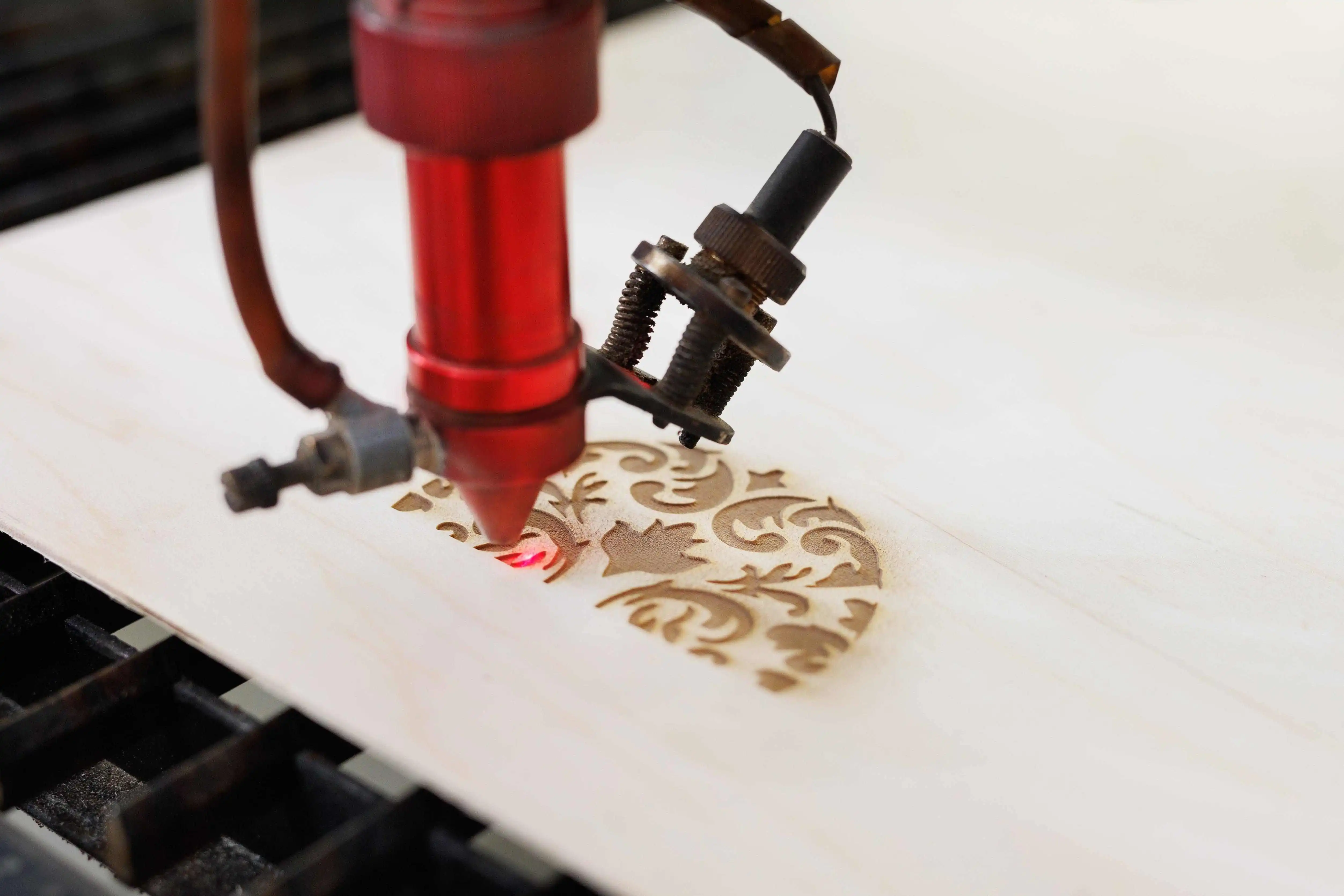
Laser etching works by shining a focused wave of light onto the surface of a material. The energy from the beam heats, evaporates, or changes chemicals in certain areas, leaving lasting marks without touching the surface. This process doesn't wear down tools and can make complicated shapes that are hard to make with other methods.
Key Laser Technologies and Their Strengths
Different kinds of lasers are used for different things. CO2 lasers are great for working with non-metal items like leather, glass, plastic, and wood. At 10.6 micrometers, these devices give off infrared light that organic things can easily take in. Fiber lasers have shorter wavelengths that work well with metals and some plastics. They also work faster and require less upkeep. Diode lasers are small and inexpensive, making them good for hobby projects and lighter-duty tasks. Knowing these differences helps procurement teams match the skills of tools to the needs of output and the specifications of materials.
Engraving Versus Cutting: Operational Differences
Cutting goes all the way through the substrate, while engraving only takes a small amount of material to leave lines on the surface. For engraving, lower power levels and faster speeds are needed to keep the structure's integrity while adding logos, license numbers, or decorative elements. To get clean lines when cutting, you need to use more energy and slow down the feed rate. Many industrial machines can switch between modes smoothly, which allows for flexible processes that combine marking and manufacturing in a single setup, which cuts down on handling time and boosts throughput.
Industrial Applications Across Sectors
For component labeling, traceability compliance, and quality control, manufacturers combine laser engravers. Automotive makers put lasting codes on VIN plates and other important parts that can stand up to harsh conditions. Electronics makers etch links and circuit boards with accuracy down to the nano level. Luxury brands add custom designs to jewelry, watches, and other items to make them more valuable. Advertising companies use acrylic and wood to cut out complicated signs with unique patterns that can be made in large quantities. These examples show how laser technology can be used to turn raw materials into unique goods that meet safety requirements and customer needs.
Best Materials for Laser Engraving and Their Industrial Applications
Engraving works best when the materials are compatible. Choosing the right materials guarantees longevity, good looks, and low costs.
Non-Metallic Substrates: Versatility and Accessibility
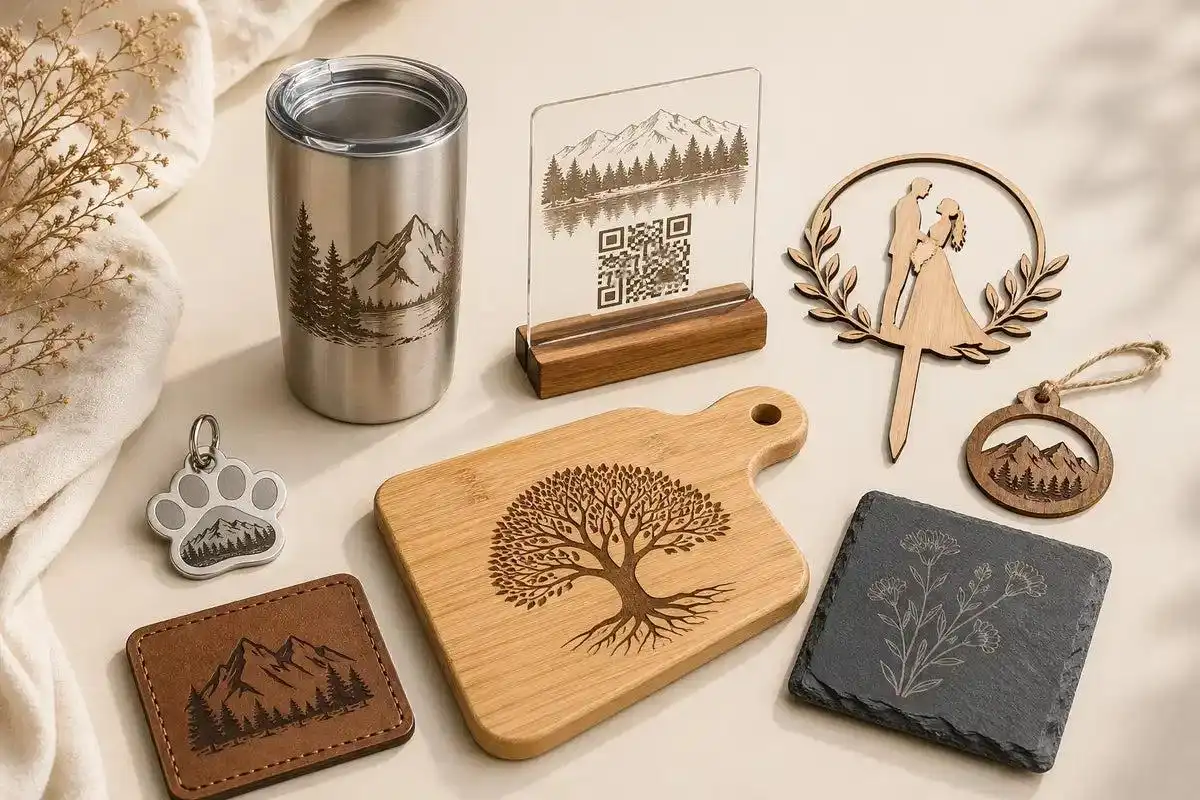
CO2 lasers char wood creating rich contrast for building models, decorative panels, and packaging. Acrylic engraves with frosted white lines on clear or colored pieces for signs and awards. Leather accepts intricate designs without losing flexibility for apparel and furniture. Glass etching adds frosted appearance to drinkware and luxury items. Paper and cardboard cut into intricate shapes for invitations and packaging prototypes. Perfect Laser PEDK-6040 reliably processes these non-metallic substrates for small-format engraving jobs.
Metal Engraving: Precision and Durability
Metals require careful parameter tuning for successful engraving. Anodized aluminum marks with high contrast by removing colored coatings to expose bare metal. Stainless steel needs fiber lasers or marking chemicals to achieve visible results through oxidation. Brass and copper engrave readily for decorative signage and industrial nameplates. Surface cleanliness directly affects mark quality; grease or oxidation reduces energy absorption and mark clarity. Procurement teams should seek metal engraving systems with adjustable frequency, pulse duration, and focus depth for different alloys.
Real-World Material-Application Synergy
Think about a company that makes jewelry and engraves complex filigree designs on bands made of sterling silver. For the level of accuracy needed—often within 0.01 millimeters—stable optics and finely tuned power transfer are needed. Fiber lasers can do this. On the other hand, a company that makes custom wooden boxes can benefit from CO2 systems with automatic moving tables that can work with materials from thin veneers to thick hardwoods without having to make any changes by hand. This is shown by the Perfect Laser PEDK-6040 model, which has an extra lifting platform that can be adjusted from 1 to 400 millimeters. This gives processors the freedom to easily work with different widths. By minimizing setup time, cutting down on waste, and making sure that output quality stays the same across production runs, matching material traits to laser capabilities improves return on investment (ROI).
How to Maximize Laser Engraving Quality and Efficiency?
For the best results, you need to pay attention to how you prepare the plan, how you set up the machine, and how you do maintenance.
Design Optimization for Resolution and Detail
How the file is formatted for a laser engraving machine has a big effect on engraving accuracy. Vector files are great for cutting and line work on a laser engraving machine because they don't lose quality when enlarged. Photographic engravings on a laser engraving machine work well with raster images but need 300+ DPI to prevent pixel blurring. Using proprietary software, operators adjust power, speed, and passes per area for specific substrates on a laser engraving machine. Laser intensity changes create shading effects for complex designs. Removing unnecessary nodes and optimizing path patterns on a laser engraving machine reduces processing time without affecting visual impact.
Balancing Speed and Quality Trade-Offs
While faster etching speeds may increase output, they may also make it harder to see small details or make edges smooth. Production managers have to set settings based on the goals of the program. For big words or simple images where fine details don't matter as much, high-speed passes work well. When you use slower speeds and make more passes, you can make carvings on metals deeper or make slopes on organic materials smoother. Testing small samples before making the whole batch stops mistakes that cost a lot of money and sets the standard for future jobs. Air-assist valves on machines improve quality by getting rid of dirt and cooling carved areas. This stops wood from getting burned and keeps acrylics from getting sticky.
Maintenance and Safety Protocols for Longevity
Regular repair keeps precision and extends the life of tools. Cleaning the optics (lenses and mirrors) gets rid of the dust and gunk that scatters laser energy and lowers the quality of the beam. Lubricating the linear guides and checking the tightness of the belt stops mechanical drift that lowers the accuracy of placement. Filters in exhaust systems need to be changed on a regular basis to keep the air flow right and protect workers from the fumes that are made when organic materials are processed. As part of safety rules, you should wear the right laser-rated eyewear, make sure you're properly grounded, and use emergency stop devices. Following OSHA rules and getting CE approval, like Perfect Laser products do, shows a dedication to safety at work and following the rules, which are very important in industry settings.
Choosing the Right Laser Engraver for Your Business Needs
When looking for the right tools, you need to think about the types of technology, performance requirements, and total buying costs.
CO2 Versus Fiber Laser Systems
Most non-metal uses are done with CO2 lasers because they are cheap and can work with a wide range of materials. This group includes Perfect Laser's PEDK-6040 line, which comes in 40W, 50W, and 60W versions. Small businesses, testing labs, and artist groups that work with wood, acrylic, leather, and fabrics can all use these small desktop units. Even though they cost more up front, fiber lasers are faster and more efficient on metals, and their diodes last longer without needing to be replaced, for over 100,000 hours. They work well for companies that make a lot of car parts, medical devices, or electrical parts. Hybrid systems that use both technologies do exist, but they require a lot of money and are only worth it when a wide range of materials need multi-modal capabilities.
Entry-Level Versus Industrial-Grade Machines
Entry-level CO2 laser engraver like the PEDK-6040 is affordable and useful, with compact size for limited space. With optional lifting tables, this CO2 laser engraver handles modest output and varied material thicknesses. Industrial-grade CO2 laser engraver offers larger work area, higher power, automatic loading, and CAD/CAM integration. Production volume, material diversity, and available capital guide CO2 laser engraver procurement. Growing businesses may start with desktop CO2 laser engraver then upgrade as demand requires larger machines.
Procurement Considerations and Supplier Evaluation
The total cost of ownership is more than just the price of the car. Long-term satisfaction is affected by things like warranty coverage, how quickly expert help responds, and the availability of spare parts. Perfect Laser offers free product advice, online service 24 hours a day, seven days a week, and two-year warranties on writing machines and one-year warranties on bigger units. A supplier's image is important. Perfect Laser exports to Germany, Japan, Brazil, and the UAE, which shows that they can be trusted. Accessory options, like spinning clips for round items and honeycomb tables for better air flow, make machines more useful in a variety of situations. Options for scalability, such as software updates and flexible extensions, protect investments against changing production needs in the future.
Practical Case Studies: Real-World Applications and ROI of Laser Engraving
Procurement pros can explain investments and predict operational gains by showing real benefits through real-life examples.
SME Branding Through Custom Packaging
A craft brewery in the area bought a PEDK-6040 CO2 engraver to put their name and limited-edition patterns on wooden crates and leather coasters. Before, hiring these jobs cost a lot per unit and took more than two weeks to complete. Having engraving done in-house cut costs by 60% and allowed for same-day turnarounds, which helped with marketing efforts that were tied to regular launches. The small machine fit right into their production floor without any changes to the building, and its automatic lifting table could handle boxes of different sizes. Within eight months, the brewery paid for the equipment by saving money on labor and selling more goods because of unique branding.
Metal Marking for Traceability and Compliance
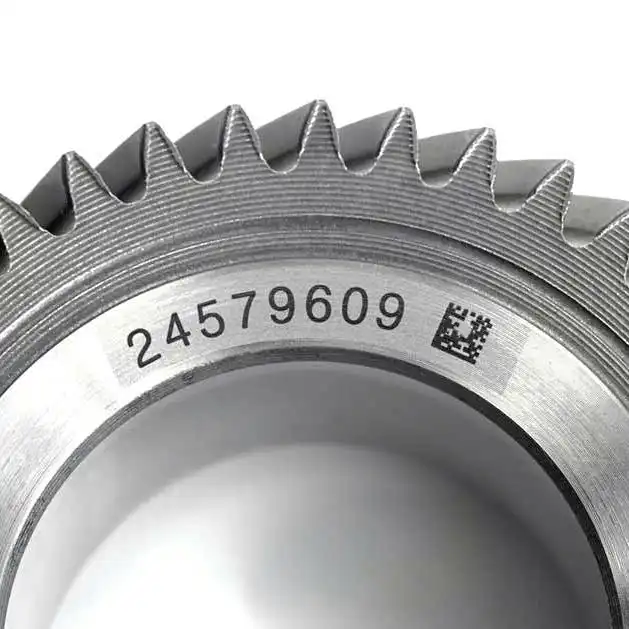
A company that sells parts to automakers used fiber laser marking to make sure that important safety parts like brake pads and steering units were all in the same serial number. Rules said that fixed codes that could be read by machines had to be resistant to rust and high temperatures. Fiber lasers provided contrasts that were higher than the norm in the industry. This made sure that barcode scanners could accurately collect data along supply lines. By automating interaction with production lines, bottlenecks caused by labeling by hand were removed, which increased throughput by 40%. The system's accuracy—0.001 millimeters—meeted strict aerospace and car standards. This cut down on rejections and made it easier to do checks of traceability.
Rapid Prototyping for R&D Efficiency
A university's engineering department bought a basic CO2 cutter to shorten the time it takes to make new products. Students who were building housings for consumer electronics made samples by cutting acrylic and engraving names that could be felt on control panels. When compared to outsourcing manufacturing, rapid feedback loops cut project timelines by weeks—from CAD design to real prototype in less than an hour. The teachers liked how easy the machine was to use, even for kids who weren't used to laser technology. The spending backed dozens of cross-disciplinary projects every year, which made the costs worth it by improving education and speeding up research output.
Conclusion
Laser engravers open up new ways to work with materials and make things, from designing consumer goods to marking important aircraft parts. Businesses can choose equipment that helps them reach their production goals if they know about operating principles, material compatibility, and strategy procurement criteria. The PEDK-6040 line from Perfect Laser shows how small and flexible CO2 systems can be used for a wide range of etching and cutting tasks at a low cost. Laser technology gives a clear return on investment (ROI) by increasing productivity, quality, and operating freedom, whether it's for improving branding, making sure compliance, or speeding up prototyping. Companies can use this tried-and-true manufacturing solution to its fullest if they carefully consider the different types of lasers, the help they need from suppliers, and the needs of their unique applications.
FAQ
1. What types of metals can be engraved with laser engravers?
By oxidizing or removing the top layers, fiber lasers can mark stainless steel, anodized aluminum, brass, copper, and titanium. CO2 lasers don't work well on metals that aren't coated or marked, but they do work well when they are. Preparing the surface by getting rid of oils and oxidation makes sure that the high contrast results are always the same, which is important for workplace recognition and safety uses.
2. What safety protocols are essential for operating laser engravers in industrial settings?
To keep their eyes from getting hurt, operators must wear safety glasses that are rated for lasers and match the color of the equipment. Proper air systems get rid of the fumes that come from biological materials, which is good for your lungs. OSHA and CE safety standards are met by emergency stop buttons, proper electrical grounding, and machine casings that block stray echoes. These features reduce the risks in the workplace.
3. How do I select appropriate engraving software for my business needs?
It is very important that the software you use works with the driver of your machine. Platforms like LightBurn work with a lot of different device types and have easy-to-use interfaces for changing both vector and bitmap images. Complex projects can use advanced features like grayscale mapping, multi-pass layers, and CAD files. When looking at choices, think about how long it will take to learn, how good the customer service is, and what community tools are available to make sure that the adoption goes smoothly and that you can get help with problems in the future.
Partner with Perfect Laser for Advanced Engraving Solutions
Adding Perfect Laser's precision engraving tools to your process will help you make better products. When it comes to engraving non-metallic materials, our PEDK-6040 CO2 laser engraver works reliably and has a small, flexible design. Perfect Laser has been serving customers around the world for more than 30 years and offers full support from the initial meeting through installation and beyond. Our equipment is certified by CE, TUV, and SGS, which makes sure that it meets standards and is of good quality. Email our team at [email protected] to talk about your unique needs, get example engravings, or look into custom setups. Our 24-hour support and two-year warranties give you trust and value, whether you're a laser engraver manufacturer looking for reliable tools or a person looking at laser engravers for sale. Find out how our products can help your business be more efficient, cut costs, and find new ways to make money.
References
1. Anderson, M. (2023). Laser Engraving Technology: Principles and Industrial Applications. Manufacturing Press.
2. Chen, L., & Roberts, K. (2022). Material Science in Laser Processing: A Comprehensive Guide. Technical Publications International.
3. Davis, R. (2024). Optimizing CO2 Laser Systems for Non-Metal Substrates. Journal of Advanced Manufacturing Technology, 45(3), 112-128.
4. Foster, J. (2023). Fiber Laser Marking in Automotive and Aerospace Industries. Industrial Engineering Quarterly, 38(2), 67-82.
5. Hughes, S., & Martinez, P. (2022). Cost-Benefit Analysis of Laser Engraving in SME Manufacturing. Business Operations Review, 29(4), 201-215.
6. Thompson, E. (2024). Safety Standards and Compliance in Laser Fabrication Environments. Occupational Health and Safety Journal, 51(1), 45-59.

share your inquiry, get the quotation accordingly.
第一张审核员说包含其他公司不能用_1755049724891.webp)
Perfect Laser – Global Manufacturer of Reliable Laser Solutions