How to Use a Handheld Laser Welder: Practical Tips
Today's industry needs to be precise, quick, and adaptable. Learning how to use a handheld laser welder can change the way you do your job, whether you're putting together cars, making parts for spacecraft, making electronics, or heavy industrial welding. This compact welding tool makes clean, strong connections between a wide range of materials, from thin aluminum alloys to thick steel plates. Unlike traditional MIG or TIG methods, laser welding technology focuses a lot of energy into a narrow beam. This makes the bond very strong and with little heat damage. By learning the right way to use tools, do routine upkeep, and stay safe, you can make it last longer and get consistent, high-quality results in a wide range of situations.
Understanding the Basics of Handheld Laser Welders
Core Technology Behind Laser Welding Systems
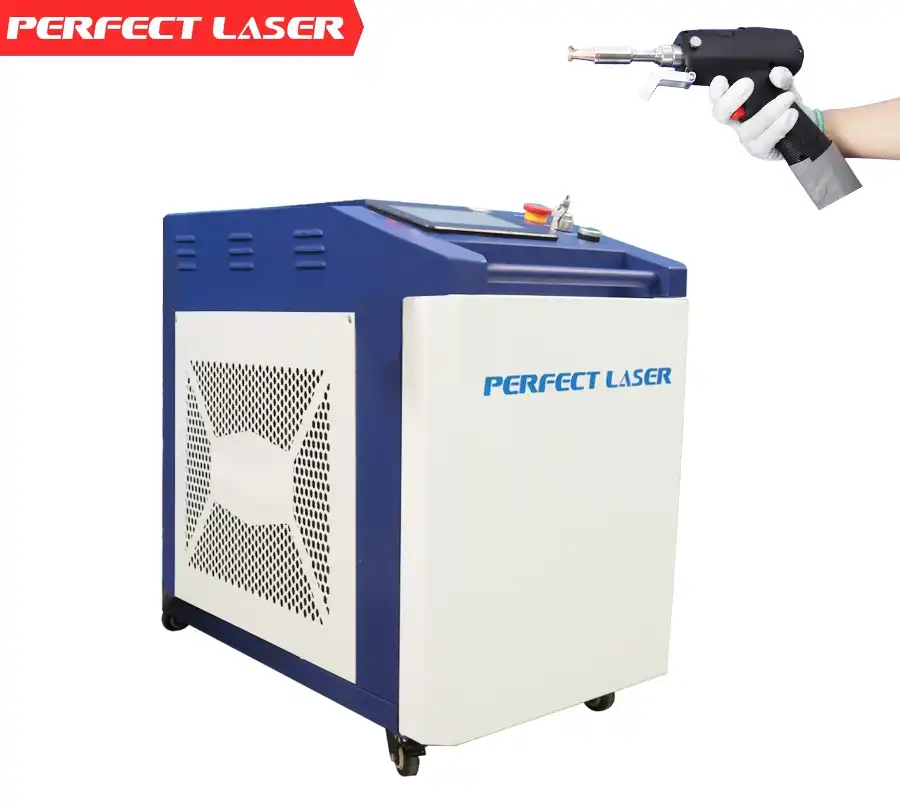
Focusing a high-intensity fiber laser beam onto metal surfaces creates focused heat that melts and joins materials together in a handheld laser welder. The Perfect Laser system has a cabinet that is built in, a fiber laser source, a cooling water drainage system, a laser control system, and a mobile welding head. When compared to traditional welding methods, this combined design makes operation easier while also making it more efficient. The fiber laser source sends out coherent light at wavelengths that metals can best receive. This lets the metals heat up and cool down quickly, reducing the temperature stress on nearby areas.
Fiber Versus Diode Laser Systems
Fiber lasers and diode lasers are the two main types of lasers used in welding. Fiber lasers are the most common type used in industry because they have better beam quality, more power density, and great energy economy. These systems are great at joining stainless steel, aluminum alloy, and zinc sheet materials, which are often used to make parts for cars and spacecraft. Diode lasers are cheaper for lighter-duty tasks, but they don't have the entry depth needed for heavy-duty tasks like building ships or making solid steel.
Critical Operational Parameters
To get the best weld quality, you need to carefully change the power levels, the welding speed, and the pulse length. Power levels usually fall between 1000W and 3000W, but this depends on the type and thickness of the material. To make sure full entry, thicker materials need more power and slower trip speeds, while thin sheets need to move quickly to avoid burn-through. The length of the pulse affects the amount of heat that is introduced. Shorter pulses have less of an effect on heat-sensitive parts used in electronics manufacturing, while continuous mode is best for structure uses that need deep fusion. When workers understand these connections, they can change the settings to suit different materials and joint configurations, whether they are welding small jewelry pieces or big machinery frames.
Step-by-Step Guide to Using a Handheld Laser Welder Effectively
Pre-Operation Preparation and Safety Checks
Before turning on your laser welding equipment, make sure that all of its parts are fully checked out. Check to see if the system that moves the coolant around keeps the right amount of coolant and the temperature stable. Laser sources that get too hot can damage them. Check fiber optic lines for signs of damage or wear, since dirt or dust on optical surfaces lowers the quality of the beam and makes welding less effective. Make sure that the safety glasses you're wearing meet the optical density requirements for the laser range being used. These are usually set for 1064nm fiber lasers. Set up your area so that wires don't cause you to trip, and make sure there is enough air flow to get rid of welding fumes, especially when joining materials that have protective coatings on them. Personal protective equipment is more than just safety glasses. When working with recently welded parts, wear clothes that won't catch fire and gloves that won't melt. Keep fire-fighting gear close at hand, especially when working with metal materials that can catch fire in some situations. The Perfect Laser's built-in design with mobile rollers lets you place it in different areas of your building. However, make sure the unit is on level ground to avoid moving it while it's working.
Fundamental Welding Techniques for Different Materials
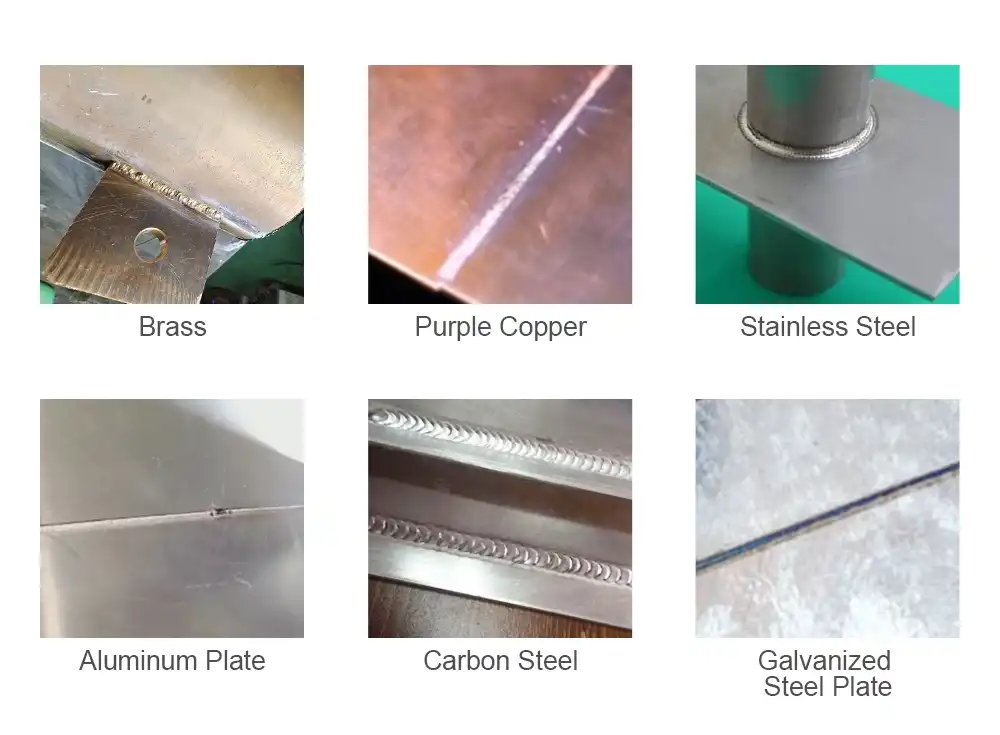
Weld accuracy goes up a lot when you master hand placement and movement patterns. Hold the light welding head about 10 to 15 degrees off of vertical and keep it 2 to 5 mm away from the top of the subject. This position makes it easier to block the flow of gas while still letting you see the melting pool clearly. Keep your speed steady. Rushing makes joints weak and porous, and staying in one place for too long can cause too much entry or displacement. Overlap joints by 10 to 15 percent of the material thickness when joining stainless steel parts that are often used to make metal advertising figures and cabinets. The continuous laser mode makes smooth changes that don't look like fish scales like regular processes do. This means that you don't have to do any extra polishing steps, which costs more in work. Because aluminum metal is a good thermal conductor and reflector, it needs higher power sets when welding. Warm up the bigger pieces to lower the temperature differences that can cause cracks. When welding galvanized sheets, the zinc coats turn into vapor. To avoid gases getting stuck in the weld pool, angle the torch so that the gases can escape.
Troubleshooting Common Operational Challenges
Welding mistakes happen to even the most skilled workers. Surfaces that are dirty often cause pores, so clean joints well with the right chemicals before welding. Cracking can be a sign of too fast of cooling or materials that don't work well together. To prevent thermal shock, slow down the welding process or pre-heat the parts. Inconsistent penetration could mean that the power supply isn't stable or that the travel speed is changing. The LCD screen on Perfect Laser systems shows working factors in real time, so changes can be made right away. Discoloration or twisting around weld zones are signs of overheating. To control the amount of heat going in, you can lower the power levels, speed up the trip, or use pulse mode. Check the safety interlocks, water flow, and fiber lines if the handheld laser welder won't turn on. The centered button layout makes debugging easier by making it easy to get to the diagnostic features. Perfect Laser's 2–12-hour quick feedback support helps with tough problems, limiting production slowdown that hurts delivery times and customer happiness.
Maintenance and Safety Best Practices for Long-Term Reliability
Routine Maintenance Protocols
Sticking to repair plans is important for keeping equipment working well. Once a week, use lint-free optical wipes and approved cleaning solutions to clean the protected windows on the welding head. Never use rough materials that damage delicate surfaces. To keep the pump from breaking down, check the cooling system filters once a month and change them as directed by the maker. Perfect Laser software updates sometimes add new features or better control algorithms. To keep your work from stopping, install these updates during planned repair windows. Every three months, you should calibrate the laser head to keep the beam focus accuracy that is needed for microwelding in the electronics and chip businesses. When things aren't lined up right, the power density at the focus point drops. This makes the entry depth and joint strength worse. Perfect Laser systems' integrated design puts important parts in a cabinet that is easy to get to. This makes upkeep jobs easier than with spread configurations that need multiple service spots.
Comprehensive Safety Measures
Safety rules for the whole building are part of laser safety, not just for the operators. Set up places that only certain people can get into and put up warning signs that say "active laser operations." Put up beam control systems or barriers to keep people outside the immediate work zone from being accidentally exposed. When making high-end goods or fixing jewelry, the accuracy needed for seams that are almost unnoticeable means that the pieces must be held in place securely so that they don't move in a way that could redirect the laser beam. Keep the tools in a climate-controlled area to keep optical parts from dampness. Over time, humidity lowers the quality of the beam by causing rust and optical surface contamination. Cover the unit with protection materials to keep dust and damage from impacts out when moving it from one work site to another. The small size and portability of Perfect Laser make it easy to move without affecting its steadiness while it's working.
Engaging OEM Support Services
Build ties with approved distributors who can provide you with real replacement parts and professional help. When you use fake parts, they can hurt safety and performance, and they might even cancel your guarantee. Perfect Laser guarantees service for life and can help with installation jobs that are too complicated to be done in-house. Professional checks should be done once a year to find problems early on, before they get worse and cost a lot to fix. When looking at equipment updates or expansions, ask to see product demos. Working with certain materials and joint configurations in real life shows capabilities that aren't clear from specs alone.
Comparing Handheld Laser Welders to Traditional and Other Laser Welding Solutions
Performance Analysis Across Welding Methods
In traditional MIG welding, filler material is used to join the pieces together. This makes raised bits that need to be ground down to a smooth finish. This process takes a lot of time and effort, especially when it comes to precision tasks like making parts for spacecraft, where the quality of the surface affects how well the craft moves through the air. TIG welding gives you more control, but it also takes a lot of skill to do and moves more slowly, which slows down production. In many situations, the handheld laser welder gets rid of the need for filler material, making changes that are smooth with little post-processing. This efficiency cuts down on production costs while keeping the strong, reliable welds that are needed for important car parts and building systems. Benchtop laser systems are very stable for making small parts, but they aren't flexible enough for making big sheet metal structures like those used in ships. Fixed welding heads make it hard to reach complex shapes, so complicated fixtures are needed to place workpieces within the machine's area. Portable laser welders are easier to move around with than fixed units, but they often have lower power output or beam quality. Perfect Laser's handheld solution fills in these gaps. The combined system provides industrial-grade performance in a form factor that can be used in a variety of production settings, from small cabinet spaces to large structural frames.
Selecting Appropriate Equipment for Specific Industries
When makers of cars and airplanes choose welding systems, they look for ones that can integrate robotics. Modern fiber laser welders can work with robotic arms to do routine production tasks. They also have modes for human operation that can be used to make prototypes and fix things. The comfortable, light welding head keeps operators from getting tired during long shifts, so the quality of the welds stays the same throughout production runs. When micro-welding very small, heat-sensitive parts, precision electronics and chip uses need the utmost accuracy. Power modulation and pulse control features keep nearby circuits from getting damaged by heat while making physically sound connections on small parts. Manufacturers of high-end goods and jewelry like how focused laser energy can make gaps almost unnoticeable. When using a torch to join valuable metals together, the process often leaves marks or changes the shape, which need a lot of work to be fixed. The focused heat zone of laser welding keeps the material's features even after the joint is closed. This makes the products very precise and up to high quality standards. Deep-penetration welding is needed for thick materials in heavy industries like ships and steel manufacturing. Fiber laser technology is good for these heavy-duty tasks where equipment breakdowns affect expensive production plans because it is built to last and works well in tough circumstances.
Procurement Tips: How to Buy the Right Handheld Laser Welder for Your Business
Evaluating Investment Parameters
When buying tools strategically, the costs up front are weighed against the practical savings over time. Look at the total cost of ownership, which includes how much energy it uses, how often it needs to be maintained, and how often it needs to be replaced. Fiber laser sources are more efficient than older CO2 systems, which means that less electricity will be used over the equipment's lifetime. The terms of a warranty have a big effect on risk management. Full covering guards against unexpected repair costs during key production times. Perfect Laser backs its marking machines with two-year warranties and bigger industrial units with one-year guarantees. This shows that they are confident in the stability of their products, which are the result of strict quality testing. Financing choices help with managing cash flow when capital budgets don't allow for instant purchases. Leasing programs let businesses spread the costs of buying tools out over several fiscal years while keeping their credit lines open for other uses. When setting up various production sites or increasing capacity to meet rising demand, bulk purchasing agreements can save you money. Rental programs let businesses temporarily increase their capacity during busy times without making long-term financial investments. This is especially helpful for companies whose demand changes with the seasons.
Sourcing From Authorized Suppliers
Partner with well-known makers and distributors to make sure the products you sell are real and that you can get expert help. Perfect Laser has sites in Germany, Japan, Italy, Russia, South Korea, Turkey, Brazil, India, and the United Arab Emirates, showing that it works well in a wide range of industrial settings. The company's two research and development centers have 63 patents on key technologies that give the business advanced capabilities on a global scale. Having CE approval, along with TUV and SGS credentials, shows that the product meets the strict safety and quality standards that rule the industrial equipment markets. When looking at handheld laser welding machine providers, find out what kind of service they offer after the sale. Response times for equipment problems depend on how close service techs are. Perfect Laser's 2- to 12-hour feedback promise keeps production interruptions to a minimum. Free pre-sales advice helps match the specs of the equipment to the needs of the application. This keeps expensive gaps between what the equipment can do and what it needs to do its job. Sample services let you check the quality of the welding on your specific materials before you make a final purchase choice. This greatly lowers the risk of the purchase.
Customization and Demonstration Value
Instead of general overviews of capabilities, ask for detailed demos that address your specific welding problems. Bring samples of the material that are typical of the whole range of thicknesses and alloys that are used in production. Check the quality of the welds made with different parameter values to see how easy they are to use and how consistent the results are. Check the LCD screen and unified controls to make the system easier to use and cut down on the time needed to train new workers. Check the physics of the mobile head by using it for a long time to make sure that its light weight keeps you from getting tired during normal work shifts. Talk about the options for customization that would meet the specific needs of a building or a specific purpose. Perfect Laser's customer-focused method focuses on giving agents and customers benefits through custom solutions instead of causing operations to follow standard equipment setups. This adaptability comes in handy when adding laser welding to current production processes or working with parts that have strange shapes, which is common in custom manufacturing settings.
Conclusion
Manufacturers who learn how to use handheld laser welder technology will have a competitive edge in fields that need accuracy, speed, and adaptability. The all-around method described here, from knowing basic laser principles to strategic procurement practices, gives operators and decision-makers information they can use right away. Developing the right techniques, following strict care rules, and being aware of safety issues all help tools work better and keep people safe. As manufacturing moves toward more flexibility and shorter production cycles, laser welding's unique mix of portability, speed, and quality becomes more and more important for companies that want to be the best at what they do and lead the market.
FAQ
1. What materials can handheld laser welders effectively join?
You can use these methods with stainless steel, aluminum alloy, carbon steel, galvanized sheet, titanium, and even valuable metals like gold and silver. Depending on the laser power output, it can work with materials as thin as foils (less than 0.5 mm) and as thick as plates (more than 5 mm). Different metals have different heating qualities, which makes joining them difficult, but it is still possible with the right parameter optimization.
2. How does laser welding compare to traditional methods in terms of cost efficiency?
Traditional MIG or TIG systems cost more to buy at first, but they save money over time because they use fewer materials, have faster cycle times, and need less post-processing. Using less energy lowers electricity costs, and better weld quality lowers the number of repairs that need to be done and the amount of scrap material that is lost. This makes the total economics of production much better.
3. What training requirements exist for operators?
People who have experience welding can learn the basics in a few days, but it takes a lot of practice to master more advanced methods. Manufacturers usually give training on how to use their products, which includes safety rules, choosing the right parameters, and fixing problems. Operators can use new materials and methods as business needs change because they are always learning new skills.
Partner With Perfect Laser for Superior Welding Solutions
Picking the right maker for your handheld laser welder will have a direct effect on your ability to produce and your long-term success. Since 1995, Perfect Laser has been working with laser tools and has helped over 10,000 people around the world with their reliable, high-performance systems. Our all-in-one handheld welding solutions come in small, mobile platforms that can be used in a variety of industrial settings. They include fiber laser sources, refrigerated cooling, smart controls, and comfortable welding heads. We offer full support, including free pre-sales advice, sample testing, and lifetime technical help with engineer installation offered all over the world. Email our team at [email protected] to talk about your unique welding needs and set up a time for us to show you how our Perfect Laser tools can work on your materials. Let us be your reliable business partner when it comes to cutting edge laser welding technology.
References
1. Smith, J.L. & Rodriguez, M. (2023). Industrial Laser Welding: Technology and Applications. Manufacturing Technology Press.
2. Chen, W. & Anderson, K. (2024). "Comparative Analysis of Handheld Laser Welding Systems in Automotive Manufacturing." Journal of Advanced Manufacturing Processes, 46(3), 127-145.
3. Thompson, R. (2023). Precision Welding Handbook for Aerospace Components. Aerospace Engineering Publications.
4. Müller, H. & Kowalski, P. (2024). "Safety Protocols and Best Practices for Fiber Laser Welding Operations." International Welding Safety Review, 18(2), 89-103.
5. Gupta, S. & Yamamoto, T. (2023). Laser Joining Technologies for Electronics Manufacturing. Semiconductor Processing Institute.
6. Williams, D.F. (2024). "Economic Analysis of Laser Versus Traditional Welding in Heavy Industry." Industrial Manufacturing Quarterly, 31(1), 54-72.

share your inquiry, get the quotation accordingly.
第一张审核员说包含其他公司不能用_1755049724891.webp)
Perfect Laser – Global Manufacturer of Reliable Laser Solutions