How to Laser Engrave Wood Quickly with Clean, Dark Results
If you want to do fast, clean, and dark wood etching, you need to know how to use your tools and supplies. For most non-metallic projects, the best power choices for a good wood laser engraving machine are between 40W and 60W. This gives you exact beam control that makes strong, contrasting marks. The key is to make sure that the laser's frequency and speed are right for the density of the wood and that the focus is lined up correctly. Cleaning the surface of the wood to get rid of dust and oils before etching makes it much clearer. Hardwoods, like maple or cherry, naturally produce darker, deeper tones than softer species.
Understanding Wood Laser Engraving: Core Principles and Challenges
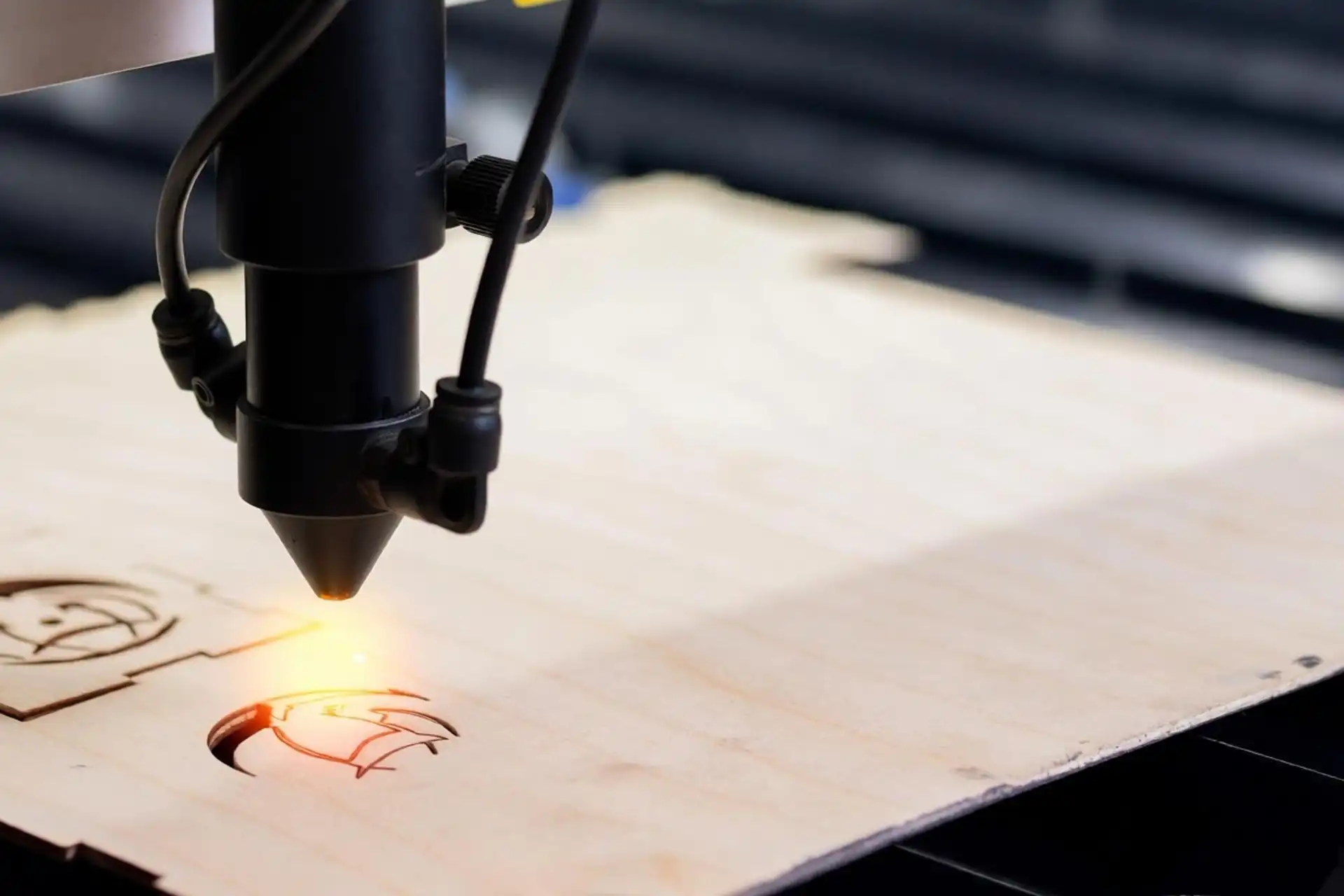
Controlled melting and charring are what laser etching on wood depends on. When a focused laser beam hits wood fibers, it quickly heats the material up, burning it in places that can be seen. How dark and deep these marks are will depend on how well the laser energy goes through the wood.
How Laser-Wood Interaction Works
Infrared light from CO2 lasers has a wavelength of 10.6 micrometers, which is easily absorbed by organic objects like wood. This absorption turns light energy into heat, which evaporates water and lignin and turns cellulose fibers into carbon. The burned layer stands out against the natural wood background because it is dark. How much material is taken and how dark the mark is are directly related to things like laser power, pulse frequency, and beam width.
Common Industrial Challenges in Wood Engraving
When B2B businesses try to scale their production, they often run into problems with consistency. Different types of wood have different amounts of wetness, which changes how deeply the laser can go. The direction of the grain changes how heat is distributed, so lines that go across the grain are often darker than lines that go along it. Resinous woods, like pine, also leave behind smoke dust that obstructs lenses and lowers beam quality over long runs. When working with large amounts of material for companies that make signs or promotional items, it's important to find the right balance between cutting speed and mark quality.
Critical Parameters for Process Consistency
The power of the laser determines how deep it goes, and the speed determines how long it stays on each point. Runs at slower speeds and modest power usually leave darker marks than runs at high speeds. Focus precision is very important—even a 1 mm difference from the ideal focal point lowers the energy density and makes the carving lighter. For consistent results, wood moisture should stay between 8 and 12%. Too much moisture loses heat energy by turning into steam instead of charring.
Optimizing Your Wood Laser Engraving Process for Speed and Quality
When etching on wood, choosing the right materials and setting up the machine correctly are key to getting good results. Laser treatment works better on hardwoods with tight grain structures than on softwoods with less stable growth patterns.
Selecting the Right Wood Species
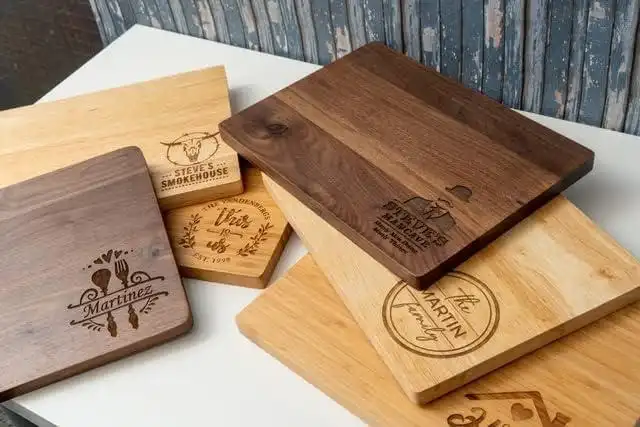
Because their cells are thick and their makeup is constant, maple, walnut, and cherry always make engravings that are deep and dark. When exposed to a laser, these hardwoods carbonize evenly, making a sharp difference without too much charring. Similar benefits can be found in bamboo plywood, which makes it more appealing to brands that care about the environment. Softwoods like pine work fine, but they need more power or slower speeds to get the same level of darkness, which slows down output.
Machine Settings for Optimal Performance
For 40W to 60W systems, power settings between 50 and 70% of full capacity usually work best. It might seem faster to run a wood laser engraving machine at full power, but this often leads to uneven depth and too much burning around the sides. Changing the speed depends on the strength of the wood. Dense types of wood can handle 150–250 mm/s well, while softer types need 100–180 mm/s to char properly. Most of the time, frequency sets between 20kHz and 25kHz work well, but slightly higher frequencies are better for fine detail.
Surface Preparation Techniques
Before etching, use compressed air or lint-free cloths to clean the wood. Handling oils act as shields that block laser energy, leaving lighter marks. Some operators put down thin layers of dish soap solution and let them dry. This makes a temporary layer that improves contrast, but the carbonized soap dust makes carvings look much darker. This method works especially well with light-colored woods like maple or birch.
Workflow Strategies for High-Volume Production
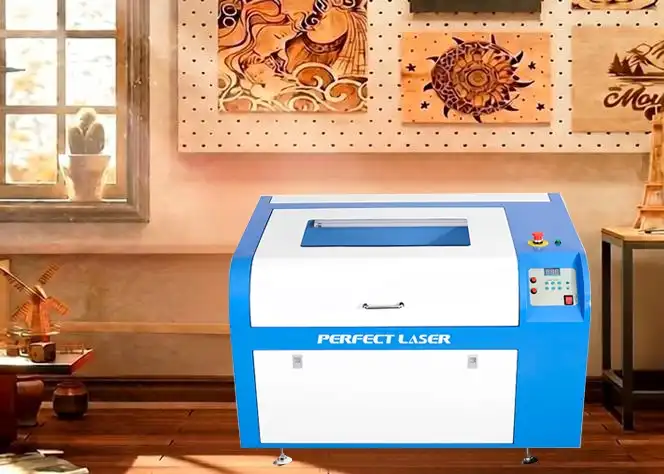
It takes less time to set up between jobs when you handle similar designs in batches. Focus changes are kept to a minimum by putting wood thicknesses that are close together. Advanced models come with automated material feeding systems that get rid of the need for human packing delays. The Perfect Laser 6040 model has a front-and-back running-through system that lets longer materials, like cloth rolls or long wood panels, be processed continuously without having to be moved. This feature greatly boosts the speed of operations that make awards, plaques, or artistic signs.
Choosing the Right Wood Laser Engraving Machine for Your Business
The potential of operations and long-term profits are affected by the choice of equipment. By knowing which features fit your production needs, you can avoid costly mismatches between what the machine can do and what the business needs.
Desktop vs. Industrial Systems
Desktop units work well for small businesses and companies that only handle a small amount of work each day. The working area of these small tools is usually around 300x400mm, and they have power sources of 30W to 50W. Industrial systems have bigger work areas—600x400mm or more—and power options that go up to 60W or more. This is where the Perfect Laser 6040 model comes in. It has industrial features in a fairly small package that's good for medium-sized buildings.
CO2 Laser Technology Advantages
CO2 devices are the most common way to engrave on wood because their frequency is a perfect match for how organic materials absorb light. These tools can work with a wide range of non-metallic materials, such as acrylic, leather, cloth, and different types of wood, and they don't need to be set up again and again. The Perfect Laser equipment uses hermetically sealed CO2 laser tubes that have a 10,000-hour operating lifespan if they are properly kept. This means that the equipment will work reliably for years to come.
Essential Features for Professional Operations
Professional-grade technology is different from hobbyist types because it has more advanced control systems. In Perfect Laser's 6040 series, the LCD screen control board can join via USB or work on its own with design tools like AutoCAD, CorelDRAW, and others like it. This 1GB memory size lets you work offline without using up too many computer resources. Automatic focusing systems cut down on the time needed to set up between jobs, and automatic lifting platforms can handle materials from thin veneer to 400 mm thick wood blocks.
Working table configurations meet the needs of special applications. Honeycomb tables support delicate fabrics and thin materials by spreading the weight out evenly and letting smoke escape. Heavy things like thick plastic or oak don't bend on strip tables. When working with mixed amounts, dual-table systems let workers quickly switch between different types of materials, keeping the production flow going.
Safety features protect both people and the money you spend on tools. Thickened glass windows used as observation windows protect workers from laser beams while still letting them watch the process. When safety covers open, interlock systems turn off the laser beam automatically, keeping people from being exposed by mistake. Before turning on the main beam, red pointer lasers mark the cutting lines. This keeps material from going to waste because of mistakes in placing.
Cooling Systems and Maintenance Considerations
Laser tubes last longer and keep their beam quality when they are properly cooled. The CW-5000 and CW-5200 water chillers that come with Perfect Laser tools allow for fine temperature control with little noise and low power use. These cooling devices are made for business use and keep the engraving quality high over long production runs.
Evaluating Manufacturers and Support Services
Well-known companies like Perfect Laser have been making laser engravers and industrial lasers for decades and have service networks all over the world. Since 1995, Perfect Laser has made more than 300 different types of machines in 20 different product lines. They have gained experience by working with more than 10,000 customers around the world. This leads to better solutions that deal with problems that come up in real production. International certificates like CE, TUV, and SGS show that the product meets strict performance and safety standards.
Support infrastructure is very important for keeping downtime to a minimum. Perfect Laser offers expert support 24 hours a day, seven days a week, with initial answer times of two hours. Overseas installation services make sure that everything is set up correctly, and lifelong help covers any questions that come up during use. When fixing important production problems that could stop work otherwise, these services are very helpful.
Maintenance and Safety Best Practices to Sustain Performance
Regular safety checks and repair schedules protect both the equipment and the people who work on it, and they also make sure that output can keep going.
Daily and Weekly Cleaning Procedures
Every time you're done with a session, clean up the work area. Wood dust and burned residue build up on the rails and guides, which causes friction that makes setting less accurate. Use the right cleaning products and optical-grade tissues to wipe down mirrors and lenses. Never use regular cloths, as they can scratch delicate surfaces. Every day, check the water amounts in cooling systems and add more as needed to keep the flow going.
Lens and Mirror Alignment
When optics aren't lined up right, they scatter laser energy, which lowers the power at the focus point. Using target cards to check the line once a month shows how accurate the beam setting is. The focus length changing parts on Perfect Laser tools make it easier to find the best focal distance. However, settings should be checked every so often to make sure they haven't changed because of vibrations or parts settling down.
Ventilation and Fume Extraction
When you carve wood, you make smoke that has volatile organic substances and small particles in it. These contaminants are removed by good ventilation systems before they form optical fog or pose a breathing risk. Place exit vents away from intake vents to stop air from going back and forth. Follow the manufacturer's instructions for replacing ventilation system filters. Clogged filters stop movement and let fumes build up.
Operator Safety Equipment
Protective glasses rated for CO2 laser wavelengths keeps your eyes from getting hurt by scattered reflections, even though co2 laser engraver enclosed designs lower the risk of direct contact. Fire extinguishers that are marked for electrical fires should be easy to get to, since laser burning can start fires in wood dust and some finishes. When equipment breaks down, reaction times are sped up by teaching workers how to shut down in an emergency.
Troubleshooting Common Issues
Uneven or weak writing is often a sign of dirty lenses or mirrors that aren't lined up right. Inconsistent width across the work area could mean that the table isn't level or that the focus isn't the same everywhere. Too much charring around the sides usually happens when you run too slowly or use too much power. Perfect Laser machines have synchronous belts with reference scales carved on the platform edges. This helps workers check where the materials are placed and find calibration drift before it affects the quality of the work.
Case Studies & Best Practices: Achieving Fast, Clean, Dark Results in Real-World Applications
Real-life production settings show how smart choices about tools and process optimization can lead to measured speed and quality gains.
Custom Signage Production Efficiency
An advertising company that made plaques and awards out of wood ran into problems with their old etching tools. Because the depth and light marks were not always the same, it took more than one pass, which limited daily output to 40 units. They changed the settings to 60% power at 180mm/s speed after getting a Perfect Laser 6040 machine that can change height automatically. With this mix, dark, even carvings could be made in a single pass. The front-to-back pass-through feature let longer sign boards be processed without having to be moved. Within three months, daily production rose to 95 units, and compared to their old multi-pass method, power use dropped by 18%.
Promotional Product Personalization
A company that makes unique wood gifts had trouble keeping the quality of each batch consistent when working with different types of wood. Setting up maple coasters was different from setting up walnut boxes, which meant that they had to be moved around a lot, which took 30% of the production time. Standardized pre-treatment methods, such as testing for wetness and cleaning the surface, cut down on variation. They saved settings profiles for each type of wood in the machine's 1GB memory so that switching could be done instantly from the LCD control panel. The time it took to switch between batches dropped to less than five minutes, and the rate of quality failure dropped from 8% to less than 2%.
Textile and Leather Engraving Applications
A clothing company added laser etching so that they could put their logo on denim jackets and leather items. The honeycomb shape of the workbench was perfect for supporting flexible fabrics and letting smoke escape. Lower power levels (35–45%) and faster speeds (220–280mm/s) stopped burn-through but left marks that could be seen. The no-contact processing kept the grain of the cloth and got rid of the mechanical warping that happens with other embossing methods.
Conclusion
To get good at wood laser etching, you need to have a good mix of technical understanding and real-world experience. Knowing how laser energy affects various types of wood helps choose the right material, and setting up the machine correctly improves both speed and mark quality. Modern wood laser engraving machines, like the Perfect Laser 6040 line, have the safety features, control systems, and power output options that are needed in professional production settings. Regular maintenance keeps equipment working well and makes it last longer. Following safety rules keeps workers and buildings safe. The case studies show that planned process changes lead to big increases in productivity and better quality in a wide range of situations, from making signs to making promotional items.
FAQ
1. What wood types produce the darkest laser engravings?
The darkest marks are made by dense hardwoods with tight grain patterns. Walnut, cherry, and maple are at the top of this group because their cells are all the same size and shape, so they carbonize evenly when exposed to laser light. Bamboo board also works very well and is good for the environment. Softwoods, like pine, make lighter results unless the power is increased or the speed is slowed down, which lowers the output efficiency.
2. How can I increase engraving speed without sacrificing darkness?
Test different power-to-speed ratios with different types of wood to find the best one. Running at 60–70% of its full power often lets you go faster than the highest power options, which causes too much charring. Using a weak dish soap solution to treat surfaces first raises the contrast, which makes up for faster pass speeds. By handling similar designs in batches, setup times between jobs are cut down, which increases total throughput.
3. What maintenance tasks most significantly impact engraving quality?
The best quality gains come from optical cleaning and alignment checks. When lenses and mirrors are dirty, they spread out the beam energy, which lowers the useful power at the focus point. Checking the alignment once a month stops the slow shift that makes marks less clear. Keeping the cooling system working right protects the performance of the laser tube and makes sure that the power output stays the same across production runs.
Partner with Perfect Laser for Superior Wood Engraving Solutions
With tried-and-true technology and full support, Perfect Laser is ready to change the way you engrave on wood. Our maker of 6040 series wood laser engraving machines gives you the accuracy, flexibility, and dependability that tough production settings need. Our equipment can be powered by 40W to 60W, can automatically change the height to fit materials up to 400 mm thick, and has advanced control systems that allow offline use. It can adapt to your changing business needs.
We back up every wood laser engraving machine with expert help 24 hours a day, two-hour answer guarantees, and installation services in other countries. Our tech team has worked on projects for almost 30 years and has built relationships with more than 10,000 people around the world. Perfect Laser has the tools and knowledge to help you get faster, cleaner, heavier results that set your products apart in a crowded market, whether you're making custom signs, personalized gifts, or sample parts. Get in touch with our team at [email protected] to talk about your unique needs and find out how our solutions can help you improve the quality and speed of your production.
References
1. Chen, M., & Rodriguez, K. (2023). Advanced Laser Processing Techniques for Wood Products. Journal of Manufacturing Technology, 45(3), 287-304.
2. Thompson, R. L. (2022). Industrial Laser Systems: Selection and Optimization Strategies. Technical Press International.
3. Wagner, D., & Sato, H. (2024). Material Science Perspectives on Laser-Wood Interactions. Wood Processing Quarterly, 18(1), 42-59.
4. Mitchell, S. E. (2023). Safety and Maintenance Protocols for Laser Engraving Operations. Manufacturing Safety Review, 31(4), 156-173.
5. Harrison, P., & Choi, Y. (2022). CO2 Laser Applications in Precision Manufacturing. Laser Technology Advances, 12(2), 98-115.
6. Brennan, J. K. (2024). Process Optimization for High-Volume Laser Engraving Production. Industrial Efficiency Journal, 29(1), 67-84.

share your inquiry, get the quotation accordingly.
第一张审核员说包含其他公司不能用_1755049724891.webp)
Perfect Laser – Global Manufacturer of Reliable Laser Solutions