Advantages of Automatic Glass Cutting Machines Compared to Manual Glass Cutting
An automatic glass cutting machine changes the way production works by replacing manual labor with computer-controlled accuracy. This lets makers get uniform quality while cutting down on waste and injuries on the job. These high-tech systems work well with modern buildings and solve problems like growth, accuracy, and operating efficiency that can't be solved by hand.
Introduction
Glass cutting accuracy directly affects product quality and customer satisfaction. Traditional manual methods struggle with global market demands for faster turnaround and tighter tolerances. Procurement professionals face pressure to increase productivity without compromising standards. Automated cutting systems solve this through CAD integration, real-time monitoring, and mechanical consistency that manual operations cannot match over long production runs. This article helps decision-makers evaluate automation investments.
Limitations of Manual Glass Cutting and the Need for Automation
Inconsistent Accuracy and High Material Waste
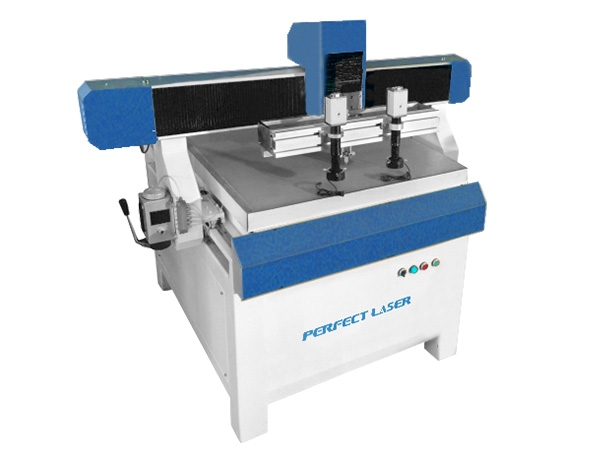
Cutting glass by hand depends a lot on the skill of the person doing it, which means that the accuracy will vary. Even skilled workers can make small mistakes when they are tired or when the cutting path is complicated. This lack of uniformity leads to more rejections and more waste of materials. An automatic glass cutting machine, on the other hand, keeps its accuracy over long production runs, making sure that every piece fits the CAD specs. Through CNC control and imported guide structures, perfect laser systems further reduce variation. This helps makers reach tighter standards and much lower scrap rates, especially in settings where a lot of parts need to be made quickly and accurately.
Safety Risks and Operator Fatigue
When people cut glass by hand, they are directly exposed to sharp edges, heavy sheets, and repeated scoring movements, which raises the risk of injury. Over time, physical tiredness also makes it harder to focus, which lowers the quality of the cuts and makes the workplace less safe. By streamlining the scoring, placing, and cutting processes, an automatic glass cutting machine reduces the amount of work that needs to be done by hand. Operators keep an eye on the system mostly through a control interface, which keeps them out of risky areas. With its stable mechanical design and smart control systems, Perfect Laser equipment makes work safer and more comfortable. It helps companies meet current safety standards for the workplace.
Limited Scalability and Low Production Efficiency
As demand rises, hand glass cutting is hard to scale up because the amount of work done rests on how skilled and available the workers are. It takes time to train new workers, and the speed of output is bound by how much people can work. An automatic glass cutting machine, on the other hand, can keep going at the same speed and quality for a long time. Perfect Laser CNC systems can use more than one tool at once and have optimised cutting lines that let them work faster without losing accuracy. This makes it easier for companies to handle big orders, cut down on shipping times, and make more things without having to pay their workers a lot more.
Core Advantages of Automatic Glass Cutting Machines
Modern automatic glass cutting machines offer transformative benefits that can't be matched by human methods. When procurement teams know about these benefits, they can better support capital investments and plan for routine changes.
Precision and Accuracy
Positioning tools that are handled by computers can make thousands of cuts with accuracy down to the micron level. This is possible with the Perfect Laser PEG-8080 type, which has a CNC control system, servo motors, and imported linear guides. Cutting margins stay within ±0.15mm with this setup, which is important for jobs that need exact measurements. CAD integration gets rid of writing mistakes that happen a lot when things are done by hand. Designers make digital models that are sent straight to the cutting table to make sure that what was drawn matches what was made. This straight workflow cuts down on revision cycles and gets new goods to market faster.
Productivity and Throughput
The ability to run an operation continuously changes the economics of production in a basic way. Manual cutters need breaks and shift changes, but automatic systems can work effectively for long periods of time with little oversight. Perfect Laser's equipment has multi-knife functionality, which lets multiple cutting processes happen at the same time, which increases output rates. The human-machine link makes the setup process easier. Instead of counting and marking things, operators focus on adding materials and keeping an eye on how the system is working. Because of this efficiency, wait times are faster and customer orders are filled more quickly.
Safety Enhancements
Automated methods reduce the amount of direct glass handling, which greatly lowers the risk of harm. The most dangerous jobs can be done by machines, like mechanical lifting arms and air breaking tables. Operators do their jobs at control desks, which are away from big things and sharp edges. Extra layers of safety are added by safety interlocks and emergency stops. These features meet strict workplace laws in the US and Europe, which helps businesses stay in line and shows they care about their employees' well-being.
Economic Benefits
Long-term cost research shows that there are strong financial benefits. Less loss of materials directly raises the profit margin on every job. When you don't need as many workers, you don't have to pay as much for things like training and replacing workers. Using less energy in a CNC glass cutting machine helps reach environmental goals. Intelligent motor control and idle modes on a CNC glass cutting machine help minimize power consumption. The PEG-8080 CNC glass cutting machine has longer service life and uses fewer consumable materials, delivering optimal return on investment over its entire operating lifetime. This energy-efficient CNC glass cutting machine supports both sustainability targets and financial performance for glass processing facilities.
Types of Automatic Glass Cutting Machines and Their Suitability
Knowing about the different technologies that are out there helps match the skills of tools to the needs of the production. Each automatic glass cutting machine method has its own unique qualities that make it useful in different operating situations.
CNC Glass Cutting Systems
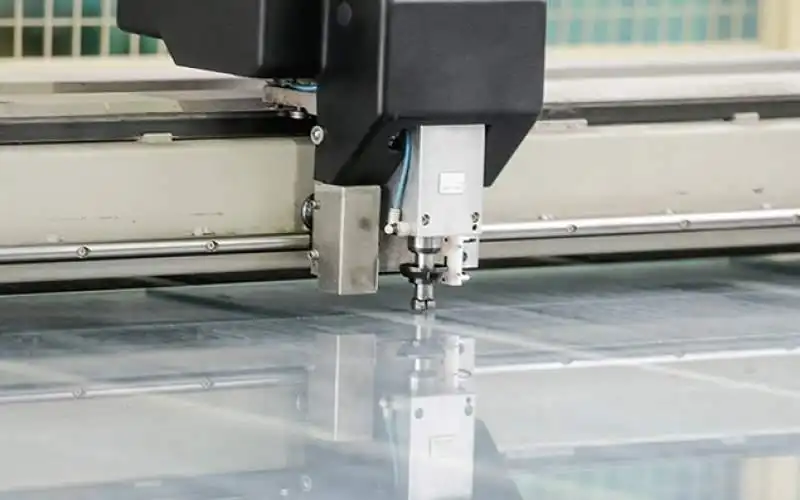
CNC tools, like the PEG-8080, have cutting wheels that are moved by computer-controlled systems. These units are very flexible and can consistently make straight lines, bends, and complicated forms. They are very good at working with building glass, furniture parts, and artistic pieces. Precision racks, ball screws, and linear guides are used in this technology to make motion control smooth. Taiwanese TBI parts and imported German Bole knife wheels are used by Perfect Laser to make sure that it works reliably on all types of glass. The system can cut materials as thin as 0.15 mm, which makes it useful for electronics and other specialty items that need to be very thin.
Laser Technology for Cutting
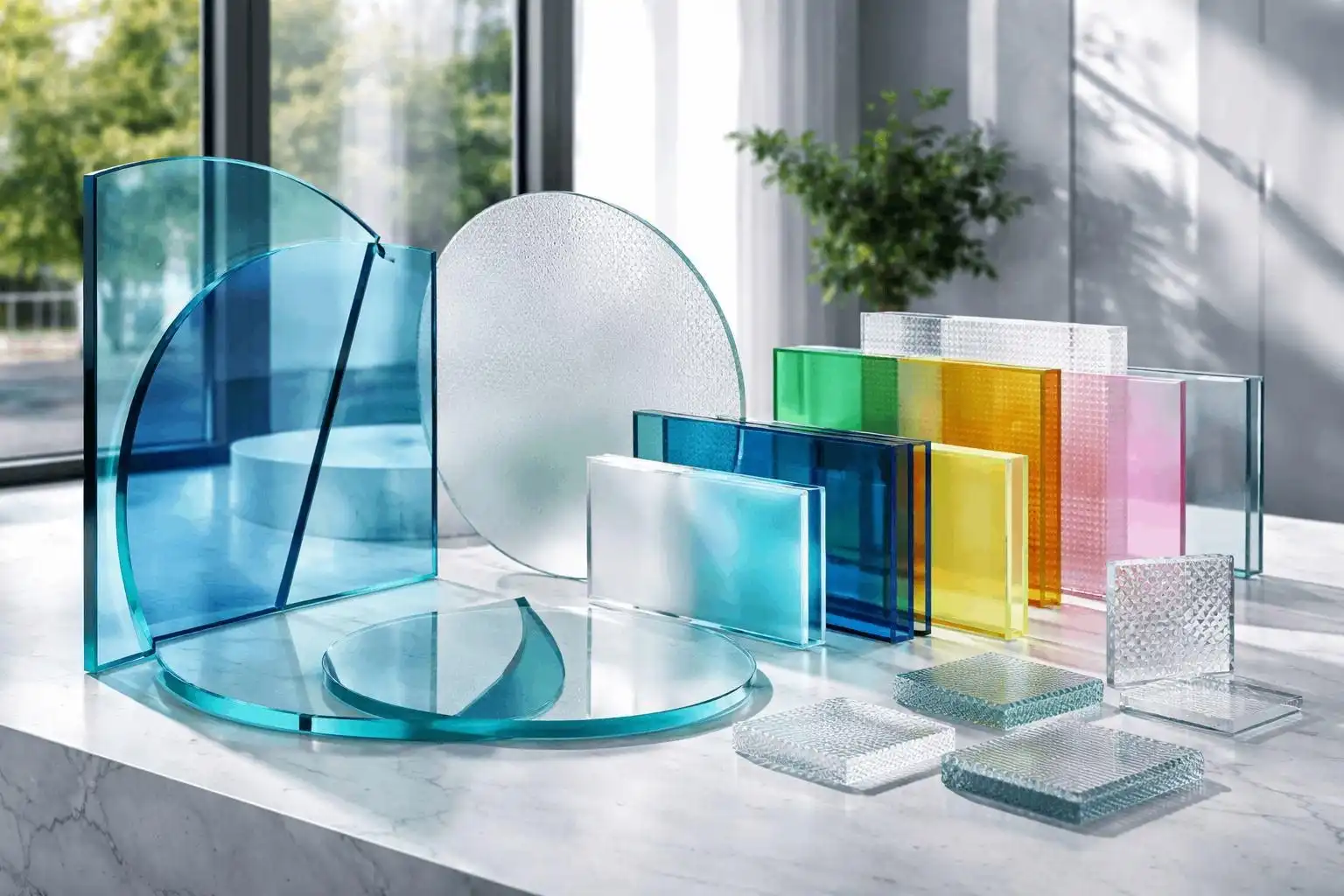
Laser systems use directed light beams to melt or evaporate glass along lines that have already been set up. This non-contact way keeps tools from wearing out and lets you make images with a lot of detail. This technology works best for things that need to be very precise, like chip wafers and parts for medical devices. Heat-affected areas in a CNC glass cutting machine need to be carefully managed to prevent stress fractures in surrounding material. To control the thermal effect on a CNC glass cutting machine, more advanced systems use cooling devices and power modulation during operation. This thermal management capability distinguishes higher-end CNC glass cutting machine configurations from basic cutting equipment, enabling precise cuts without compromising glass structural integrity near the cut zone.
Waterjet Cutting Machines
Streams of high-pressure water mixed with rough particles can break glass without making it hot. This method works well with thick materials and complicated three-dimensional forms. A lot of big industrial uses like this method because they can't stand heat distortion. Waterjet systems need a lot of support infrastructure, like tools to filter the water and move rough materials. For many regular tasks, operating costs are still higher than mechanical cutting.
Selection Considerations
Choosing the right technology rests on a number of things that are all connected:
1. If a capital investment can be justified through flow gains, it depends on how much is being made. Automated filling systems and multi-head setups are helpful for businesses that do a lot of work.
2. Specifications for the material affect the choice of technology. Cutting factors and tool choices are affected by the thickness, make-up, and surface treatment of the glass. The PEG-8080's work table can be customized with anti-special board, metal, or marble tops. This shows how systems can be used with different types of materials.
3. How hard a cut is determines what tools are needed. Controls for simple straight cuts are easier to learn than controls for complex patterns with tight radius curves. CAD integration and optimization tools are very important for getting the most out of materials while working with complicated cutting plans.
4. Budgets naturally play a role in choices, but procurement workers should look at the total cost of ownership instead of just the original price. Long-term operational costs are greatly affected by warranty coverage, parts supply, and service reaction times.
Maintenance Tips and Common Problems with Automatic Glass Cutting Machines
Good repair habits have a direct effect on how well automatic glass cutting machines work and how well they cut. Setting up habits for thorough care keeps machines running longer and saves money on repairs.
Routine Maintenance Protocols
Cleaning the guide rails and drive systems on a regular basis gets rid of the glass shards and other junk that builds up on them. A daily check finds problems with alignment, worn parts, and loose bolts before they get worse. We suggest writing down these checks so that you can set baseline success measures. Schedules for lubrication must exactly match what the maker says. Precision parts in Perfect Laser's tools need to be oiled with certain types of oil at set times. Too much oil brings in dirt and debris, while too little lube speeds up wear. Updates for software should get the same care as repairs for machines. Control system changes fix bugs, make cutting methods better, and make safety features stronger. Keeping software versions up to date ensures that it works well with modern design tools and performs at its best.
Common Issues and Solutions
Over time, as mechanical parts wear down and settle, calibration shift happens. Dimensional irregularities and a loss of edge quality are signs. Equipment instructions describe how to recalibrate things so they work the way they were supposed to. The Z-axis automatic alignment knife feature of Perfect Laser helps keep accuracy between official calibration rounds. Cutting wheel wear has a direct effect on the quality of the score. Watching the state of the edges and how they rotate can help you guess when to replace them. The PEG-8080 can work with more than one knife at once, so it can keep running while the wheels are being changed. This keeps production from stopping too much. Sensor problems show up as mistakes in setting or stops that don't make sense. Cleaning the surfaces of sensors fixes a lot of problems, and checking for electrical continuity finds problems with the wires. When fixing goes beyond what can be done in-house, skilled help is needed.
Service Support Infrastructure
Warranty terms are very important for protecting you during the original deployment times. Perfect Laser backs up its marking machines with a two-year warranty and its bigger cutting systems with a one-year guarantee, showing that it is sure that its products will last. Knowing the scope of the warranty helps you make a budget for repair plans after the warranty is over. Repair times depend on how quickly parts can be gotten. Suppliers with local supplies have less downtime than those who need to ship goods abroad. Long production stops can be avoided by building ties with prompt service providers. When troubleshooting a glass cutting machine, technical support accessibility is very important. Providers who give consultations 24 hours a day for their glass cutting machine, like Perfect Laser, help solve problems quickly no matter what time zone they are in. This rapid response capability for a glass cutting machine is especially helpful during critical production periods, when delays cost significant money. Reliable glass cutting machine support minimizes costly production interruptions.
Procurement Considerations for Automatic Glass Cutting Machines
Supplier Evaluation Criteria
Competence in technical areas is the base. Established research and development (R&D) programs show that a company is dedicated to new ideas and better products. Perfect Laser runs two research centers and has 63 national patents, which shows that it has a lot of technical tools working to improve cutting technology. Quality assurance methods show how well a product is made. Getting a CE certification means that the product meets European safety standards. Getting extra TUV and SGS certifications shows that the product follows strict quality management systems. With these qualifications, you can be sure that the product is reliable and meets all legal requirements. Service infrastructure influences long-term satisfaction. A global presence lets local help be quick. Perfect Laser has exported to many countries, including Germany, Japan, Italy, Brazil, and many more. This shows that they have built service networks that can support foreign operations.
Financial Considerations
Financing choices change how possible it is to buy something. Companies that can't commit all of their cash at once can still get advanced technology through leasing, flexible payment terms, and performance-based contracts. Progressive sellers set up deals that match cash flow patterns to how well the equipment works. ROI calculations should include more than one type of reward. There are direct saves from less waste and work, and there are also secondary wins from better quality and keeping customers. Automated cutting systems usually pay for themselves in 18 to 36 months, but this depends on how often they are used and how much human costs vary.
Conclusion
A smart investment that will pay off in quality, efficiency, safety, and cost savings is switching from cutting glass by hand to an automatic glass cutting machine. CNC control systems are very accurate, so they don't depend on human error and can make complicated shapes that would be hard to make by hand. There are accumulating economic gains from less waste, less work, and longer machine service lives. Perfect Laser's PEG-8080 shows how current systems combine high-tech parts with easy-to-use controls to provide industrial-grade performance. When procurement professionals are looking at automation choices, they shouldn't just look at the original price. They should also look at the technical skills, service infrastructure, and total cost of ownership of the suppliers. When makers switch to automated cutting, they gain a competitive edge in markets that expect higher quality standards and faster delivery times.
FAQ
1. How frequently do automatic glass cutting machines require maintenance?
Every day, cleaning and eye checks take between 15 and 30 minutes. Every week, lubrication and tuning checks take between one and two hours, based on how complicated the machine is. Software changes happen every three months, and full professional maintenance is usually planned once a year. Maintenance frequency changes based on production output; sites that are used a lot may need more frequent attention to keep running at their best.
2. Can automated systems handle custom shapes and intricate designs?
Yes, CNC devices are great at making shapes with a lot of angles. With CAD integration, designers can make unique models that are sent straight to the cutting table. With its 360-degree spinning cutting head and optimization software, the PEG-8080 can consistently make circles, ellipses, polygons, and freeform shapes. Simulation lets you see cuts before they are run, which cuts down on setup waste in trial designs.
3. Do these machines meet US and European safety standards?
Manufacturers with a good reputation make sure they follow local rules. The equipment from Perfect Laser has a CE mark on it, which means it meets European safety standards. Quality management systems are checked by a third party with extra certifications from TUV and SGS. When buying tools, make sure that the paperwork shows that it meets OSHA standards for US installations and other important standards for other target markets.
Partner with a Trusted Automatic Glass Cutting Machine Manufacturer
Choosing the right equipment partner is the first step in improving your output skills. Perfect Laser has been providing top-notch engineering solutions for glass processing for 30+ years, mixing cutting-edge technology with a full range of support services. Our PEG-8080 automatic glass cutting machine has imported German knife wheels, Taiwan TBI linear guides, and advanced CNC control systems that make it very accurate down to the micron level.
We are a well-known company that sells automatic glass cutting machines to more than 50 countries. Our customers are in businesses ranging from building glass to precision electronics. Our OEM customization and expert help available 24 hours a day, 7 days a week make sure that our solutions are perfect for your needs. For in-depth talks, application testing, and full quotes, please email our experts at [email protected]. Find out how Perfect Laser's cutting tools can change the quality and speed of your production.
References
1. Mitchell, R. & Thompson, K. (2021). Automated Glass Processing: Technology and Industrial Applications. Industrial Manufacturing Press.
2. Chen, L., Rodriguez, M., & Patel, S. (2020). "Comparative Analysis of CNC and Laser Glass Cutting Systems." Journal of Manufacturing Technology, 45(3), 287-304.
3. European Glass Processing Association. (2022). Standards and Best Practices for Automated Glass Cutting Equipment. EGPA Technical Publication Series.
4. Williams, J. (2019). Precision Engineering in Glass Manufacturing: From Manual Craft to Digital Control. Academic Technical Publishers.
5. International Glass Industry Council. (2023). "Safety Guidelines for Automated Glass Processing Facilities." IGIC Industrial Safety Standards, Volume 12.
6. Anderson, T. & Kumar, V. (2020). "ROI Analysis of Automation Investment in Glass Processing Operations." Manufacturing Economics Quarterly, 38(2), 156-173.

share your inquiry, get the quotation accordingly.
第一张审核员说包含其他公司不能用_1755049724891.webp)
Perfect Laser – Global Manufacturer of Reliable Laser Solutions