What Is a 4-in-1 Handheld Fiber Laser Welder?
The concept of a ''4 in 1 laser welding machine'' is impressive due to its integration of multiple laser processes into a single portable tool. This high-tech equipment combines welding, cutting, cleaning, and metal surface cleaning functions within one compact system. Unlike traditional welding setups that require separate machines for each task, this multifunctional device leverages fiber laser technology to deliver high precision, speed, and operational flexibility. Its handheld design allows operators to easily move around workpieces of different sizes, making it especially suitable for complex shapes and on-site repair work. This innovative approach significantly improves industrial manufacturing efficiency and provides businesses with greater operational versatility.
Understanding the 4-in-1 Handheld Fiber Laser Welder
Core Technology Behind Fiber Laser Welding
Fiber laser welding uses a focused beam to create a melt pool for strong metal bonds. It offers better beam quality than CO2 lasers, with smaller heat-affected zones and less thermal distortion. Perfect Laser's PE-W2000 delivers uniform weld quality for stainless steel, carbon steel, aluminum, and nickel alloys. The integrated cabinet design houses generator, cooling, and controls.
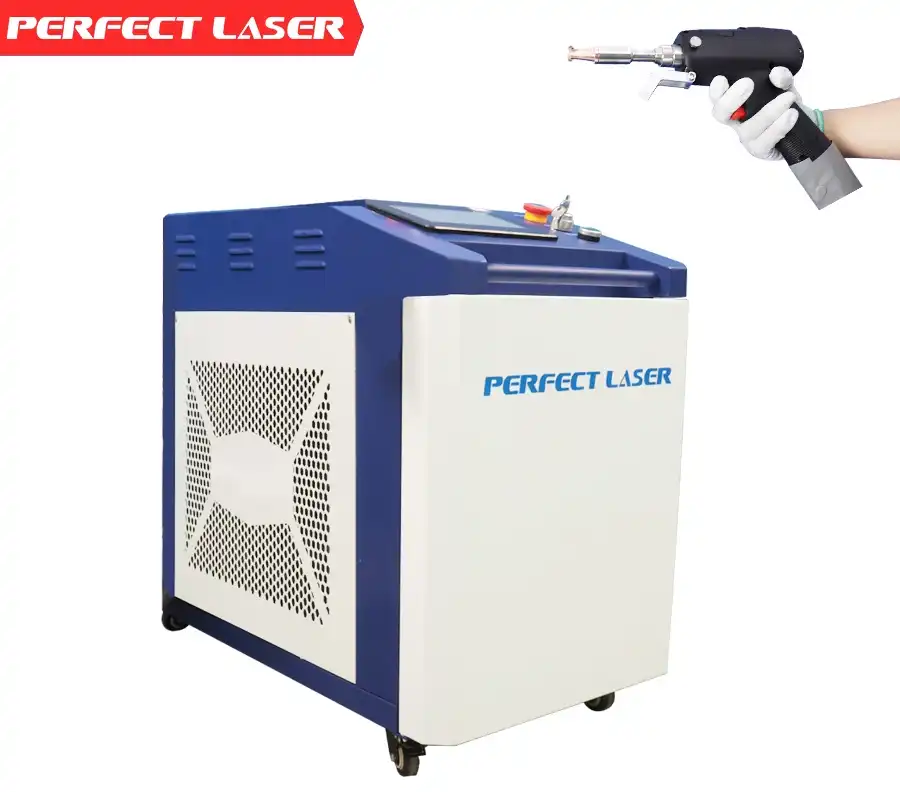
What Makes It "4-in-1"?
The control system enables welding, cutting, cleaning, and weld cleaning modes. Welding handles 0.5-3mm materials. Cutting mode increases power density for smooth cuts. Cleaning removes rust without chemicals. Weld cleaning polishes joints without grinding. This flexibility eliminates separate tools. The 0.7kg handheld laser head reduces operator fatigue while allowing full control of complex welding angles and positions.
Ergonomic Design Advantages
The lightweight design benefits aerospace titanium welding in confined spaces and jewelry work with precious metals. Built-in rollers enable mobility across shop floors. Operators learn the intuitive interface in 30 minutes—far faster than traditional welding certification programs. This accessibility allows small manufacturers to adopt advanced laser welding technology without extensive training or dedicated robotic cells for low to medium volume production.
Benefits and Applications of 4-in-1 Laser Welders in Modern Industry
Efficiency Gains Through Consolidated Operations
For traditional welding processes to work, there needs to be more than one desk, tool changes, and steps for moving materials. A Industrial Laser Welding Machine 4 in 1 laser welding machine gets rid of these wasteful steps by combining them into one. When automakers join lightweight aluminum chassis parts together, they can remove oxide layers and polish lines right away, without having to move parts between stations. This streamlined method with Industrial Laser Welding Machine cuts cycle times by up to 40% and makes sure that all production batches are the same.
Compared to regular arc welding methods, this one uses a lot less energy. Fiber lasers are much more efficient than older technologies, which only worked 10-15% of the time when turning electricity into laser light. The targeted beam sends energy exactly where it's needed without spreading too much heat, so as little material as possible is lost. Some of the environmental benefits are getting rid of welding smoke, using less shielding gas, and not making any chemical cleaning waste.
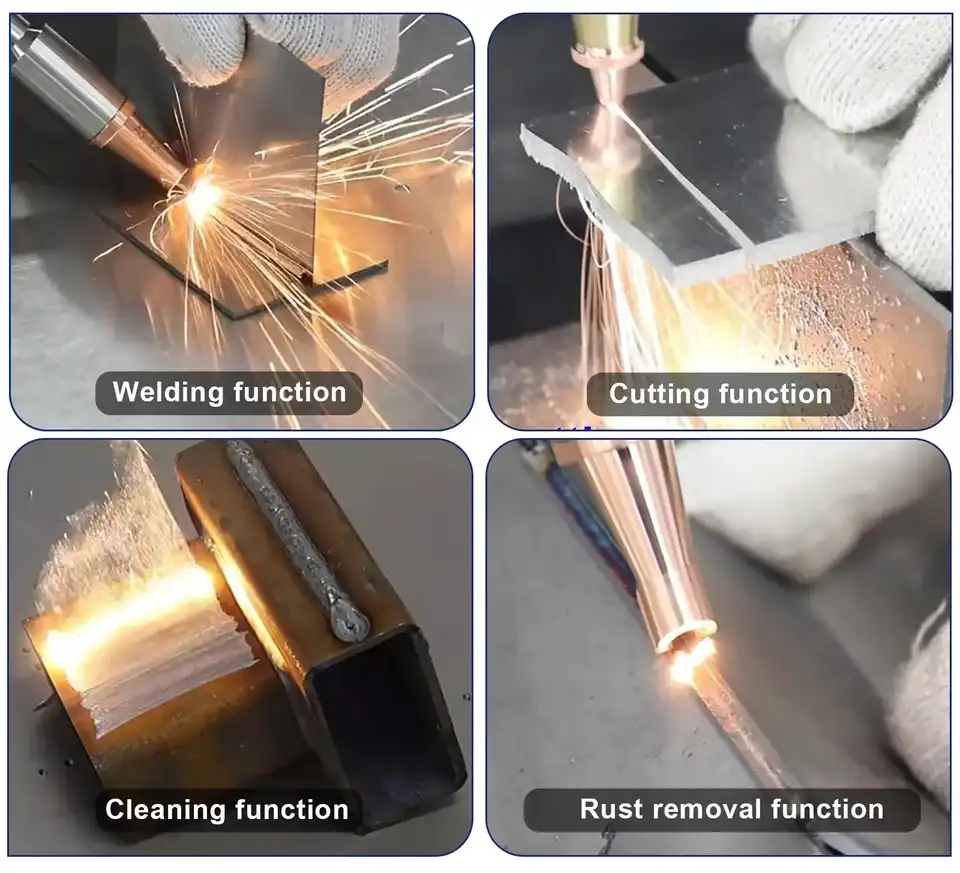
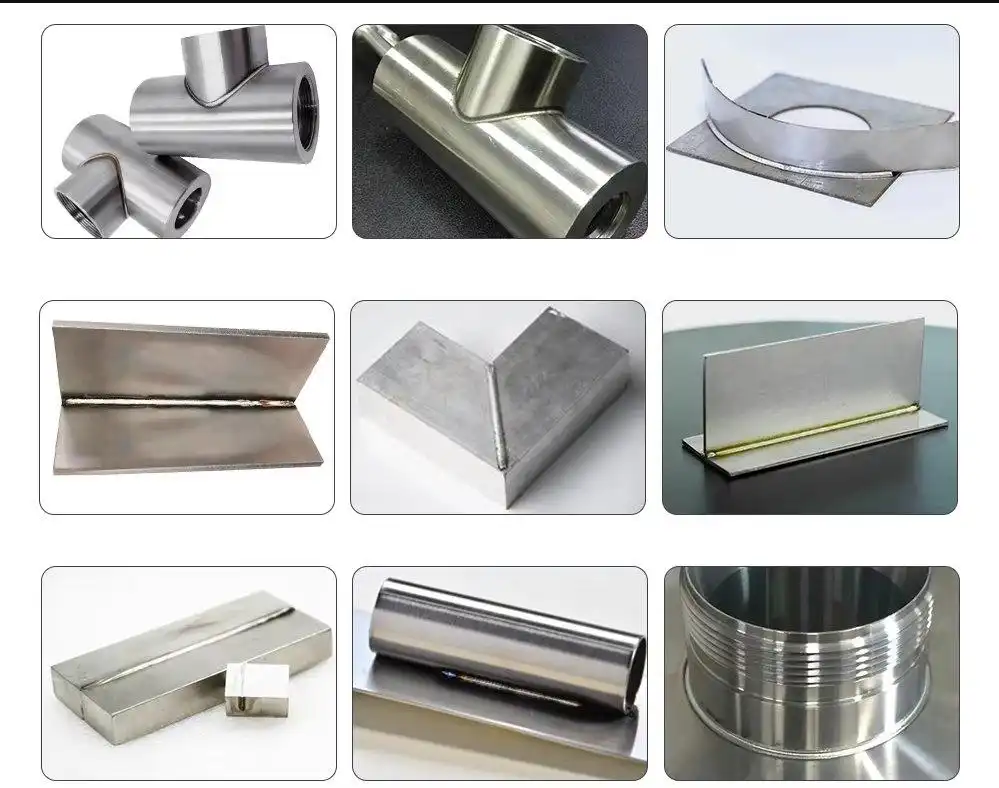
Industry-Specific Applications
- Automotive and aerospace: 4-in-1 laser welds titanium and aluminum with over 90% base material strength.
- Precision electronics: small heat-affected zone protects nearby components for battery packs and connectors.
- Luxury goods: spot-weld chain links without damaging gemstones.
- Heavy industry: handheld units up to 3000W weld thicker materials.
- Shipyard workers use portability for on-site repairs. Deep penetration cuts up to 3mm.
Comparing 4-in-1 Laser Welders with Other Welding Solutions
Precision and Quality Metrics
Traditional MIG and TIG welding methods use electrodes and shielding gas that need to be replaced, which adds factors that affect the quality of the joint. Through non-contact processes, laser welding gets rid of these flaws. Comparative tests show that laser welds are 99.5% defect-free, while traditional ways are only 92–95%. Because there is no splatter and little cleanup after the weld, finishing work is cut by about 60%.
Even though CO2 lasers can cut through thicker materials, they have lower beam quality and cost more to run. Fiber lasers stay focused over longer distances and smaller spot sizes, which lets them do precise work that gas lasers can't do. Fiber systems don't need as much upkeep because they are solid-state, which means there are no mirrors to balance or gas mixtures to handle.
Total Cost of Ownership Analysis
When procurement teams look at industrial laser welding options, they need to think about how much they cost to buy, how much they cost to run, and how much output they can gain. Depending on its features and power level, a normal 4 in 1 laser welding machine can cost anywhere from a modest to a large amount of money. But when you figure out the return on investment, you should include the money you save by combining tools, cutting down on the cost of supplies, getting lower energy bills, and cutting down on the cost of labor by making cycle times faster.
Over the course of five years, keeping different welding, cutting, and cleaning equipment usually results in a 35–50% higher total cost of ownership for fiber laser systems. When care instructions are followed, maintenance downtime is less than 2% per year on average. This is compared to 8–12% for traditional welding cells that need electrode changes and gas system cleaning more often.
Flexibility Versus Fixed Automation
Handheld laser welders give job shops and custom makers unmatched freedom when it comes to working with different-shaped pieces. In real time, the user can change the focus distance, approach angles, and journey speed to fit different designs. Fixed robotic systems are better for making a lot of the same parts, but they aren't flexible enough for product changes and need a lot of reworking.
Because types like Perfect Laser's PE-W2000 are small, they can be used in places with limited room where automated cells wouldn't fit. Small manufacturers can use laser welding without having to spend money on robotic equipment. This means that mid-market businesses can also use this advanced joining technology.
Practical Guidance for Procurement: Selecting & Maintaining Your 4-in-1 Laser Welder
Key Selection Criteria
Throughput and material suitability are directly affected by power flow. A 1500W system can work with thin-gauge materials like those used in electronics and jewelry, while a 3000W system is better for big industrial tasks. When figuring out how much power is needed, people who work in procurement should look at the normal ranges of workpiece diameter and production numbers. Because the PE-W2000 comes in different power options, it can be expanded as manufacturing needs change.
Different providers offer different multifunctionality features. Instead of thinking that all 4 in 1 laser welding machine models can do the same things, make sure that the cleaning and cutting modes meet the needs of your particular process. Before signing a purchase deal, ask to see sample welds on real production materials to make sure the performance claims are true.
Long-term happiness is strongly linked to brand trust. Perfect Laser has been making lasers since 1995 and has approvals from CE, TUV, and SGS, which show that they meet world quality standards. The company's 63 patents show that they are committed to continuing to come up with new ideas. Their long-term involvement in Germany, Japan, Italy, and other advanced manufacturing markets also shows that they can be trusted.
Maintenance Best Practices
Regular repair keeps things running at their best and makes them last longer. The following habits should be put into place:
- Daily cleaning of protective lens: Clean the protected lens every day because growth of residue lowers the quality of the beam. To keep the clarity of your vision, only use approved cleaning products and lint-free wipes.
- Weekly inspection of fiber connections: Check fiber connections once a week to make sure they are securely connected and that there are no contaminants at the ends of the fibers where the beam enters the welding head.
- Monthly calibration checks: Check the focus distance and beam alignment once a month using measuring markers. Most computers have diagnostic tools that can do this check automatically.
- Quarterly chiller maintenance: Every three months, you should check the pump's function and replace the coolant as directed by the maker. Too much heat from not enough cooling leads to early laser failure.
- Annual comprehensive service: As part of the annual thorough service, you should have a professional review the laser source output, update the control system, and check the mechanical parts.
Setting these rules during the planning phase of buying makes sure that facilities spend the right amount of money on repair and train their staff properly. Perfect Laser offers online technical help 24 hours a day, seven days a week, and backs up its marking machines with a two-year warranty (one year for bigger systems).
Safety Protocol Implementation
To keep lasers safe, you must strictly follow the safety steps. Operators must wear safety glasses that are rated for the 1070nm fiber laser range. Built-in safety alarms in the PE-W2000 keep an eye on door interlocks, emergency stops, and beam path barriers to make sure that no one gets accidentally exposed.
Controlled laser zones should be set up in the workplace with the right signs and limits on who can enter. Even though laser processes make a lot less smoke than arc welding, ventilation systems still need to catch the metal fumes that come out of welding. Even though the process isn't touching anything, personal safety equipment like flame-resistant clothes and heat-resistant gloves is still needed.
Leading Brands, Suppliers, and Procurement Options for 4-in-1 Laser Welders
Manufacturer Evaluation Criteria
When procurement teams are looking for 4 in 1 laser welding machine tools, they should give more weight to makers with extensive certification portfolios. The CE certification for Perfect Laser makes sure that it meets safety standards in the European Union. The TUV and SGS certifications show that its quality control systems meet international standards. When putting tools into use across global manufacturing operations, these qualifications lower the regulatory risk.
Premium providers are set apart from commodity vendors by their technical help infrastructure. Perfect Laser has two research and development centers that let them respond quickly to problems with applications and requests for customization. Their engineering team works directly with clients to find the best laser settings for different mixtures of materials and joint configurations, which is more than just offering tools.
When planning installation schedules, production capacity and shipping dependability are important things to think about. Established makers keep an inventory of parts and use tried-and-true supply lines that keep wait times from going on for months, which is common with smaller sources. Perfect Laser exports to more than 20 countries, which shows that they can handle processes that help with coordinating foreign projects.
Procurement Channel Options
Direct manufacturer purchasing typically offers best value for standard configurations. They offer reasonable prices and expert support without adding a markup for distributors. Contracts to buy a lot of units at once lead to bigger savings and better service terms.
Authorized regional wholesalers offer localized support benefits such as installation help on-site, domestic spare parts inventory, and expert service in the customer's native language. This route works well for businesses that value quick service responses over small cost saves. Perfect Laser keeps up networks of approved dealers in North America, Europe, and Asia so that they can meet the needs of a wide range of buyers.
Service and Warranty Considerations
Comprehensive guarantee coverage keeps capital purchases safe from breaking down too soon. As standard, the terms should cover the light source, the control system, and the mechanical parts. Perfect Laser's two-year warranty on small systems and one-year guarantee on industrial units are in line with industry standards. They also offer help 24 hours a day, seven days a week, which is more than most companies promise.
After-sales service deals often include preventative maintenance calls once a year, faster service for technical issues, and cheaper replacement parts. Long-term value is higher when these terms are negotiated during the original procurement discussions than when help is bought after equipment problems happen. Ask for specific service level agreements that spell out the fastest times for responding and the dates that repairs will be done.
Conclusion
The 4 in 1 laser welding machine is a huge step forward in metal joining technology because it combines welding, cutting, cleaning, and finishing tasks into a single, movable system that works quickly and well. It can be used to make lightweight structures for cars, precise electrical assemblies, high-end goods, and heavy industry maintenance. When compared to traditional ways, fiber laser technology is more accurate, costs less, and has a much smaller effect on the environment. When purchasing these systems, people in charge of buying things should look at how much power they need, how reliable the maker is, and the total cost of ownership. They should also make sure that strict upkeep rules and safety standards are followed. The increased flexibility and efficiency make investments worthwhile in all industrial areas that want to gain a competitive edge through improved production methods.
FAQ
1. What materials can a 4 in 1 laser welding machine process effectively?
Metals like carbon steel, aluminum alloys, titanium, copper, nickel, and zinc, as well as stainless steel types 304 and 316, work great with these devices. The thickest material that can be used ranges from 0.5 mm for precise electronics work to 3 mm for building projects. It is possible to join metals that are not the same when the parameters are optimized correctly. This lets you make new products that you couldn't make with traditional welding methods.
2. How does laser welding impact joint strength compared to traditional methods?
When laser welds are done right, the tensile values hit 95–98% of the properties of the base material, which is the same as or better than TIG welding. The small area touched by heat limits grain growth and keeps the substructure of the material intact. Fatigue testing shows that laser joints can handle cyclic loads as well as the parent metal. This means they can be used for important safety parts in aircraft and cars.
3. What maintenance and warranty support should buyers expect?
Reliable 4 in 1 laser welding machine suppliers, such as Perfect Laser, back up their products with full warranties that cover the laser sources, control systems, and mechanical parts. Expect 24-month coverage on small computers, and you can get longer service plans if you want to. Maintenance needs are still very low compared to standard equipment, taking only about 4 to 6 hours every three months for regular checks and adjustments. Technical help via email, phone, and online testing makes sure that problems are fixed quickly.
Partner with a Trusted 4 in 1 Laser Welding Machine Manufacturer
Perfect Laser can help you with your business problems because they have been using lasers to make things for30+ years. Our PE-W2000 industrial laser welder blends tried-and-true fiber laser technology with a useful, flexible design. It comes in 1500W, 2000W, and 3000W options so you can get the right power for your needs. As a provider of approved 4 in 1 laser welding machines, we uphold strict quality standards that are backed up by CE, TUV, and SGS certifications. We support setups in the heavy industry, aerospace, automotive, and electronics industries. Our engineering team offers unique solutions, thorough training, and technical help at [email protected] that is available 24 hours a day, 7 days a week. Check out how our technology that combines welding, cutting, and cleaning can make your work easier, save you money on tools, and improve the quality of your joints and the speed at which you can make things.
References
1. Cao, X., & Wallace, W. (2021). Laser Welding: Fundamentals and Industrial Applications. Cambridge University Press.
2. Dawes, C. (2019). Laser Welding Technology in Modern Manufacturing. Woodhead Publishing.
3. Ion, J. C. (2020). Laser Processing of Engineering Materials: Principles, Procedure and Industrial Application. Elsevier Science.
4. Katayama, S. (2022). Handbook of Laser Welding Technologies. Springer International Publishing.
5. Olsen, F. O. (2018). Hybrid Laser-Arc Welding Applications and Process Development. CRC Press.
6. Steen, W. M., & Mazumder, J. (2023). Laser Material Processing: Fourth Edition. Springer-Verlag London.

share your inquiry, get the quotation accordingly.
第一张审核员说包含其他公司不能用_1755049724891.webp)
Perfect Laser – Global Manufacturer of Reliable Laser Solutions