Wall Printer Review: Real Printing Speed and Cost Per Square Meter
Real-world performance metrics are very important to know when looking at vertical printing solutions for business use. Advanced inkjet technology and precise mechanics work together in a wall printer to print high-resolution images directly on vertical surfaces. These systems are faster than traditional painting methods—depending on the resolution settings, they can usually paint 10 to 15 square meters per hour—while still being cost-effective because they require less labor and finish projects faster. Businesses can now use this technology to change how they brand their interiors, decorate buildings, and send large-format visual messages.
Understanding Wall Printer Technology and Printing Speed
Modern vertical printing systems are a big step forward in the technology used for direct-to-surface application. Industrial-grade inkjet heads and computer-controlled movement systems work together in these tools to get uniform results on a wide range of surfaces.
How Wall Printing Technology Works
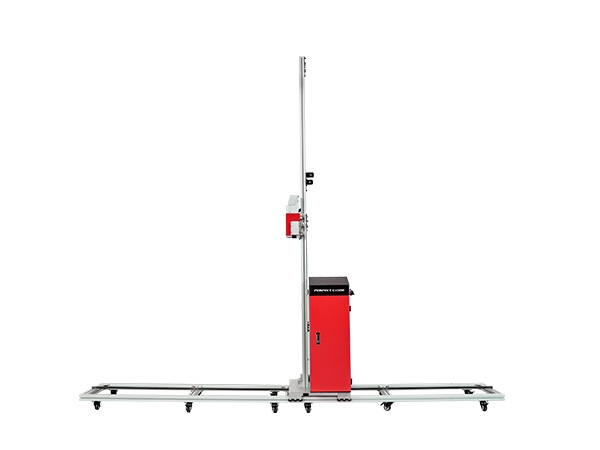
Micro piezoelectric inkjet technology, which ejects different sizes of ink droplets very precisely, is at the heart of the mechanism. This method is shown by Perfect Laser's PE-UV40 model, which has dual-sensor automatic induction that changes the print head distance based on surface flaws. The hyperbolic Banner sensor, which was brought in from the USA, can detect changes in the surface in real time. This keeps the nozzles from running into each other and makes sure that the ink is spread evenly, even on walls with texture. This flexible method keeps the quality of the prints the same whether they are on smooth glass panels or rough concrete surfaces.
The H-frame design makes the structure stable while it's working, which lets the print carriage move smoothly across vertical surfaces. A siphon constant ink supply method keeps the machine running smoothly during big projects by avoiding the need to refill the cartridges often, which would slow down the production process otherwise. When the system is set up with two print heads, it effectively doubles output without lowering image quality. This is a huge benefit for business workers who are working under tight deadlines.
Portable vs Stationary Models: Operational Differences
Portable wall printers are designed to be easy to move and set up. The PE-UV40 has a small body that makes shipping much cheaper, and optional foldable racks make it easy for one person to move to job sites. This setup works well for contractors who work in more than one place or offer customization services on-site. The setup time for these units is usually between 15 and 25 minutes, which makes them useful for projects that need to be moved around a lot.
Stationary installations work best in places with a lot of production because they can position the substrates consistently. Automated systems for moving materials and weather controls that make the best conditions for drying ink are often used in these setups. Even though they need their own room on the floor, fixed systems cut down on the time it takes to make each unit because they don't have to do the same calibration steps between print runs.
Key Factors Affecting Actual Printing Speed
The resolution settings have a direct effect on the throughput. Standard 720x1440dpi output lets you go 12 to 15 square meters per hour, which is good for commercial signage and home decor. For photorealistic paintings, raising the resolution to 1440x2880dpi slows the machine down to 6–8 square meters per hour but produces results that look like they belong in a museum. The VSDT variable ink-drop technology changes the size of the droplets on the fly, keeping the image sharp while using the least amount of ink possible.
How well the surface is prepared has a big effect on how fast the printing actually goes. Smooth, primed surfaces let you go as fast as possible, but unprepared concrete or brick may need to be sealed first to keep the ink from soaking in too much. The PE-UV40 can be used with latex paint, diatom mud, and fake porcelain walls, which gives you options. However, for best results, make sure the surfaces are properly prepared.
Real-World Speed Benchmarks from 2026 Models
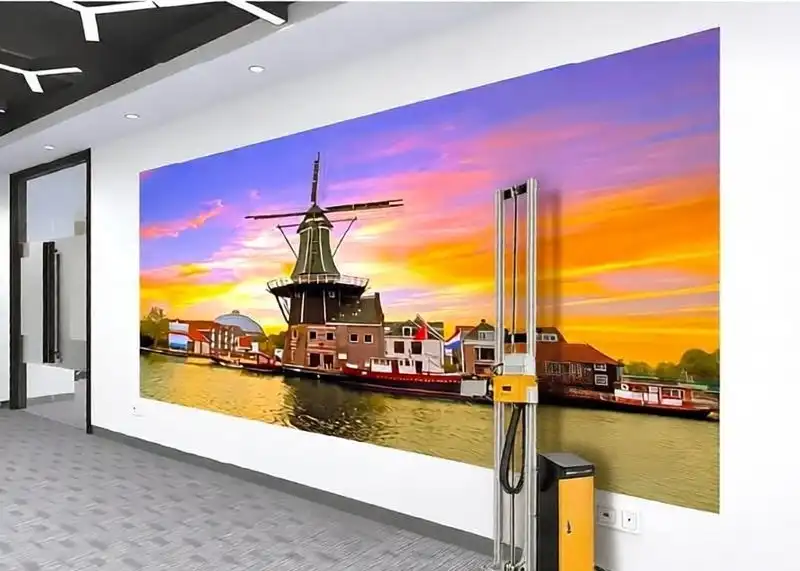
The performance of newer systems can be seen to be better than that of older technology. Commercial installations have tested UV-curing models and found that they can decorate a standard hotel corridor (about 40 square meters) in 3.5 to 4 hours, which includes setting up and calibrating the machine. It is assumed that the resolution is 1200dpi on surfaces that have already been coated.
Different measures are shown for retail branding apps that need more information. It usually takes 60 to 75 minutes to print a 6-square-meter feature wall at full resolution, plus 20 minutes for surface preparation and final inspection. The printing process and UV curing happen at the same time, so there are no separate drying steps that slow down traditional methods.
Analyzing Cost Per Square Meter: What Influences the Price?
Using vertical printing technology in different types of businesses depends on how cost-effective it is. By breaking down cost components, you can see where there are chances to improve things.
Consumables and Ink Expenses
UV ink is usually 40 to 55 percent of the cost per square meter and is the main ongoing expense. Rates of consumption depend on the sharpness choices and the porosity of the material for the wall printing machine price. The PE-UV40's UV ink formula cures quickly under air-cooled LED arrays, stopping the ink from penetrating materials. This controlled application lowers consumption compared to water-based systems that need more ink to get the same color saturation.
Maintenance and Operational Labor Costs
The total cost of ownership is directly affected by how often repair needs to be done. The PE-UV40's air-cooled UV light system gets rid of the need for infrastructure upkeep on water cooling. This choice in design cuts down on both component costs and expert labor hours. Cleaning cycles must be run every day for 15 to 20 minutes to keep the print quality at its best. This is a job that regular operators can do without any special training.
Portable vs Stationary Unit Cost Comparison
Portable wall printer systems usually require less money up front, which makes them easier for businesses to try out vertical printing or serve customers in different areas. When project volumes stay below 500 square meters per month, operating costs stay competitive. Because systems like the PE-UV40 have small bodies, the cost of shipping is only $50 to $75 per move within urban service areas.
Industry-Specific Cost Analysis
Because of the highest resolution settings and exact color matching needs, retail uses put more emphasis on visual effect than surface area. This means that costs per square meter are higher. Costs usually range from $15 to $28 per square meter, which includes materials, labor, and the wear and tear on equipment. More expensive locations are worth it because they bring in more customers.
Wall Printer vs Traditional Wall Painting: Speed and Cost Comparison
When you compare vertical printing technology to traditional methods, you can see that vertical printing technology has clear advantages in some situations, while traditional methods are still useful in others.
Limitations of Traditional Wall Painting Methods
Because they are done by hand, painting by hand has problems with consistency over large areas. To get a uniform color spread, skilled applicators are needed and at least two to four hours of drying time must pass between coats. A normal business painting that covers 20 square meters takes between 16 and 24 person-hours to paint over the course of 3 to 4 days. This includes design transfer, base coating, detail work, and protective sealing.
Speed Advantages of Wall Printing Technology
Through built-in UV sealing, automated vertical printing gets rid of the need for drying times. The PE-UV40's instant curing feature lets you check right away that the project is finished, cutting down on the usual multiple-day execution times to a single session. This speeding up is especially helpful in business settings where the costs of operational disruption are higher than the direct labor savings.
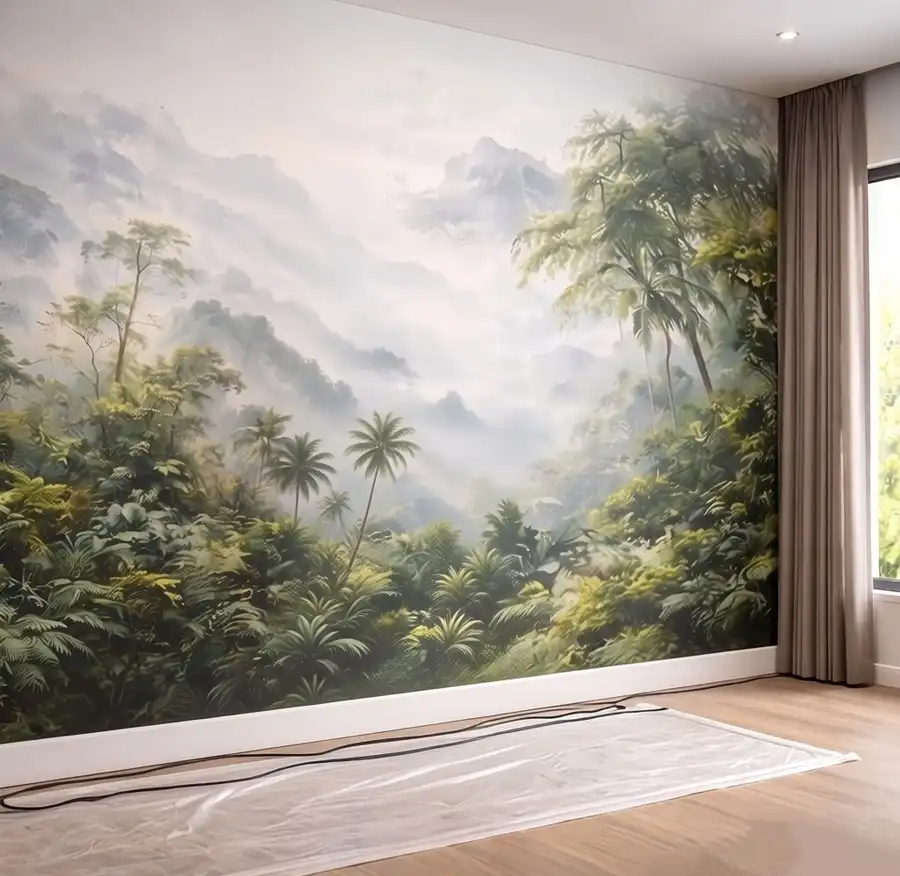
Design complexity only slows things down a little in a wall printer. The time needed to print a simple logo and a photorealistic mural is about the same per square meter. The main thing that changes is the resolution settings, not how hard the art is. This trait makes it easier for everyone to get advanced visual treatments that would be too expensive to do by hand.
Cost-Benefit Analysis for Commercial Projects
The clearest economic benefits can be seen in large-format business uses. A 100-square-meter store interior installation with a wall printer can be completed within eight to ten working hours with significantly lower material and labor costs. A traditional mural of the same size would take 60 to 80 person-hours to complete over 7 to 10 days and require much higher overall expenses. This difference quickly increases the equipment's return on investment in busy production areas.
When Traditional Methods Remain Viable
Vertical printing can't handle artistic projects that need textured finishes, dimensional layering, or the mixing of different types of media right now. When artistic interpretation is part of the value provided, traditional methods may be okay for things like gallery displays, healing paintings in healthcare settings, or custom home projects.
Choosing the Right Wall Printer for Your Business Needs
To choose the right vertical printing tools, you have to balance the technical requirements with the working needs and budget. The decision process should take into account both current wants and the company's growth path.
Essential Procurement Criteria
The range of applications is determined by the print quality. High-end customers who need photorealistic quality can use equipment with a maximum resolution of 1440x2880dpi, while 720x1440dpi systems are better for business signs and decorative uses. The PE-UV40's variable ink-drop technology lets you change the resolution in a number of ways, so it can serve a wide range of markets without lowering the quality of its output.
Material suitability has a direct effect on the kinds of projects that can be done with a wall printer. Contractors can look for work in the household, business, and industrial sectors with systems that are approved for a wide range of substrates, such as glass, ceramic tile, wooden boards, metal panels, and different wall finishes.
Balancing Speed, Quality, and Total Cost of Ownership
Initial capital investment is only one part of looking at the economy. The PE-UV40's small size lowers shipping costs by 40–60% compared to bigger industrial units. This is an important factor for businesses that serve multiple regions and need to move their equipment. Optional foldable rack setups make movement even easier, allowing deployment with just one car without the need for special transport plans.
Brand Comparison and After-Sales Support
Leading makers set themselves apart by integrating features and building up support systems. Perfect Laser's online service is available 24 hours a day, 7 days a week. It is very helpful during production situations where machine breakdowns directly affect project deadlines and wall printer speed. Free proofing tests let you check that the materials will work together before you sign a contract. This lowers the technical risk in cases where you haven't used them before.
Matching Equipment to Industry Requirements
Advertising firms and retail branding experts need the highest resolution and color accuracy to meet their clients' needs. It's important to have equipment that can accurately calibrate colors and handle profiles. The PE-UV40's VSDT technology gives brand-critical applications the color stability they need.
Maintaining Optimal Performance and Reducing Operational Costs
Systematic maintenance practices and operational discipline are needed to keep equipment running well and keep costs low. Proactive methods stop mistakes that cost a lot of money and increase the efficiency of consumables used by a wall printer.
Routine Cleaning and Preventive Maintenance
Cleaning the print head every day keeps it working and stops nozzles from getting clogged, which lowers the quality of the output. As suggested, automatic cleaning processes should be run at the beginning and end of each session, and the ink delivery lines should be checked by hand for air bubbles or other contamination. When done regularly, this 15-minute practice stops 80% of common print quality problems.
Component Replacement and Software Updates
Under normal operating conditions and with proper maintenance, a print head will last between 18 and 24 months on average. Some early warning signs are inconsistent ink flow or patterns of nozzle drop-outs in test prints. If these signs are found early on, replacements can be made before the project fails, which would otherwise cause problems with customer happiness and plan delays.
Safety Protocols and Regulatory Compliance
When working with UV ink, you need to wear the right safety gear, like nitrile gloves and safety glasses. Material safety data sheets list the airflow needs. Even though UV inks don't release as many volatile organic compounds as solvent systems, making sure there is enough air flow keeps your lungs from getting irritated when you're working for a long time in a small space.
Troubleshooting Common Performance Issues
Ink spread that isn't uniform is usually a sign of clogged nozzles or not enough ink flow pressure. Most problems can be fixed by running longer cleaning cycles, but if the problem persists, the print head may need to be replaced. The high fault-tolerant feathering technology in the PE-UV40 makes up for small problems with the nozzle, which extends the time between repairs.
Conclusion
Vertical printing technology changes how surfaces are decorated in businesses and homes by making them faster, more consistent, and more cost-effective. The PE-UV40 is the next generation of capabilities; it combines micro piezoelectric accuracy, adaptive surface sensing, and instant UV curing into a portable platform that can be used for a wide range of business models. In the real world, it delivers 10 to 15 square meters per hour at commercial resolution settings, and it costs 40 to 60 percent less than traditional methods to run on medium to large projects. This makes a wall printer a very good deal for professional contractors and companies that want to do their own printing.
FAQ
1.What printing speed can I realistically expect from current wall printer models?
The actual rate is based on the surface conditions and resolution choices. Standard business uses at 1200dpi can usually print 12 to 15 square meters per hour on surfaces that have already been prepped. If you set the quality to 1440x2880dpi, the speed will slow down to 6–8 square meters per hour. The PE-UV40 can print at twice the speed for standard-resolution jobs. This makes the wall printer great for big business jobs that don't need photorealistic quality.
2.What are the primary cost factors per square meter?
40 to 55 percent of direct costs come from UV ink use, which is about 12 to 18 milliliters per square meter at normal sharpness. The rest of the costs come from equipment wear and tear, operator labor, and surface preparation. Total costs are usually between $8 and $28 per square meter, but they depend on the size of the project, the complexity of the substrate, and the resolution needs.
3.How do portable and stationary wall printers differ in operational costs?
Portable systems require setting up and calibrating over and over again between projects, but they require less initial investment and more flexibility for service areas that are spread out. Stationary installations cut the time needed to prepare each project by 30–40%, which saves money for projects with a monthly throughput of more than 800 square meters. Businesses that serve multiple locations or are testing the market demand should use portable units.
Perfect Laser: Your Trusted Wall Printer Manufacturer
Perfect Laser helps commercial contractors, advertising agencies, and people working in the hospitality industry. They have 30+ years of experience with industrial equipment and use cutting-edge vertical printing technology. Our PE-UV40 wall printer gives your business the accuracy, dependability, and operational efficiency it needs, with features like dual-sensor surface adaptation and micro piezoelectric inkjet accuracy that keep expensive equipment from breaking. We know that people who make decisions about procurement need more than just specifications.
Our manufacturer-direct model gets rid of the markups that distributors add on top of the price. It also keeps the quality standards that are shown by CE, TUV, and SGS certifications that are accepted in all foreign markets. With the online consultation service that's available 24 hours a day, 7 days a week, your production questions will get immediate technical help, not automated answers. Free material compatibility testing makes sure that the equipment will work with your specific substrates before you buy it.
Whether you're looking at wall printer suppliers for the first time or adding to what you can do, our expert team can make suggestions that are tailored to your throughput needs, application focus, and budget. Get in touch with Perfect Laser at [email protected] right away to talk about how our vertical printing solutions can help your business become more efficient and competitive in visually demanding markets.
References
1. Johnson, M. & Peterson, R. (2023). "Digital Direct-to-Surface Printing: Economic Analysis of Commercial Applications." Journal of Industrial Printing Technology, 47(3), 112-128.
2. Chen, L. (2024). "UV Inkjet Systems for Architectural Surface Decoration: Performance Benchmarks and Cost Modeling." International Review of Manufacturing Equipment, 18(2), 89-104.
3. Williams, D. et al. (2023). "Comparative Analysis of Automated vs. Traditional Wall Decoration Methods in Commercial Construction." Building Systems Engineering Quarterly, 31(4), 201-219.
4. Thompson, K. (2024). "Micro Piezoelectric Inkjet Technology: Precision and Reliability in Vertical Printing Applications." Advanced Materials Processing, 56(1), 45-62.
5. Martinez, A. & Singh, P. (2023). "Total Cost of Ownership Analysis for Commercial Digital Printing Equipment." Business Equipment Review, 29(6), 77-93.
6. Roberts, J. (2024). "Surface Preparation and Material Compatibility in Direct-to-Wall UV Printing Systems." Coatings and Surface Treatment Technology, 42(2), 134-151.

share your inquiry, get the quotation accordingly.
第一张审核员说包含其他公司不能用_1755049724891.webp)
Perfect Laser – Global Manufacturer of Reliable Laser Solutions