The Uses of Automatic Glass Cutting Machines in Manufacturing
Different types of businesses need modern manufacturing that is accurate, quick, and reliable. These needs can be met by an automatic glass cutting machine, which uses computer-controlled systems to make precise cuts in complicated shapes. These high-tech tools change how makers work with glass to make everything from very thin semiconductor plates to thick building panels. By combining stepper or servo motors with CNC control systems, these machines can cut many things at once and keep the quality the same over thousands of units. This skill meets important needs in fields like making cars and high-end goods, where quality and consistency are what set one company apart from the competition.
Understanding Automatic Glass Cutting Machines in Manufacturing
Technology Architecture and Operational Principles
Control systems that turn digital patterns into real cuts are the building blocks of automated glass processes. Modern systems combine CAD mapping technology with human-machine interfaces, which lets users design complicated patterns without having to do a lot of work by hand. When precision rack-and-pinion systems are combined with linear guides, they create very little physical resistance. This lets cutting heads move across work areas with an accuracy of about 0.15 mm. This level of accuracy is very important when working with heat-sensitive parts or making seams that are almost unnoticeable in high-end uses.
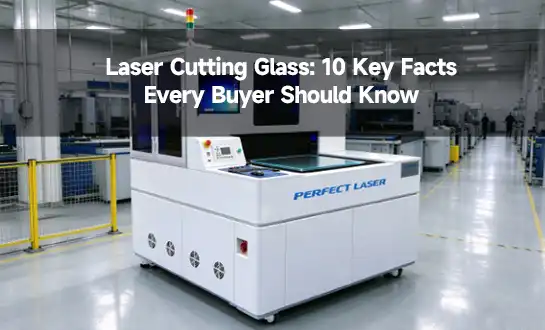
The PEG-8080 model from Perfect Laser is a good example of this kind of technology combination because it has imported German Bole knife wheels along with linear guides and ball screws from Taiwan TBI. The multi-knife setup lets multiple tasks be done at the same time, which greatly shortens cycle times while keeping the quality of all cuts the same. When working with different thicknesses of glass, from 0.15mm ultra-thin substrates to thicker building panels, the Z-axis automatic alignment tool makes sure that the depth control is always the same.

Differentiation Between Machine Categories
Knowing the differences between machine types is helpful for manufacturing processes. As part of combined production lines, fully robotic systems have loading arms, positioning devices, cutting tables, and breaking stations. These setups work well for high-volume tasks where the speed at which materials are moved has a direct effect on output. Semi-automatic models need help from a user to load and unload, but the cutting process is still controlled, which makes them flexible for medium-sized production runs with different needs.
CNC-controlled glass cutters are the most flexible because their cutting wheels can rotate 360 degrees and make any kind of straight or curved cut. These tools work great for custom jobs where the design is more complicated than simple geometric shapes. Which category to choose depends on how much is being made, how flexible the designs are, and how well they need to work with current manufacturing processes.
Safety and Energy Efficiency Considerations
Modern automatic glass cutting machines have many safety features that make the workplace safer. Remote control operation keeps operators from having to touch the edges of the glass too much, and built-in sensors find mistakes in where the materials are placed before the cutting starts. Pneumatic breaking systems use controlled force along scored lines to make fractures that don't break in random ways that create dangerous debris.
Energy economy comes from better control of movements and less waste of materials. Intelligent cutting optimization software figures out the best way to nest sheets so that the most glass can be made from each one. This lowers the cost of materials and the amount that needs to be thrown away. Servo motor technology only uses power when it's actively cutting. This is different from older hand tools that often had hydraulic systems that worked all the time.
Core Benefits of Automatic Glass Cutting Machines for Manufacturing
Production Throughput and Cycle Time Optimization
When manufacturing companies switch from human to automated cutting systems, they noticeably increase their output. When compared to hand scoring and breaking, an automatic glass cutting machine can process intricate designs in a fraction of the time! Parallel cutting processes are done by multi-knife configurations, which successfully increase output without increasing floor space or the number of operators needed.

When cycle times stay the same, it's easier to plan when to make things. Variability comes from operator tiredness, differences in skill, and differences in method when cutting by hand. Automated systems keep working speeds the same no matter how long a shift lasts or how complicated the design is. This consistency makes it easier to plan production and keep delivery promises. This is especially helpful when working with processes that come after, like hardening, finishing, or assembly.
Material Waste Reduction and Quality Consistency
Cutting optimization programs look at the sizes of the glass and the shapes of the parts that need to be cut in order to make the least amount of scrap. These software programs figure out nesting patterns that are hard to get with traditional manual planning methods. This usually leads to an 8–15% increase in material use. Over the course of a year's worth of production, these gains mean big cost savings and less damage to the earth because fewer raw materials are used.
Consistency in quality has a direct effect on the next steps in the manufacturing process. When edging, precise edge features cut down on the need for grinding and cleaning. By getting rid of stress concentration points that cause breakage during heat treatment, clean, exact cuts improve the results of tempering. Automated cutting ensures accurate measurements when making insulated glass units, which leads to proper seal formation and long-term performance reliability.
Operational Safety and Maintenance Economics
The number of injuries at work goes down a lot when main glass manipulation jobs are done by automated systems. Heavy glass sheets can be put in place by mechanical arms instead of being lifted by hand, which prevents back injuries and crush injuries. Enclosed cutting zones keep glass particles and other waste out of the air, which makes it safer to walk around workspaces and improves air quality.
Even though they cost more up front, automatic options are better in the long run because they cost less to run. This idea is shown by the PEG-8080 model, which has a low-consumption design and long-lasting parts that reduce repair periods. Imported cutting wheels keep their edges sharp for thousands of linear meters, which means they don't need to be replaced as often and cause less downtime. The predictive maintenance features keep an eye on how parts wear, so service can be planned for planned breaks in production instead of having to be done when something breaks down out of the blue.
Best Practices for Integrating Automatic Glass Cutting Machines in Manufacturing Workflows
Initial Setup and Calibration Protocols
Getting the foundations ready and controlling the surroundings are the first steps to a successful application. Automatic glass cutting machines need stable, level mounting platforms that keep vibrations from spreading when they move quickly. Stable temperature in the work area impacts the accuracy of measurements because thermal expansion affects both glass surfaces and machine parts. Manufacturers who get the best results keep their work areas at temperatures between 20°C and 24°C with little change.
Calibration processes set the basic factors for effectiveness. Systems like the PEG-8080 have a human-machine interface that helps workers check the balance, change the cutting wheel pressure, and confirm the coordinate system. Drift can be found before it affects the quality of the production by checking the calibration regularly, usually once a week for high-volume processes. Software updates from equipment makers often include improvements to motion control algorithms and optimization routines, so they should only be installed during repair times.
Preventive Maintenance and Troubleshooting Frameworks
Systematic repair plans keep machines running smoothly and make parts last longer. Every day, checks are made to see how the cutting wheels are doing, how much oil is in the linear guides, and how much dirt is on the work areas. As part of the monthly routine, the belt tension is checked, the electrical connections are checked, and a backup copy of the software is made. When trained techs service your system once a year, they change precise parts and do full diagnostics.
Operators can fix common problems without having to wait for long periods of downtime thanks to troubleshooting methods. Diagnostic features show error codes with clear steps on how to fix them, telling the difference between mistakes made by the user, problems with the material, and mechanical problems. Having extra cutting wheels, drive belts, and sensor parts on hand makes it easy to change them quickly during production shifts. Keeping track of problems that keep happening helps find systemic issues that need tech help or process changes.
Workforce Training and Safety Protocol Implementation
Full training for operators includes how to use the machines, check the quality, and know what to do in a situation. Effective programs teach operating concepts in the classroom and give students hands-on experience while being supervised. Operators learn how to read measures of cutting quality, change settings for different types of glass, and spot early warning signs of component wear.
Safety training stresses the need for personal protective equipment, lockout-tagout processes during upkeep, and the right way to handle materials. Before letting a person use a machine without supervision, certification programs make sure they are skilled. Updates to software, new types of materials, and lessons learned from investigating incidents are all covered in refresher training classes. This ongoing training keeps operations safe and helps teams get the most out of the equipment's features.
How to Choose the Right Automatic Glass Cutting Machine for Your Manufacturing Needs
Requirements Assessment and Application Matching
Before buying something, it's important to carefully look at what needs to be made. The type of glass has a big impact on the machine that is chosen. For example, building glass is harder to cut than semiconductor chips or luxury mirror glass. The thickness range determines the cutting wheel's needs and its ability to handle pressure. Because it can work with materials ranging from 0.15 mm to normal architectural thicknesses, the PEG-8080 can be used in a wide range of situations. However, tasks that need to work with specific materials may need to use other tools.
Capacity selection is based on projected production volumes. Semi-automatic systems may be enough for businesses that work less than 1,000 square meters per month, but fully integrated production lines with automatic loading and breaking systems are better for high-volume businesses. Design complexity is taken into account in this estimate. Facilities that mostly make rectangular parts have higher output than those that cut complicated curved patterns that need to move machines around a lot.
Industry-Specific Considerations for Different Sectors
Precision and repeatability are more important to original equipment makers in the aerospace and automobile industries than cutting speed. For quality management systems, these fields need to keep records of the cutting factors and statistical process control data. Systems that can log a lot of data and work with business manufacturing execution systems are more likely to be chosen for machines.
Distributors and job shops need to be able to adapt to different customer needs. Competitive edge comes from multi-knife configurations that can handle different cutting patterns without taking a long time to set up. The PEG-8080 has a variety of changeable work surfaces, such as anti-special board, aluminum, or marble countertops. This lets you fit the machine's setup to the most common types of materials while still being able to handle special orders when they come up.

Large companies that make standard goods try to get the most work done with the least amount of effort. Fully automatic production lines that include material handling cut down on the need for direct work while keeping the quality of the output constant. Optimization software that keeps improving cutting patterns based on collected output data helps these processes.
Evaluation Criteria and Procurement Strategies
To compare different systems, you need structured review tools. Baseline capabilities are set by technical specs like cutting accuracy, maximum speed, material thickness range, and work area measurements. Long-term dependability and upkeep needs are shown by the quality of the parts, especially the control systems, motors, guides, and cutting wheels. The fact that the PEG-8080 uses imported precise parts shows that it is committed to long-term performance.
When it comes to money, there are more things to think about than just the purchase price. There are also installation costs, training costs, upkeep needs, and supply costs. Calculating the total cost of ownership over the expected life of the equipment is a more realistic way to compare investments than just looking at the original capital outlay. Buying choices are affected by financing options, guarantee coverage, and the availability of technical support. This is especially true for smaller businesses that are investing in automation for the first time.
When choosing capital equipment, the name and market position of the supplier are important. Perfect Laser has been making things since 1995, and they have CE, TUV, and SGS standards to show that they follow the rules and make sure the quality is good. Customers from Germany, Japan, Italy, Russia, Brazil, India, and the United Arab Emirates have shown that the product works well in a variety of legal and application settings.
Future Trends and Innovations in Automatic Glass Cutting Technology
Automation Advancement and Digital Integration
Through integration with larger industrial digitization efforts, the development of automatic glass cutting machines quickens. IoT connection lets you check on performance in real time, plan maintenance ahead of time, and do tests from afar. Operators check the state of machines using their phones, which send them alerts when production runs are finished, when maintenance is due, or when a fault needs to be fixed. With this connection, equipment goes from being separate production tools to being parts of a whole manufacturing system.
Cutting optimization in CNC glass cutting machines is improved by AI in ways that go beyond what standard programs can do. Machine learning systems look at old cutting data to find trends that improve material yield, cut down on cutting time, or improve the quality of the edge. These systems change their suggestions based on the type of glass, the surroundings, and the production objectives. Real-time precision tracking finds small changes from the best cutting parameters and adjusts the pressure, speed, or wheel positioning automatically to keep quality standards.
Sustainability and Environmental Compliance
Environmental factors are becoming more and more important in the planning and purchase of tools. Servo motor systems that are energy-efficient use less electricity than older hydraulic systems. Optimized cutting designs reduce the amount of waste material, which directly lowers the environmental effects of getting raw materials and preparing them. In some advanced designs, water-based cooling systems get rid of the need for chemical coolants that need to be handled and thrown away in a certain way.
Manufacturers that want to get green building certifications or make sure they follow environmental management system rules find that automatic glass cutting machines help them reach their goals by using less energy and materials more efficiently. Enclosed cutting systems that keep particulate matter inside and make it easier to collect trash make it easier to follow changing rules about working air quality and waste disposal.
Market Evolution and Technology Adoption Patterns
As technology spreads faster around the world, the market for glass cutting tools keeps getting more competitive. New sellers add new features that are aimed at specific market groups, while well-known companies like Perfect Laser use their years of experience to improve technologies that have already been used. This dynamic makes it possible for users to get access to more advanced features at prices that are getting better and better.
The way people accept new technologies shows that more and more people are realizing that automation can help with more than just big processes. Medium-sized businesses see automatic glass cutting machines as a need for staying competitive, not just nice-to-have extras. This change is happening because customers want consistent quality, shorter wait times, and low prices, which are hard for manual processes to provide. Different types of machines are available at different price points, which makes them easier to use at all levels of production.
Conclusion
Automatic glass cutting machines create strong value propositions across a wide range of businesses by improving manufacturing speed and product quality. These systems offer accuracy, regularity, and throughput that can't be matched by human methods. They also make the workplace safer and waste less material. Modern systems like Perfect Laser's PEG-8080 type work reliably in tough production settings thanks to their advanced technology, high-quality parts, and advanced software. For execution to go well, the machine's capabilities must be matched to its specific operating needs, operators must be fully trained, and the equipment must be maintained in a way that keeps it working well. As automation technology keeps getting better through digital integration and AI apps, early users set themselves up to stay ahead of the competition in markets that are becoming more quality- and efficiency-focused.
FAQ
1. What return on investment timeline should manufacturers expect from automated glass cutting equipment?
Depending on production output and worker cost structures, most manufacturing businesses see a return on investment (ROI) within 18 to 36 months. Material waste is cut down by 8 to 15 percent on average, worker needs are cut down, rework rates go down, and output throughput goes up. Optimization software has benefits that can't be replicated by human operations, so facilities that process a lot of different designs see faster payback periods. When facilities project their financial returns, they should include the total cost of ownership, which includes upkeep, materials, and training costs.
2. Can automatic glass cutting machines handle specialty glass types and varying thicknesses?
Modern CNC systems can cut a wide range of materials because their cutting settings can be changed. For semiconductor uses, the PEG-8080 can work with glass as thin as 0.15 mm, but it can also handle normal building thicknesses. For the best results, you need to change certain parameters for specialty materials like solar glass, cosmetic mirror glass, and ultrathin electrical substrates. The adaptability of a machine relies on the cutting wheels it uses, how well it controls pressure, and how well its software can handle automatic glass cutting machines.
3. How do automated systems reduce waste compared to manual cutting methods?
Optimization programs figure out the best way to stack glass sheets so that the most useful parts can be taken from each one. Manual planning depends on the experience of the person doing it, and because of time limits and problems with visual estimates, it often leads to less-than-ideal patterns. Automated systems instantly look at thousands of possible setups and choose the ones that leave the least amount of waste. Precision cutting also cuts down on edge flaws that cause parts to need to be oversized to account for differences in size, which increases the rate at which materials are used.
Partner with Perfect Laser for Advanced Glass Cutting Solutions
If you need help making your manufacturing process more accurate and efficient, Perfect Laser is ready to help. We are a top maker of automatic glass cutting machines and have been in business for over 30 years. We know the problems that producers of automotive, aerospace, electronics, and architectural glass face. Our PEG-8080 model has precision parts that were brought in from other countries and smart control systems that make it work reliably in tough production settings.
We invite people who make decisions about buying to see our technology for themselves through demos that are tailored to the types of materials you use and your production needs. Our technical team works with clients to set up tools that meet their exact needs, including choosing the right work area material, cutting wheels, and software optimization settings. Full user training and quick technical help (available at [email protected]) make sure that the system works well and lasts for a long time.
Get in touch with us right away to talk about how our automatic glass cutting machine for sale can help you make more things. We give you full technical specs, performance data, and ROI forecasts to help you make smart choices about what to buy.
References
1. Chen, Y., & Liu, R. (2023). Precision Manufacturing Technologies for Advanced Glass Processing. International Journal of Advanced Manufacturing Technology, 128(7), 3245-3262.
2. Thompson, M. D. (2022). Automation Integration in Modern Glass Fabrication Facilities. Journal of Manufacturing Systems, 64, 412-428.
3. Patel, S., & Wong, K. H. (2024). CNC Control Systems for Non-Metallic Material Processing: Design Principles and Applications. Manufacturing Engineering Review, 41(2), 89-106.
4. European Glass Manufacturing Association. (2023). Industry Standards for Automated Glass Cutting Equipment: Safety and Performance Guidelines. Brussels: EGMA Publications.
5. Rodriguez, A., Martinez, L., & Kim, J. (2023). Material Optimization Algorithms in Computer-Controlled Cutting Systems. Production Engineering Research and Development, 17(4), 567-584.
6. International Manufacturing Technology Association. (2024). Global Trends in Glass Processing Automation: Market Analysis and Technology Forecast 2024-2029. McLean, VA: IMTA Research Division.

share your inquiry, get the quotation accordingly.
第一张审核员说包含其他公司不能用_1755049724891.webp)
Perfect Laser – Global Manufacturer of Reliable Laser Solutions