Glass Laser Cutting Machine Guide: Types, Uses, and Benefits
When it comes to cutting glass items accurately, a glass laser cutting machine is unparalleled in speed and precision. These advanced devices cut glass with little waste and excellent edge quality using focused laser beams. Laser cutting can generate precise designs, speed up the process, and eliminate micro-cracks that damage structures. Whether you're creating smartphone cover glass, automobile windshields, or building panels, you can acquire these equipment to fit your production goals and quality standards if you know what they can do and how to adjust them.
Understanding Glass Laser Cutting Machines: Technology and Types
Modern glass laser cutting uses two major laser types. Lasers have transformed numerous industry processes. A laser beam targets the glass surface, and regulated heat energy separates it precisely without touching.
Core Laser Technologies for Glass Processing
CO₂ laser systems, operating at 10.6 μm, are often employed in glass manufacturing for controlled thermal cracking along predetermined routes. Architectural clean edges are possible with thicker glass. At 1.06 μm, fiber lasers provide superior efficiency, beam quality, and smaller focus areas, making them excellent for thin, precise substrates like electronic glass. Users may match performance with material type and production size with modern glass laser cutting machines that include both technologies.
Industrial-Grade versus Desktop Glass Cutting Systems
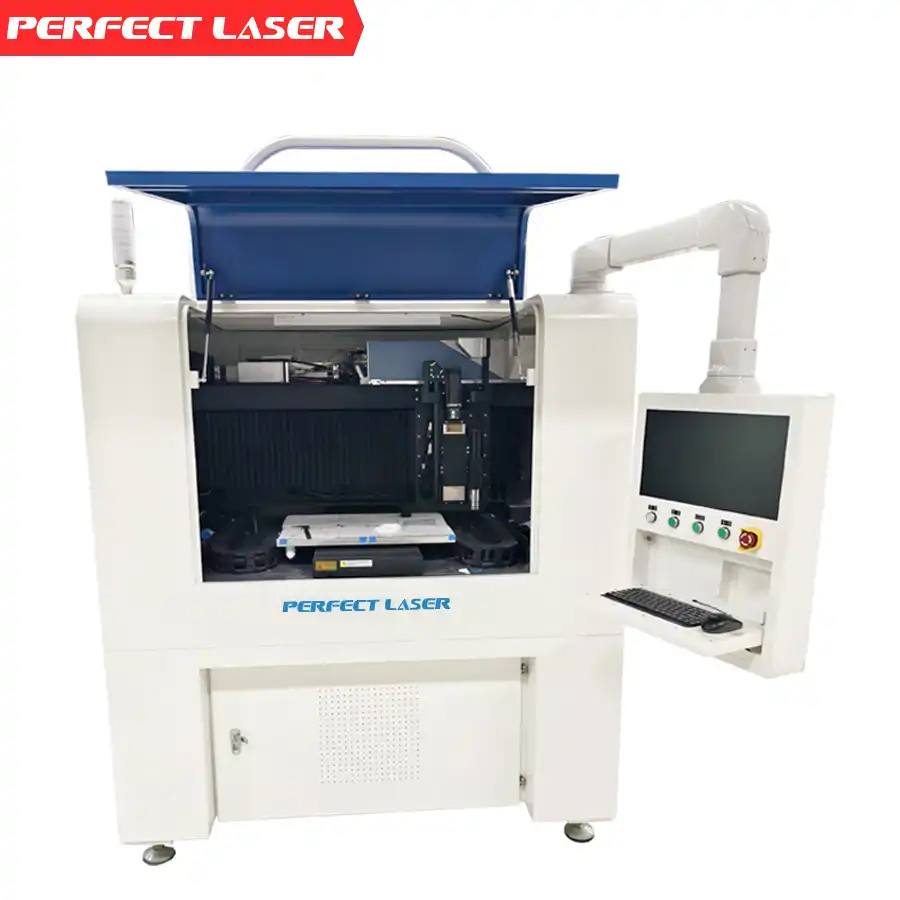
CNC control, sturdy mechanical constructions, and automated material handling are used in high-volume industrial glass cutting systems. Multi-tool designs improve efficiency as they constantly process big glass sheets for automotive, aerospace, and construction. Desktop systems are modest and ideal for prototyping, crafts, and small-batch manufacturing. They provide accuracy for creative and electrical applications despite their lower power. They are suitable for enterprises evaluating laser technologies before industrial implementation due to their cheaper cost and mobility.
Specialized Configurations for Specific Glass Types
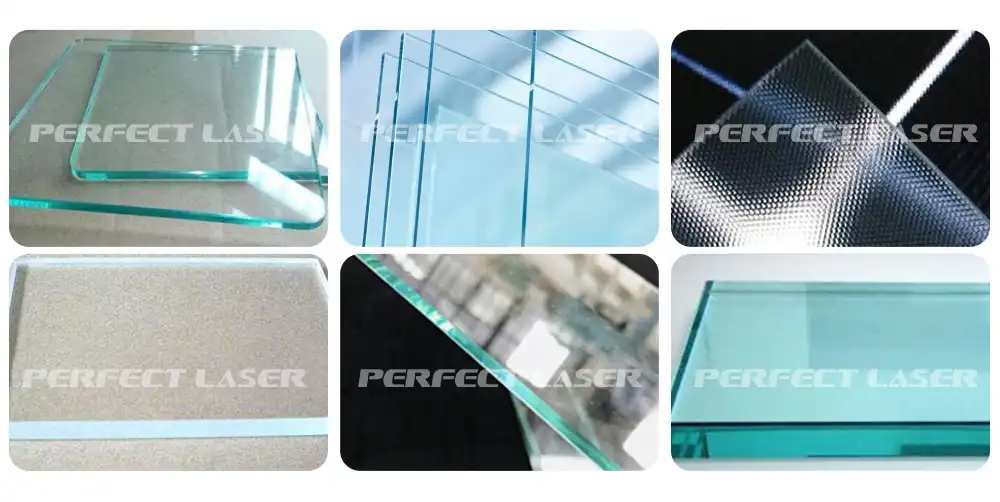
Cutting different glass materials requires different procedures to assure quality and avoid harm. Ultra-thin glass requires precise power control and focus stability, while tempered glass needs stress management to prevent catastrophic breakdown. Hard sapphire glass requires high-energy laser systems, whereas laminated and LCD glass need regulated temperature profiles to avoid delamination. Geometric precision is essential for optical glass. Advanced glass laser cutting machines constantly modify settings to provide consistent results across materials while retaining structural integrity and optical performance.
Benefits and Applications of Glass Laser Cutting Machines
When you switch from traditional cutting methods to laser-based systems, you'll see measurable changes in a number of performance measures that have a direct effect on the quality of your products and how efficiently your business runs.
Performance Advantages Over Traditional Methods
Laser cutting reduces stress failure and mechanical scoring micro-cracks, improving glass cutting accuracy. It reduces waste and secondary finishing compared to waterjet. The non-contact glass cutting technology provides accuracy, clean edges, and little heat impact. It also allows complicated shapes without tool modifications, increasing production flexibility. Laser systems improve glass cutting efficiency, sustainability, and suitability for current industrial applications that need accuracy and scalability by increasing precision, speed, and energy efficiency.
Industry Applications Demonstrating Versatility
Laser systems make glass cutting precise and flexible in architectural, automotive, electronics, and photovoltaics. They allow intricate facades and structural panels in architecture. Glass cutting for windshields and sensor covers requires fine tolerances in automotive manufacture. Electronics benefit from micro-precision display glass and optical components. Advanced glass cutting ensures uniformity and efficiency in large-scale solar manufacturing, enabling durability, performance, and sustainability across high-tech sectors.
Operational Cost Analysis and Equipment Longevity
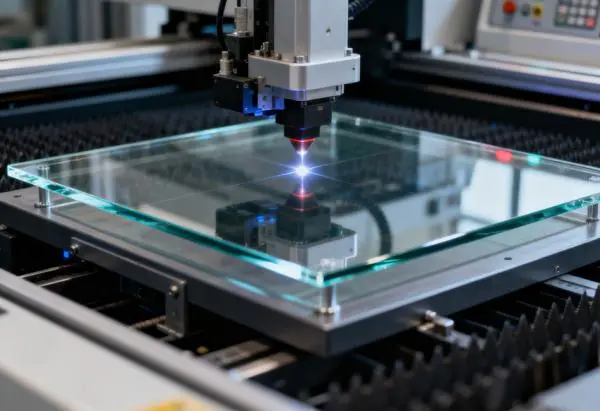
Laser-based glass cutting improves precise stability and lowers operating expenses by reducing tool wear and maintenance. No physical cutting tool deterioration reduces downtime and replacement costs, unlike mechanical methods. Modern machines use reliable laser sources and clever monitoring systems to cut glass for over a decade. Energy-efficient operation boosts precise economics, particularly in continuous manufacturing. Fiber lasers save more than CO2 systems by decreasing power and cooling.
Selecting the Right Glass Laser Cutting Machine: A Decision Support Framework
Procurement professionals face severe laser cutting decisions. They must combine technology's talents with the company's budget and long-term goals. A structured review system helps individuals concentrate on the topics that most affect production output.
Technical Specifications and Performance Criteria
Accuracy, speed, and operating range determine glass cutting machine choices while preserving precision. High-end systems for demanding applications attain sub-±0.05 mm tolerance. Processing speed must match material type and production volume for reliable glass cutting. Size of work area influences accuracy and productivity. System suitability depends on material compatibility. Evaluation of genuine production demands assures accuracy and eliminates over-specification, enhancing efficiency and manufacturing uniformity.
Comparative Analysis of Leading Technology Providers
Glass cutting equipment manufacturers worldwide vary in capabilities, location, target sectors, and accuracy. Industrial brands prioritize high-performance output, whereas entry-level systems stress usability. For wider glass cutting applications, mid-range manufacturers balance automation and material flexibility. High-end providers provide accuracy and speed for large-scale operations but cost a lot. In competitive manufacturing contexts, production size, precision, and long-term operational strategy determine supplier selection.
Procurement Considerations Beyond Technical Specifications
Besides technical parameters, laser glass cutting machine procurement includes customization, service, and lifecycle support to ensure operational perfection. Configuration flexibility improves process integration and production efficiency. Warranty terms greatly affect glass cutting reliability and overall cost of ownership. Precision performance is ensured by after-sales assistance, replacement parts, and worldwide service. Training and documentation improve operator productivity, reduce downtime, and increase system adoption across industrial settings and production sizes.
Maintenance, Safety, and Troubleshooting for Optimal Performance
To get the most out of your equipment's uptime and working life, you need to follow maintenance guidelines and safety processes that protect both people and your investments.
Essential Maintenance Protocols
Proper maintenance ensures stable glass cutting performance and long-term precision by protecting optical and mechanical components. Regular cleaning of lenses and protective covers prevents dust-related efficiency loss. Lubrication of moving parts maintains smooth glass cutting operation and reduces mechanical wear. Cooling systems must be monitored to preserve consistent precision output and avoid overheating. Calibration checks ensure accuracy over time, while spare part replacement schedules maintain system reliability and minimize unexpected downtime in continuous production environments.
Safety Guidelines and Regulatory Compliance
Safety is critical in glass cutting operations due to high-energy laser exposure requiring strict precision control. Class 4 laser systems require protective enclosures and safety interlocks to prevent accidents. Operators must use protective equipment during maintenance to ensure safe glass cutting procedures. Electrical and mechanical safety standards must be followed to maintain operational precision and compliance. Regulatory certifications ensure equipment meets global safety requirements, while proper training reduces risks and supports safe, efficient industrial environments.
Common Issues and Troubleshooting Approaches
Common glass cutting issues include poor edge quality, positioning errors, and system instability affecting precision output. Dirty optics or misaligned focus often reduce cutting efficiency. Mechanical wear or calibration drift can impact glass cutting accuracy. Power instability or cooling failures may interrupt operation and reduce precision performance. Control system errors require diagnostic review and proper reset procedures. Maintaining detailed troubleshooting records improves repair efficiency and ensures consistent precision in long-term production environments.
Future Trends and Innovations in Glass Laser Cutting Technology
Demands for higher efficiency, better accuracy, and more environmentally friendly production in all industrial sectors are speeding up the development of laser cutting technology.
Next-Generation Laser Sources
Picosecond and femtosecond systems are examples of ultrashort pulse lasers, which are a new technology that can do special kinds of processing in a glass cutting machine. These lasers remove material through photomechanical effects instead of thermal processes. This means that there are almost no heat-affected zones and even very sensitive surfaces can be processed. Even though they are very expensive right now, ongoing development will probably make them more available for specific tasks that need unprecedented accuracy.
Solid-state laser technology keeps getting better. For example, newer diode-pumped systems are more efficient, last longer, and need less upkeep than older models. These changes are good for both fiber lasers and disk lasers. They back trends that lower costs, which lets smaller makers use advanced technology.
For some types of glass and processing needs, green laser sources with lower wavelengths are better than standard infrared systems. Because the different ways the materials interact with the laser make it possible to process them in ways that aren't possible with regular laser bands. This means that a wider range of goods can be made and higher quality levels can be reached.
Automation and Integration Developments
Smart manufacturing integration links laser cutting machines to larger production management systems. This lets machines be watched in real time, schedules to be made automatically, and repair plans to be made ahead of time. Sensors built into machines collect operating data that is studied through cloud platforms to find ways to improve performance and predict when parts will break down before they cause downtime.
The use of AI to help optimize parameters is a big step forward in making setup simpler. Machine learning programs look at the results of cuts and change the settings for power, speed, and focus automatically to get the best results with different types of materials and shapes. This feature makes it less important for operators to know what they're doing and speeds up the process of switching between goods.
Robotic material handling technology gets rid of the need for people to load and unload by hand, which supports constant production and lowers the need for workers. Vision systems help robots place their parts with the same level of accuracy as machines. Meanwhile, automatic quality checking finds flaws right after cutting, so mistakes can be fixed quickly and with as little waste as possible.
Human workers and robotic systems are combined in collaborative automation ideas, merging the freedom and decision-making of humans with the precision and durability of robots. These mixed methods work well in production settings where products are changed often and batch sizes vary, making fully automatic methods difficult from an economic point of view.
Sustainability and Environmental Impact
As energy economy keeps getting better, the costs of running glass laser cutting machines and their impact on the world keep going down. New laser source designs, improved beam delivery systems, and smart power management all use less electricity while keeping or even improving the cutting performance.
Optimizing material use with advanced stacking algorithms cuts down on waste by putting parts on raw material pieces in the best way possible. New versions of software make optimization more complex, taking into account not only physical packing density but also cutting path efficiency and material-specific limits that affect yield rates in real life.
Closed-loop cooling systems and fluids that are good for the environment cut down on the amount of water used and stop the release of dirty coolants. Some of the newest system designs look into air-cooled setups that don't need any liquid cooling at all for low-power uses.
More and more, manufacturers are designing equipment with circular economy principles in mind. For example, they stress the ability to recycle parts, modular construction that lets you choose which upgrades to make instead of replacing the whole thing, and remanufacturing programs that make equipment last longer while using fewer resources.
Conclusion
Choosing the right glass laser cutting machine and laser cutting technology for processing glass is a smart choice that affects the quality of the finished product, the efficiency of operations, and the company's place in the market. Modern systems can do a lot of different things, from making smartphone parts with great accuracy to processing building panels quickly. These features make them useful in a lot of different industries. It is important to know the differences between laser technologies, test machines against specific operating criteria, and work with experienced sources to make sure that the technology is implemented successfully. As automation, AI integration, and next-generation laser sources keep getting better, makers who adopt them early will be able to take advantage of new features that change the limits of what's possible in glass manufacturing.
FAQ
1. What precision levels can glass laser cutting machines achieve for intricate designs?
Dimensional tolerances on modern systems are usually kept within ±0.05 millimeters across the working area. For very important uses, special designs can achieve even higher precision. The accuracy you'll experience relies on things like the width of the glass, the type of material used, the speed of the cut, and the stability of the temperature in the area. For smartphone cover glass and camera parts, the tightest tolerances are usually needed in electronics manufacturing. However, slightly looser tolerances may be okay in building uses. Asking for sample cuts to be made with your real production materials is the most accurate way to find out how precise the work can be for your needs.
2. Which maintenance tasks are critical for minimizing downtime?
Protective glasses should be checked and cleaned every day to keep the beam quality from dropping, which would hurt the cutting performance. Checking the operation of the cooling system once a week, including checking the fluid amounts and temperature settings, stops laser sources from overheating and damaging them. Positioning parts don't wear out too quickly when mechanical systems are oiled once a month, according to the manufacturer's instructions. Having enough safety glasses, nozzles, filters, and other parts that wear out quickly can be replaced right away by keeping enough of them on hand. This keeps production from stopping while parts are shipped.
3. Can the laser cutting process temper or laminate glass effectively?
Tempered glass is hard to work with because it has internal forces that can make it break completely when it is cut. Cutting can be done successfully with the help of controlled temperature profiles and stress-relieving methods. However, the success rate depends on how hard the glass is tempered and how thick it is. When the right parameters are optimized, delamination of laminated glass can't happen during cutting. For best results, applications should usually be tested with real-life samples before they are put into production.
Partner with Perfect Laser for Advanced Glass Cutting Solutions
Perfect Laser offers complete glass laser cutting machine options and has been in business for almost 30 years, helping customers around the world in the automotive, aerospace, electronics, and architecture industries. Your production experts and our engineering team work together to design systems that meet your exact material needs, throughput needs, and integration limits. We keep large stockpiles of precision parts and materials, so we can respond quickly when your production plan needs help right away.
Our machines have CNC control systems, stepper or servo motor drives, and foreign precision parts that make them last 10 years or more with proper upkeep. The smart human-machine interface instantly finds the best cutting parameters for both expert techs and operators who haven't used a laser before. Our setups can be used for a wide range of glass cutting tasks, from ultra-thin smartphone glass to car windshields and architectural panels.
As a well-known company that sells glass laser cutting machines and has certificates from CE, TUV, and SGS, we offer honest advice that helps you solve your unique production problems. Email us at [email protected] to get in touch with us.
References
1. Dubey, A.K. & Yadava, V. (2018). Laser Beam Machining: A Review. International Journal of Machine Tools and Manufacture, 48(6), 609-628.
2. Chryssolouris, G. (2013). Laser Machining: Theory and Practice. Springer Science & Business Media.
3. Steen, W.M. & Mazumder, J. (2010). Laser Material Processing, Fourth Edition. Springer London.
4. Hecht, J. (2021). Understanding Lasers: An Entry-Level Guide, Fourth Edition. IEEE Press.
5. Ready, J.F. & Farson, D.F. (2001). LIA Handbook of Laser Materials Processing. Laser Institute of America.
6. Dahotre, N.B. & Harimkar, S.P. (2008). Laser Fabrication and Machining of Materials. Springer US.

share your inquiry, get the quotation accordingly.
第一张审核员说包含其他公司不能用_1755049724891.webp)
Perfect Laser – Global Manufacturer of Reliable Laser Solutions