Can 3D Crystal Engraving Machines Engrave Portraits? Here's How
Many business owners wonder if current subsurface laser systems can really produce photographic quality photos that are amazing in three dimensions and can be made inside clear materials. Yes, a 3d crystal engraving machine can exactly recreate human faces inside blocks of glass, crystal, and acrylic by using focused laser beams to make thousands of precise internal fracture points. These tools can make depth and detail that look like real life that can't be achieved with traditional surface etching. If makers and custom product businesses know how this technology works and how to choose the right equipment, they can make more money by marking car parts, naming hardware tools, and identifying electronic parts.
Understanding 3D Crystal Engraving Technology
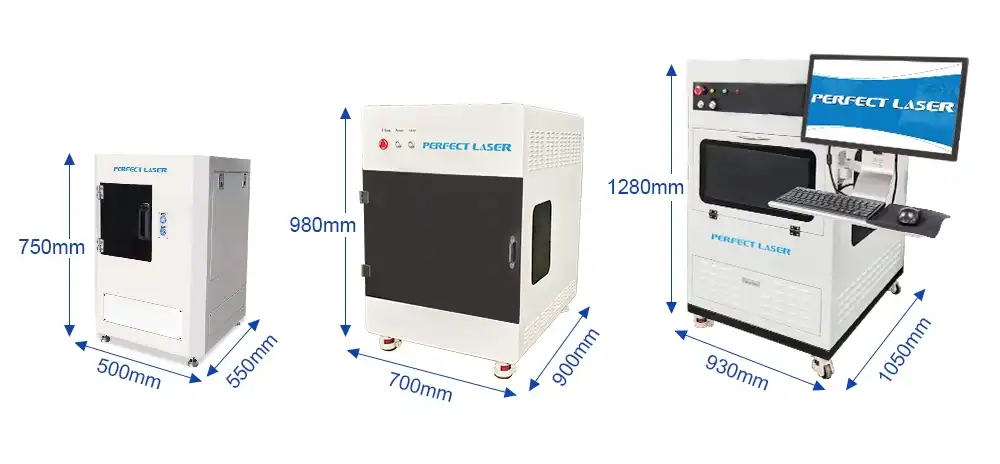
Core Principles and How It Differs from Traditional Methods
Laser subsurface engraving differs fundamentally from traditional surface etching. Conventional 2D methods remove or burn the top layer of material, while crystal engraving uses a high-energy 532nm green laser to penetrate inside transparent media without damaging the surface. The beam creates controlled micro-fractures at precise coordinates, forming a 3D voxel-based structure. This allows images to appear suspended inside the crystal and visible from multiple angles. The PE-DP-B series uses TEC semiconductor cooling to maintain stable laser output during long operation. Its standalone control system eliminates the need for an external PC, improving reliability and simplifying workflow in industrial production environments.
Key Components Driving Precision
Precision engraving depends on three core systems: a stable laser source with minimal thermal drift, high-quality optical components ensuring long service life, and a galvanometer scanning system operating at up to 24,000 points per second with ±0.01mm accuracy. These components convert image data into precise voxel positioning. Software completes the process by translating JPG, BMP, and PNG files into engraving coordinates. One-click optimization reduces setup time significantly, improving efficiency for high-volume portrait engraving production.
Machine Categories and Business Applications
Crystal engraving machines are divided into entry, mid-range, and industrial levels based on production needs. Entry models suit small businesses producing gifts, while mid-range systems handle 50–200 units daily with balanced speed and precision. Industrial systems like the PE-DP-B series support 24/7 operation for large-scale customization and mass production. Applications extend into automotive serialization, anti-counterfeiting marking, tool measurement integration, and electronics batch coding, where internal engraving ensures durability, traceability, and unchanged product appearance.
Can 3D Crystal Engraving Machines Accurately Engrave Portraits?
Technical Factors Influencing Portrait Quality
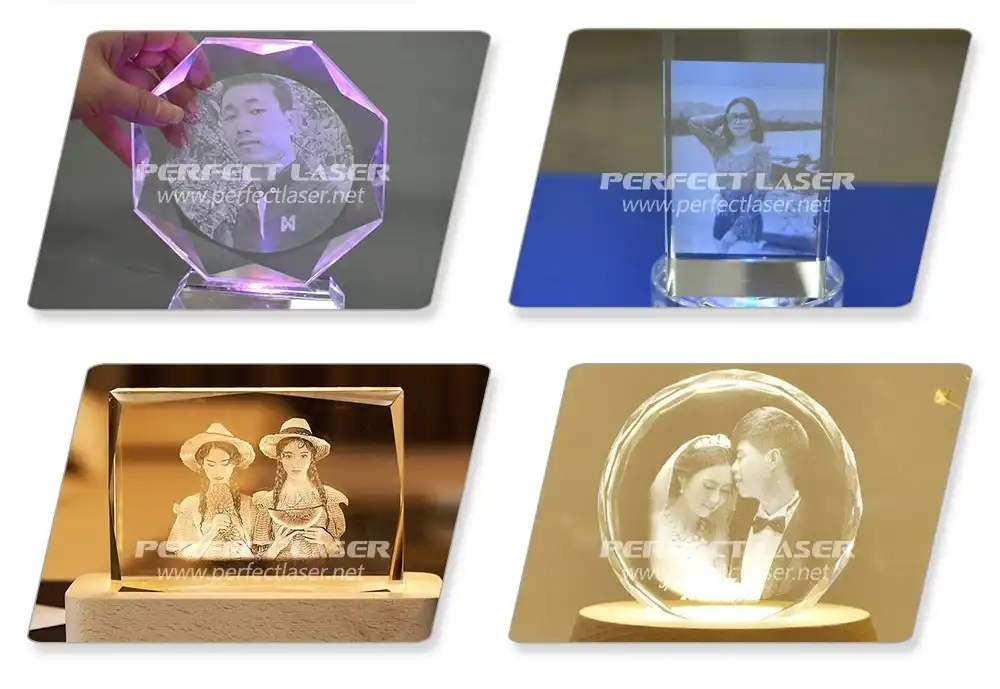
Image quality in crystal engraving is determined by resolution, voxel density, and scanning accuracy. High-resolution inputs combined with fast laser positioning ensure fine facial details such as eyes, lips, and hair are clearly reproduced. Depth control adjusts focus across multiple layers, creating realistic shading effects. Voxel-based processing assigns controlled laser pulses to each point, shaping internal refractive structures. This method enables smooth tonal transitions, making portraits appear three-dimensional and visually dynamic from different viewing angles.
Advantages Over Alternative Marking Methods
Unlike surface engraving, subsurface crystal marking protects images inside the material, ensuring long-term durability without wear or fading, often using a 3D camera to capture depth information for accurate internal portrait reconstruction. Internal engraving creates a holographic effect where images shift with viewing angles, enhancing visual depth. The PE-DP-B series adds anti-vibration protection to maintain micron-level precision in industrial environments. This stability is essential for consistent portrait engraving quality during long production cycles, ensuring reliable output even under continuous operation and mechanical vibration conditions.
Real-World Implementation Success
A California awards company adopted subsurface engraving and reduced production costs by 60%, while shortening delivery time from two weeks to 48 hours. This allowed faster production of corporate gifts and personalized awards. In another case, a manufacturer used internal crystal marking for anti-counterfeiting, embedding portrait-based security codes inside transparent panels. This improved brand protection and eliminated the need for external labels, reducing fraud risk while maintaining clean product design and long-term traceability.
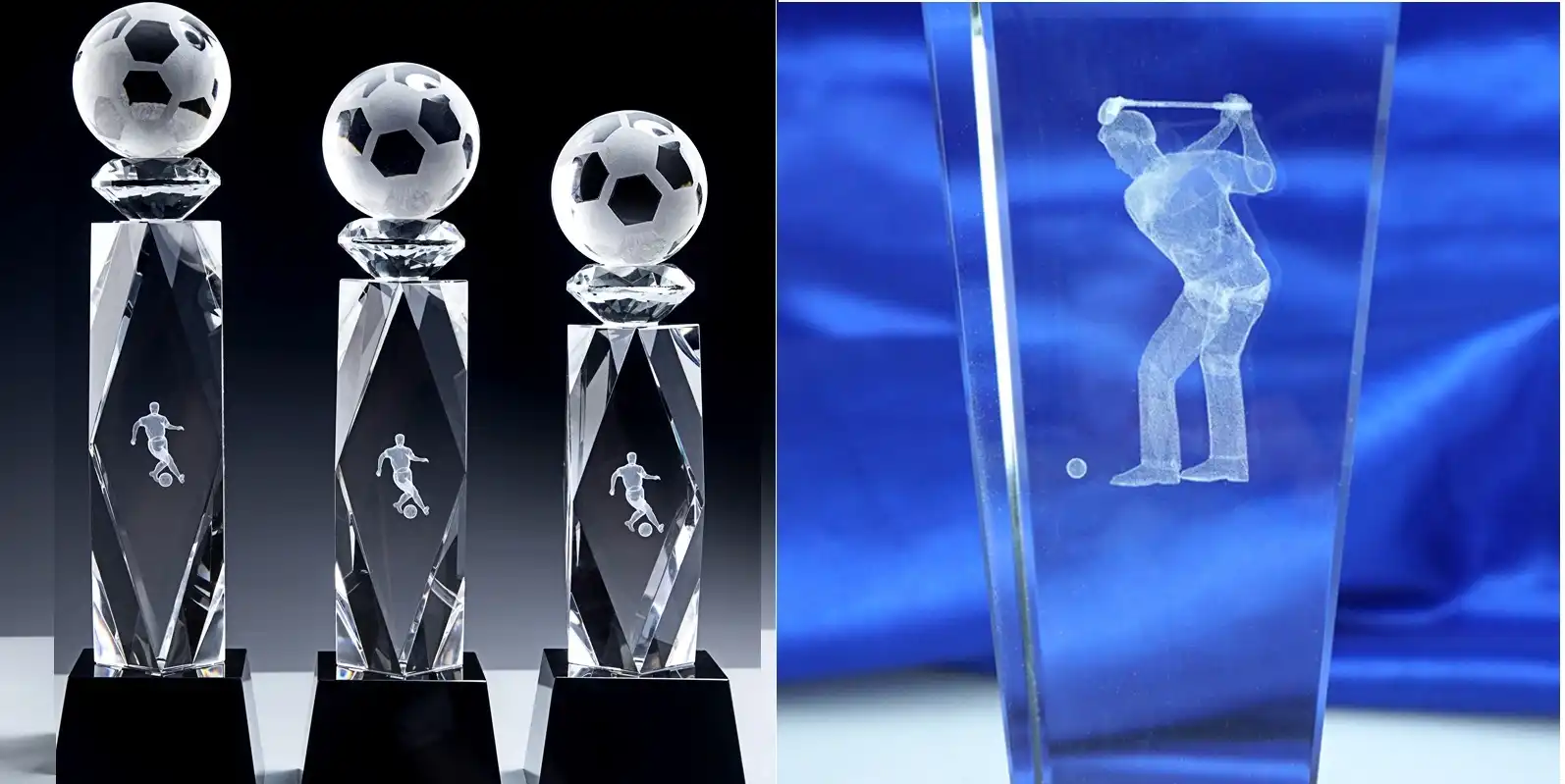
Practical Guide to Setting Up Portrait Engraving Using 3D Crystal Machines
Selecting the Right Equipment for Your Needs
Crystal etching equipment selection depends mainly on precision, throughput, and total ownership cost. Buyers should prioritize ±0.01mm positioning accuracy and over 20,000 points-per-second for portrait-grade detail. Processing time varies from 15–45 minutes depending on image complexity, so capacity must match order volume. Long-term costs include maintenance, spare parts, and software updates over five years. Systems like the PE-DP-B reduce downtime with stable components and integrated control, eliminating external PCs. This simplifies IT setup and operator training while improving reliability in continuous production environments.
Software Integration and File Preparation
Modern 3D crystal engraving machines rely on software that converts image files into voxel-based engraving coordinates. User-friendly interfaces allow operators with minimal technical background to work efficiently. Compatibility with common formats like JPG, BMP, and PNG ensures smooth workflow, while automatic optimization improves contrast and scaling for portrait engraving. Systems such as Perfect Laser support direct import from design software and maintain color-depth data for accurate shading. Automatic centering reduces setup errors, and continuous software updates ensure compatibility with evolving file standards and operating systems.
Installation, Calibration, and Maintenance Protocols
Proper installation requires stable environmental control, typically 15°C–30°C temperature and under 70% humidity to protect optical components. Initial calibration verifies beam alignment, focus accuracy, and scanning consistency using test patterns. Routine maintenance includes weekly cleaning of protective windows, monthly cooling system checks, and quarterly precision verification. Closed-machine designs improve operator safety and meet industrial standards. TEC semiconductor cooling maintains stable laser temperatures without complex water systems, simplifying installation and reducing facility modification costs while ensuring consistent engraving performance.
Procurement Insights: Buying the Right 3D Crystal Engraving Machine for Portraits
Understanding Pricing Structures and Investment Models
The price of crystal engraving tools is based on its level of skill. Entry systems start at a low level of cost, making them good for startups that want to see how much demand there is in the market. Mid-range industrial tools have better accuracy and durability, which helps established businesses give more products. Premium systems have the highest output, multiple safety systems, and full support packages for production settings with a lot of products. There are different ways to pay for something, such as buying it directly, leasing it to own it, or setting up a payment plan based on how much it produces. Business owners who have good credit can get good terms from equipment lenders who know how laser technology depreciates over time. With a normal return on investment of 18 to 24 months for properly promoted crystal portrait services, many businesses find that their operational cash flow is enough to pay for growth after the initial adoption.
Evaluating Supplier Credentials and Support Infrastructure
Partnerships for reliable equipment go beyond the original buy. Authorized makers offer certified training programs that make sure workers know how to do both simple tasks and more complex ones. The warranty should cover both the laser sources and the control hardware. For example, Perfect Laser backs up its crystal engraving systems with a two-year warranty and free upkeep for life, which is far beyond what the industry norm is. Check the qualifications of the provider in more than one way. CE certification proves that a product meets European safety standards. TUV and SGS certifications prove that a company has good quality management systems. Referrals from customers in related industries give you real-world information about how well you'll do and help you be quick. Technical evaluation features let potential buyers send in sample picture files for test etching, so they can see how well the work turns out before committing.
Building Long-Term Equipment Partnerships
Comparing specification sheets is only one part of a successful buying process. Partner with businesses that show they are investing in ongoing research and development. These are companies that are constantly improving software features, making materials more compatible, and using customer feedback to shape product development. This dedication is shown by Perfect Laser's two research and development centers and 63 national patents, which are always improving subsurface etching technology by working with industry users. Support equipment after installation is also important. Production delays are kept to a minimum by quick technical support via email, phone, and online diagnostics. Having spare parts stored in regional stores makes it possible to quickly change a part when it's needed. As staff changes happen, training materials like video tutorials, full operation manuals, and regular refresher courses help teams get the most out of their tools.
Future Trends and Innovations in 3D Crystal Portrait Engraving
Artificial Intelligence Enhancing Image Processing
New software platforms have machine learning algorithms that automatically improve face shots so that they work best for engraving using 3d crystal engraving systems. Without any help from a person, these systems look at face traits, change contrast curves, and find the best depth mapping settings. AI-driven preprocessing makes it easier for workers to do their jobs, so the quality is always the same, no matter how good the source shot is or what the lighting is like. Neural network models that have been trained on thousands of successful portrait carvings can predict problems like low detail resolution, bad shading transitions, or design elements that won't work well in voxel format before they happen. This ability to predict the future cuts down on material waste and review processes, which has a direct effect on how profitable custom engraving businesses are.
Next-Generation Laser Precision and Speed
New developments in solid-state laser design offer higher peak powers and better beam quality, which will allow for higher clarity of small details and faster processing speeds. Adaptive control methods in galvanometer systems will change scan patterns based on real-time input. This will account for changes in material properties and thermal effects during long production runs. Ultrafast laser pulses with femtosecond lengths may allow for new material effects. For example, color center formation in some crystals could give pictures subtle color tints without the need for dyes. These new ideas would give creators more ways to be creative while keeping the sturdiness and safety benefits of internal engraving.
Expanding Material Compatibility and Applications
Optical-grade glass, synthetic crystal, and clear plastic are the main materials used in traditional crystal etching. Materials that are partly see-through, like frosted glass, colored acrylics, and hybrid surfaces, are still being worked on. If it were possible to successfully engrave pictures on these materials, they could be used for things like decorative glass panels in buildings, car interiors, and consumer gadgets. As the market for luxury goods continues to grow, companies that make high-end watches are engraving pictures into sapphire crystal case backs, companies that make premium drinks offer custom bottle engraving, and companies that make memorial products are making lasting honors. For all of these uses, subsurface crystal engraving is the only way to get consistent quality, long-lasting sturdiness, and emotional effect.
Conclusion
Precision laser technology, advanced control software, and growing market possibilities in both the industrial and consumer sectors come together in crystal portrait etching using a 3d crystal engraving machine. Perfect Laser's PE-DP-B line of machines are reliable, high-quality, and easy to use, which makes them ideal for both mass production and custom personalization companies. Companies can take advantage of the growing demand for permanent, high-quality portrait goods by learning the technical basics, carefully weighing their equipment choices, and teaming up with well-known makers. The technology can be used for many different things, from serializing industrial parts to making important keepsakes. This makes it a valuable tool for manufacturing businesses that make a wide range of things.
FAQ
1. What level of detail can I expect in engraved portraits?
When working with high-resolution source pictures above 300 DPI, modern subsurface laser devices get results that look like photographs. Crystals that are between 50mm and 200mm in size make facial traits like individual hair strands, fine expression lines, and faint shading stand out. The 24,000 points-per-second engraving speed and ±0.01mm positioning accuracy of the PE-DP-B line make images that are as good as professional printing quality and stay that way in the crystal matrix.
2. Will my existing design software work with crystal engraving machines?
JPEG, PNG, BMP, and TIFF files from any visual design program are accepted by the majority of professional 3d crystal engraving machine models. The control software from Perfect Laser works directly with files from Adobe Photoshop, CorelDRAW, and AutoCAD, so you don't have to go through steps that lower the quality of the files. With just one click, the built-in portrait conversion feature automatically makes picture files look their best when showing a face, translating the format internally.
3. How do I maintain consistent portrait quality over time?
Every 500 hours of operation, calibration checks make sure that the placement accuracy stays within the limits set. Cleaning the protective optical screens once a week keeps dust from building up and blurring the beam. Temperature changes above 15°C can change the way a material reflects light during cutting, so keep an eye on the outside weather. The TEC cooling system in the PE-DP-B keeps the laser output fixed over long production runs. This stops temperature drift, which is what causes quality changes in less advanced equipment.
Partner with Perfect Laser for Premium Crystal Engraving Solutions
Perfect Laser's track record, which spans almost 30 years, puts an end to your search for a dependable 3d crystal engraving machine maker. Our PE-DP-B line is made to last in commercial settings and has the accuracy needed for perfect portrait reproduction. It is backed by CE, TUV, and SGS certifications that show our dedication to quality standards. Our systems work consistently well in harsh production settings, whether you need to serialize auto parts, mark hardware tools with lasting marks, or make unique crystal gifts. We know that detail sheets are not enough to make choices about purchases. Our expert team can help you figure out if crystal engraving fits with your production goals through free application advice. Ask for practice engraving tests using your own image files and materials to get a feel for what the PE-DP-B can do before you buy it. Integration into your current workflows is made easy by a variety of financing choices, thorough operator training, and quick help after the sale. Get in touch with Perfect Laser right away at [email protected] to talk about your needs. Our experts can suggest the best configurations, give you thorough quotes with delivery times, and set up virtual demos that show off the quality of portrait engraving. With placements in North America's car, metalworking, and electronics industries, we can help you get the most out of your crystal engraving investment.
References
1. Anderson, M. & Thompson, R. (2022). Advanced Laser Systems for Industrial Marking Applications. Manufacturing Technology Press.
2. Chen, L. (2023). "Subsurface Laser Engraving: Principles and Industrial Implementation." Journal of Precision Engineering, 47(3), 215-234.
3. Industrial Laser Solutions Editorial Team. (2023). Comprehensive Guide to Crystal and Glass Engraving Technologies. PennWell Publishing.
4. Martinez, J. & Wong, S. (2021). "Comparative Analysis of 2D and 3D Laser Marking Systems for Industrial Traceability." International Journal of Manufacturing Systems, 39(2), 88-104.
5. Peterson, K. (2024). Emerging Trends in Photonic Manufacturing and Laser Processing. Academic Press.
6. Wilson, D. & Kumar, A. (2023). "Quality Control Standards for Permanent Product Identification in Automotive Supply Chains." Production Engineering Research, 15(1), 42-59.

share your inquiry, get the quotation accordingly.
第一张审核员说包含其他公司不能用_1755049724891.webp)
Perfect Laser – Global Manufacturer of Reliable Laser Solutions