Best Auto Platform Laser Welders for Mold Repair
The Mold Laser Welding Machine stands out as one of the best auto platform laser welders for mold repair because it is a game-changing option that solves important industrial maintenance problems. When you put these high-tech systems together—precision laser technology and automatic tracking platforms—you get the most accurate way to fix complicated mold shapes. Modern laser welding equipment minimises thermal effect while maximising join strength, unlike traditional TIG or hand welding methods that cause too much heat and warping.
Introduction
Mold care is a problem that factories all over the world have to deal with all the time. Using traditional methods to fix things often leads to less accuracy, weaker structures, and longer downtimes that mess up production plans. We've seen how these restrictions have a direct effect on your bottom line by causing more waste, more rework processes, and higher mold replacement costs too soon. Auto platform laser welders completely change the situation because they provide micron-level accuracy, low heat-affected zones, and automatic consistency that are not possible with other methods. This detailed guide walks B2B buying workers through the most important technologies, evaluation criteria, and useful things to think about when choosing tools that improves the way factory processes work. Our goal is to give your team useful information that will make decisions easier, improve the quality of mold repairs, and make operations run more smoothly.
Understanding Auto Platform Laser Welders for Mold Repair
Core Technology and Working Principles
Auto platform laser welders have advanced laser production systems and computer-controlled placement systems that work together to make repairs very precisely. The technology uses a strong laser beam, usually Nd:YAG or fibre, to focus heat on specific weld spots, melting and joining the base metal with the filler metal. The motorised axis on the automatic platform part move the workpiece with micron-level accuracy, making it possible to weld in complex three-dimensional shapes that can't be done by hand. This mixture gets rid of human variation and makes sure that the weld depth and bead shape are always the same during each repair cycle.
The laser source makes coherent light through stimulated emission, which concentrates energy levels that are many times higher than those found in regular welding arcs. Modern fibre lasers get beam quality readings (M²) that are close to the theoretical minimum. This means that the focal spot is smaller and the laser can penetrate deeper at lower power levels. Precision optics in beam delivery systems keep the focus point stable throughout the working area, and real-time tracking devices change parameters to account for changes in the material. This closed-loop control makes sure that the energy coupling is at its best no matter what the mold material is made of or how the surface is prepared.
Advantages Over Traditional Repair Methods
When you compare Laser Welding Machine welding to TIG, MIG, or hand torch methods, you can see big differences in performance that have a direct effect on the cost of production. Compared to arc welding, laser technology focuses heat into tiny areas, which cuts thermal warping by 60–80%. This level of accuracy is very important when fixing complicated mold features because part quality depends on how accurately the dimensions are met. The small area that is heated up keeps the qualities of the base material, so the mold doesn't become weak or crack like molds that are fixed the old way.
These quality advantages are made better by speed advantages. Most mold fixes can be done by automated laser devices in 40–70% less time than by hand, so production doesn't have to stop. Because laser welding doesn't involve touch, electrodes aren't used, which cuts down on costs by about half. Material compatibility includes tough metals like tool steels, stainless steels, and aluminium that are hard to work with with standard methods. For industrial repair activities, these factors work together to provide faster response, higher dependability, and lower total cost of ownership.
Laser Variants and Application Considerations
Which type of fibre or Nd:YAG laser to use depends on the mold repair needs and goals of the business. Fibre lasers are the most common type of installation today because they are more electrically efficient (usually 25–35% wall-plug economy), take up less space, and don't need any upkeep. Because of their frequency (around 1070nm), they work well with metal materials and stainless steels that are often used in machining. Power can be scaled from 200W for small jewellery fixes to 6000W+ for big industrial uses. This gives you options for a wide range of mold sizes and material thicknesses.
Nd:YAG systems have clear benefits in certain situations, especially rapid operation modes that provide high peak power with managed average heat intake. This feature works well for micro-welding on heat-sensitive electronics molds or thin-wall tools where too much thermal load can cause warping. The longer frequency (1064nm) slightly better absorbs light on highly reflective surfaces like copper alloys, but current fibre lasers are getting better at closing this performance gap. When figuring out the best laser design for their operations, procurement teams should look at the types of materials they have access to, how they are usually fixed, and how much they produce.
Evaluating and Choosing the Best Auto Platform Laser Welder
Critical Selection Criteria
To find the best mold laser welding machine, you need to carefully look at a lot of different scientific and practical factors. Laser power is the most important factor because it directly affects the depth of the weld, the speed of processing, and the compatibility of the materials. Low-end systems with 300–500W are good for small precise molds and fine detail work. Systems with 600–1200W are better for medium-sized industrial tools. In heavy-duty situations, like big injection molds and die-casting tools, 1500W or more is needed to get through thick parts. Finding the right balance between power and application needs stops over-specification, which raises capital costs for no reason.
The size of the focus spot and the accuracy of the weld are determined by beam quality measures, which are shown as M² numbers or Beam Parameter Product readings. Lower M² values (nearer to 1.0) allow for tighter focusing, which makes thinner welds with fewer heat-affected zones, which is important for molds with complex features. The level of automation in different pieces of equipment changes a lot. Advanced platforms include CNC programming, vision-guided alignment, and adaptable parameter control that gets the best results across a range of shapes. Basic systems use joysticks for control. How well equipment works with current production execution systems and quality paperwork processes depends on how well the software can integrate with them.
Comparative Analysis Against Alternative Technologies
By comparing Laser Welding Machine welding to ultrasound, resistance, and traditional fusion methods, it becomes clear where laser technology gives a business an edge. While ultrasonic welding works well for plastics parts, it doesn't work well for fixing metal molds that need to be strong. Resistance spot welding needs access to the electrodes from both sides, which makes it less useful for complicated mold shapes where laser's one-sided access is much more useful. While manual TIG welding is flexible, it comes with skill requirements and consistency issues that make it harder to ensure quality in precision tools applications.
A study of costs and benefits shows that laser systems are more expensive to buy at first (usually two to three times as much as similar TIG tools), but they are more cost-effective in medium to high-volume replacement situations. Less time spent on repairs means 30–50% less in labour costs, and better quality means less money spent on rework and scrap. Fibre lasers use 40–60% less power than similar arc welding sets, and the benefits of energy economy grow over the life of the equipment. Laser technology is a good investment for serious production operations because it saves money on operations and usually pays for itself in 18 to 36 months for facilities that do regular mold repair.
Brand Landscape and Supplier Evaluation
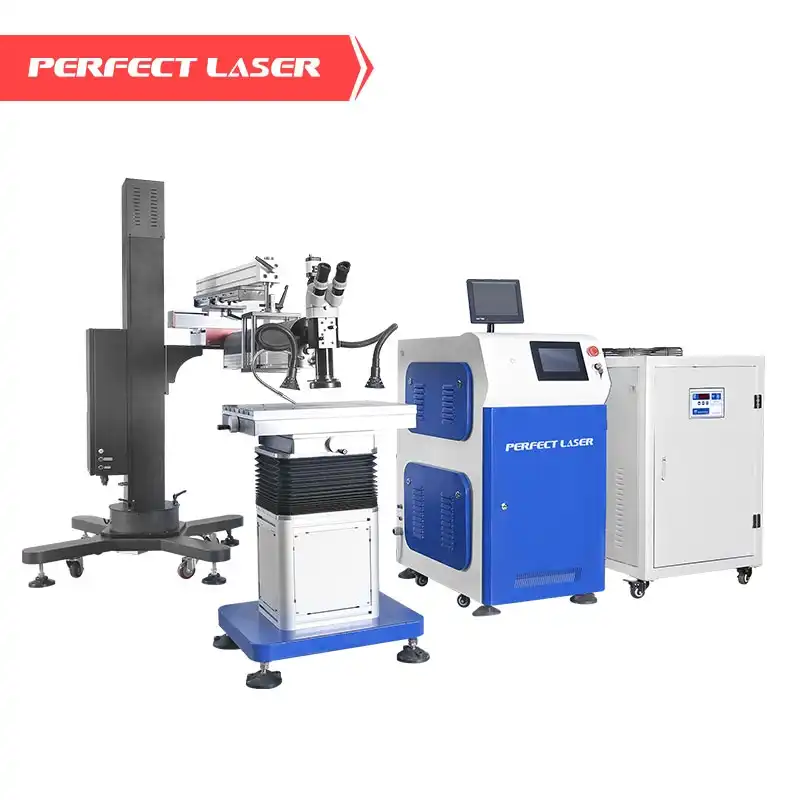
Since 1995, Perfect Laser has built its reputation by focusing on developing industrial laser solutions. It has earned 63 patents and foreign approvals from CE, TUV, and SGS. Our Model PE-W600D Suspension Arm Type Laser Welder for Mold Die Repair uses German-engineered design principles that are perfect for medium to large mold repair tasks. The extended laser hole design of the system makes it easy to access the workpiece, and the built-in two-dimensional alignment table makes sure that the weld stays continuous even when the geometry is complicated. Warranty coverage and assistance after the sale are important factors that are often missed when comparing tools for the first time. Comprehensive service agreements that include preventive maintenance, quick access to parts, and application tech help have a big effect on the long-term success of operations and should be a big part of how suppliers are chosen.
Practical Applications and Case Studies in Mold Repair
Addressing Common Mold Damage Scenarios
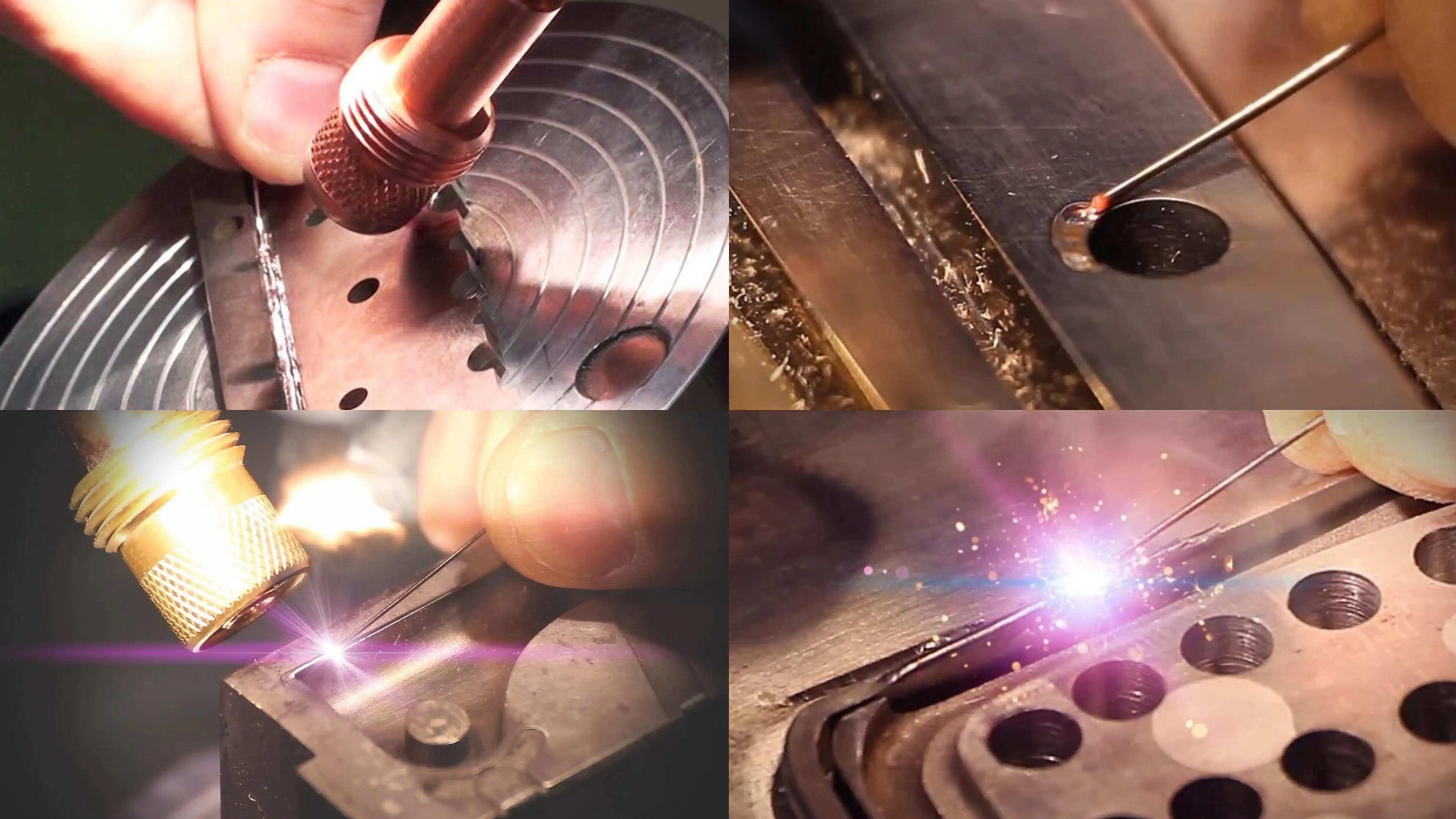
In high-volume manufacturing settings, abrasive chemicals or corrosive process conditions gradually erode mold cavities, requiring surface rebuilding. Using controlled material deposition to recreate dimensions without distortion, auto platform laser welders restore damaged surfaces. Mold laser welding devices restore delicate surface textures and complicated curves layer-by-layer with deposit thicknesses regulated to 0.1mm. This is especially useful on costly molds when replacement prices warrant meticulous maintenance.
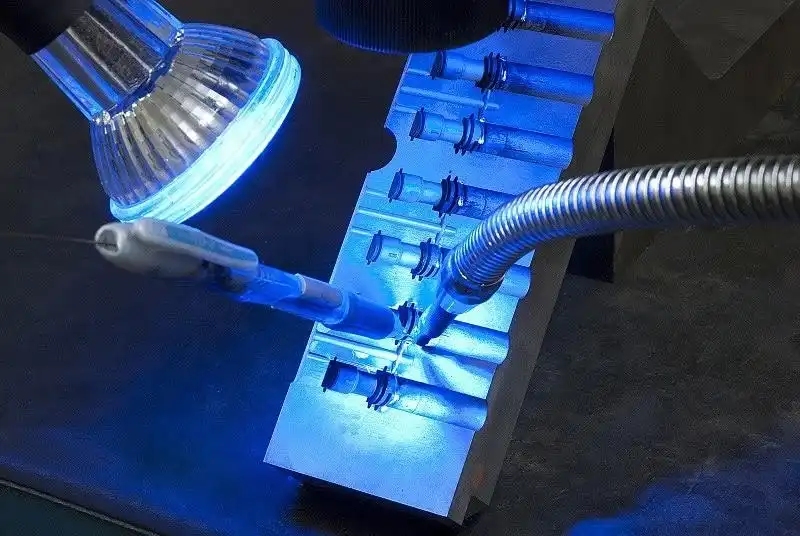
Laser technology excels in micro-crack mitigation, another important use. Thermal cycling during manufacture causes stress concentrations that form hairline fractures at sharp corners and geometric transitions. Traditional welding procedures fail to mend cracks because high heat promotes crack development. Laser welding fuses fracture faces without damaging surrounding material due to its low heat-affected zone. The PE-W600D's 10X (upgradable to 20X) stereoscopic microscope helps operators find and monitor tiny flaws throughout the repair process to eliminate cracks.
Ejector pin, gate and parting line wear repair improves mold life significantly when done proactively. High-wear zones may be strategically repaired to avoid catastrophic failures that need mold replacement. Automatic positioning systems reconstruct geometry to original specifications with uniform weld patterns, retaining crucial tolerances for component quality. Our suspension arm system's British-made ceramic condenser cavity is reliable for 8-10 years with 800 million xenon lamp pulses, assuring constant repair quality.
Industry-Specific Success Stories
After installing car platform laser welders in maintenance workflows, automotive tooling processes improved greatly. One tier-one supplier cut mold repair turnaround from 72 hours to 28 hours, avoiding production bottlenecks that necessitated large backup tooling stocks. The dimensional integrity of low-heat-input laser welding decreased post-repair machining by 65%, speeding return-to-service. These improvements allowed the plant to delay $2.3 million in mold purchases over two years, indicating a high return on laser welding equipment investment.
Aerospace component makers must meet strict quality standards, and weld integrity affects safety certifications. Laser welding's precision energy control creates uniform microstructures that fulfil mechanical property requirements. After switching from TIG to laser repair on aluminium aerospace molds, inspection rejection rates plummeted 78%, eliminating quality delays. CNC control systems record every weld parameter, simplifying AS9100 paperwork and increasing operational value beyond repair.
Laser welding works on many mold materials, benefiting packaging toolmakers. The PE-W600D system repairs hardened tool steels and aluminium alloys utilising similar platform configurations, reducing redundant welding setups. This flexibility cut equipment footprint by 40% and improved maintenance schedule. Operators may optimise settings across materials without substantial reprogramming using the intelligent handle remote control, speeding task changeovers across mold types.
Maintenance Best Practices
Laser welding system lifetime is maximised by organised preventative maintenance routines that preserve optical and mechanical components. Cleaning protective windows with solvents and lint-free products is necessary to remove spatter deposits, which reduce beam transmission. To avoid corrosion and maintain thermal transfer efficiency, the high-power integrated chiller needs monthly coolant level check and yearly fluid replacement. Lack of cooling system maintenance promotes component deterioration and laser output instability.
Use calibrated beam profiling equipment to verify optical alignment quarterly to maintain focused characteristics. The precision of mechanical positioning systems requires frequent lubrication and backlash assessment. Professional mold laser welding equipment' 12-direction computer-controlled adjustment rely on exact mechanical integrity that declines without maintenance. Manufacturer software upgrades typically increase performance and material libraries, so periodic updates guarantee equipment runs at its best throughout its life.
Safety and Compliance in Using Auto Platform Laser Welders
Essential Protective Measures and Workspace Requirements
Laser welding poses unique risks that need strict safety standards. Laser radiation may cause serious eye injuries, thus use eyewear certified for the wavelength and power of installed laser sources. Advanced high-speed LCD light valve filter automated protection features in the PE-W600D safeguard operators from dangerous radiation exposure during normal operation, reducing welding observation eye strain. This technology is much improved over past equipment generations that required safety glasses that limited sight and operator comfort.
Welding plumes must be extracted for metal particles and toxic vapours from material vaporisation. Effective extraction maintains negative pressure at the weld zone, moving pollutants from operator breathing zones to filtering equipment. OSHA laws in the US set exposure limitations for metals included in mold materials, mandating air quality monitoring if exposure evaluations indicate probable exceedance. Industrial laser installations are governed by European laser safety standards like EN 60825 that address equipment design, working procedures, and operator training.
Laser radiation locations should be blocked by physical barriers and interlock mechanisms that inhibit laser activity when safety enclosures open. Warning signs must indicate laser danger zones and protective gear. Safety issues include grounding high-voltage components and following industrial electrical installation guidelines. Safety audits safeguard persons and organisations from responsibility by verifying compliance with changing requirements.
Energy Efficiency and Environmental Considerations
Multiple mechanisms make modern laser welding systems more environmentally friendly than previous repair procedures. Fibre laser topologies convert 25-35% of input power to useable laser output, compared to 5-10% for CO2 lasers. This improvement cuts facilities energy use and carbon emissions. Eliminating consumable electrodes and shielding gases reduces environmental impact and operating expenses. Laser systems have a 40-60% reduced environmental effect than welding installations during their entire lifecycles.
Metal particles gathered by fume extraction systems may include hazardous elements depending on processed materials. Waste management must handle them. Following manufacturer and regulatory recommendations for filter disposal avoids environmental pollution. Replacement part consumption and manufacturing environmental consequences are reduced by laser equipment components' 8-10 year ceramic condenser cavity life in quality systems. When buying equipment, energy-conscious institutions should prioritise efficient designs that reduce operating carbon footprint and meet performance requirements.
Procurement Guide: Buying Auto Platform Laser Welders for Mold Repair
Understanding Cost Structures and Financing Options
Industrial laser welding equipment has several costs beyond basic equipment. Power level drives prices, with 15-30% cost increases per power doubling in normal market positioning. Entry-level 500W systems cost $30,000–$50,000, while 1000-1500W platforms for extensive mold restoration cost $50,000–$80,000. Advanced versions with automation, extended working envelopes, and premium optical systems cost $100,000–$150,000. These statistics give broad information, but configuration and supplier positioning affect price.
System cost is heavily influenced by automation sophistication. Manual positioning costs less than core laser components, but multi-axis CNC control with vision guiding and adaptive parameter management costs 40-60% more. Offline programming, simulation tools, and factory execution system integration are value-added features that boost productivity but increase investment. Instead of defaulting to maximum capability specs that exceed needs, procurement teams should thoroughly analyse operational processes to decide which automation features generate real return.
For smaller enterprises with capital restrictions, financing options for mold Laser Welding Machine should be considered alongside outright acquisition. To save operating capital and access modern technology, equipment leasing agreements often have 3-5 year durations. Lease-to-own models allow investors to eventually acquire while spreading out payments, which surpass outright purchase prices by 15-25% owing to financing charges. Some suppliers pay depending on equipment utilisation or cost savings, matching supplier and buyer objectives for effective implementation. Total cost of ownership—including energy, maintenance, and consumables—provides a clearer financial picture than purchase cost.
Supplier Evaluation and Value-Added Services
Beyond technical criteria, equipment providers must be evaluated for service, industry expertise, and long-term sustainability. ISO 9001 and CE certification, dependability measures, and client references from similar applications are product quality indicators. After-sales support—including response time promises, parts availability assurances, and technical knowledge accessibility—dramatically affects operational continuity when equipment fails. Suppliers with dedicated service organisations and qualified field personnel give better assistance than those using third-party networks unfamiliar with equipment subtleties.
Perfect Laser has provided laser solutions to numerous sectors for three decades, demonstrating its dedication to technical innovation and client success. Our twin R&D facilities constantly improve equipment capabilities, as shown by 63 patents for performance and reliability improvements. German, Japanese, Italian, Russian, Brazilian, Indian, and American and Middle Eastern installations demonstrate equipment longevity under various working situations. The 24-hour online service commitment minimises downtime by providing technical support across timezones. Two-year marking system warranty and one-year bigger platform warranty surpass industry requirements, proving manufacturing quality.
Customisation lets equipment adapt to particular operating needs that conventional setups may not meet. The PE-W600D's 12-direction computer-controlled adjustment system has design flexibility for various mold shapes and repairs. Electrical supply, cooling system, and fume extraction interfaces are properly integrated during professional installation. Operator training on equipment operation, parameter optimisation, and regular maintenance speeds up competency and maximises equipment ROI. For complete equipment lifetime support, procurement requirements should clearly address these value-added services during supplier assessment.
Conclusion
Auto platform laser welders revolutionise industrial mold maintenance with accuracy, efficiency, and quality that conventional repair techniques cannot match. This guide's methodical assessment approach helps B2B procurement experts confidently pick equipment and understand how technical parameters affect operations. From understanding laser technologies and automation to assessing supplier credentials and constructing appropriate procurement agreements, intelligent decision-making ensures effective implementation that increases production performance. For maintenance excellence and operational efficiency, laser welding investment pays off with decreased downtime, improved mold lifetime, and better repair quality.
FAQ
1. What advantages do auto platform laser welders provide compared to manual TIG welding methods?
Auto platform laser systems deliver micron-level precision impossible with manual techniques, reducing heat-affected zones by 60-80% to minimize distortion on precision molds. Automated positioning eliminates operator variability, ensuring consistent quality across every repair cycle. Processing speed advantages of 40-70% reduce production downtime substantially. The non-contact process eliminates electrode contamination risks while expanding material compatibility to challenging alloys problematic for conventional welding.
2. How quickly can we expect return on investment from laser welding equipment?
Typical payback periods range from 18-36 months for facilities performing regular mold maintenance, driven by labor cost reductions of 30-50% per repair, decreased rework expenses, and extended mold service life. High-volume operations processing numerous repairs monthly achieve faster payback, while lower-volume environments require longer timeframes. Comprehensive ROI analysis should incorporate both direct savings and indirect benefits including reduced backup tooling inventory requirements and improved production scheduling flexibility.
3. Should we choose fiber laser or Nd:YAG technology for our mold repair applications?
Fiber lasers suit most modern mold repair scenarios through superior electrical efficiency, maintenance-free operation, and excellent performance on ferrous materials and stainless steels commonly used in tooling. Pulsed Nd:YAG systems offer advantages for specific micro-welding applications on heat-sensitive thin-wall molds or highly reflective copper alloys. Material portfolio analysis and typical repair geometries should guide technology selection, with fiber architecture representing the preferred choice for general-purpose mold maintenance operations.
Elevate Your Mold Repair Capabilities with Perfect Laser
Industrial manufacturers seeking a dependable mold Laser Welding Machine supplier will find comprehensive solutions through Perfect Laser's specialized engineering expertise and proven global track record. Our Suspension Arm Type Laser Welder (Model PE-W600D) delivers the precision, reliability, and versatility required for demanding automotive, aerospace, and heavy industrial mold repair applications.The German-engineered design, British ceramic condenser cavity rated for 8-10 years service, and intelligent 12-direction positioning system address the complete spectrum of repair challenges facing modern tooling operations. Contact our technical team at [email protected] to discuss your specific mold maintenance requirements and receive detailed application assessments. We provide customized recommendations, complimentary sample testing, and comprehensive operator training that ensures successful equipment integration and maximum performance from day one.
References
1. Steen, W.M. and Mazumder, J. (2010). Laser Material Processing, 4th Edition. Springer-Verlag London Limited.
2. Ion, J.C. (2005). Laser Processing of Engineering Materials: Principles, Procedure and Industrial Application. Elsevier Butterworth-Heinemann.
3. Dawes, C. (1992). Laser Welding: A Practical Guide. Woodhead Publishing Limited, Cambridge.
4. Duley, W.W. (1999). Laser Welding. John Wiley & Sons, New York.
5. Katayama, S. (2013). Handbook of Laser Welding Technologies. Woodhead Publishing Series in Electronic and Optical Materials.
6. Ready, J.F. and Farson, D.F. (2001). LIA Handbook of Laser Materials Processing. Laser Institute of America, Magnolia Publishing.

share your inquiry, get the quotation accordingly.
第一张审核员说包含其他公司不能用_1755049724891.webp)
Perfect Laser – Global Manufacturer of Reliable Laser Solutions