Anyone Using Laser Die Cutters? Real Applications and Performance
Yes, laser die cutting is used every day by many companies in the advertising, electronics, packaging, and custom production industries. Focused CO2 laser beams allow this cutting edge technology to precisely cut through die boards up to 25 mm thick, which is not possible with regular saws. Users say that compared to automatic ways, this method cuts much more accurately, turns around jobs faster, and costs less to run. The technology gets rid of the need for human drawing, cuts down on material waste, and allows for 24-hour unmanned operation. These benefits directly lead to higher profit margins and a more competitive position for businesses that work with complex sample cartons or high-volume production runs.
What Is Laser Die Cutting and How Does It Work?
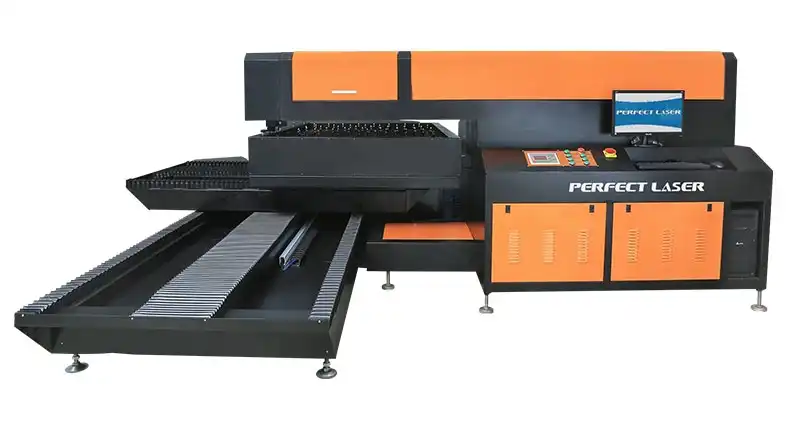
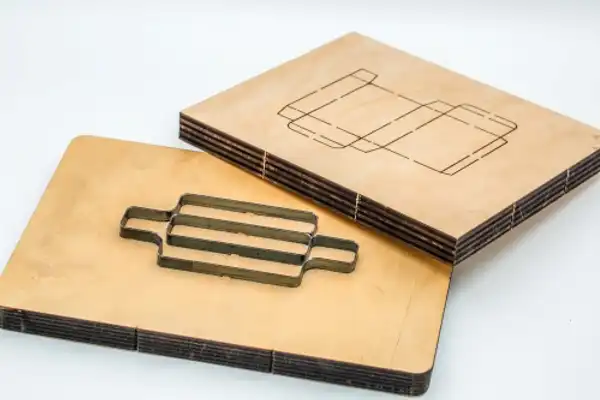
Laser die cutting is a completely new way to shape materials that are used in production and packing. In contrast to usual methods that use blades or pressing dies, this method uses a focused beam of light, usually from a CO2 laser source, to hit die boards made of wood. With its heat, the laser vaporizes material along predetermined routes, making tunnels that are the same width and depth all the way through.
The Core Technology Behind Laser Die Cutting
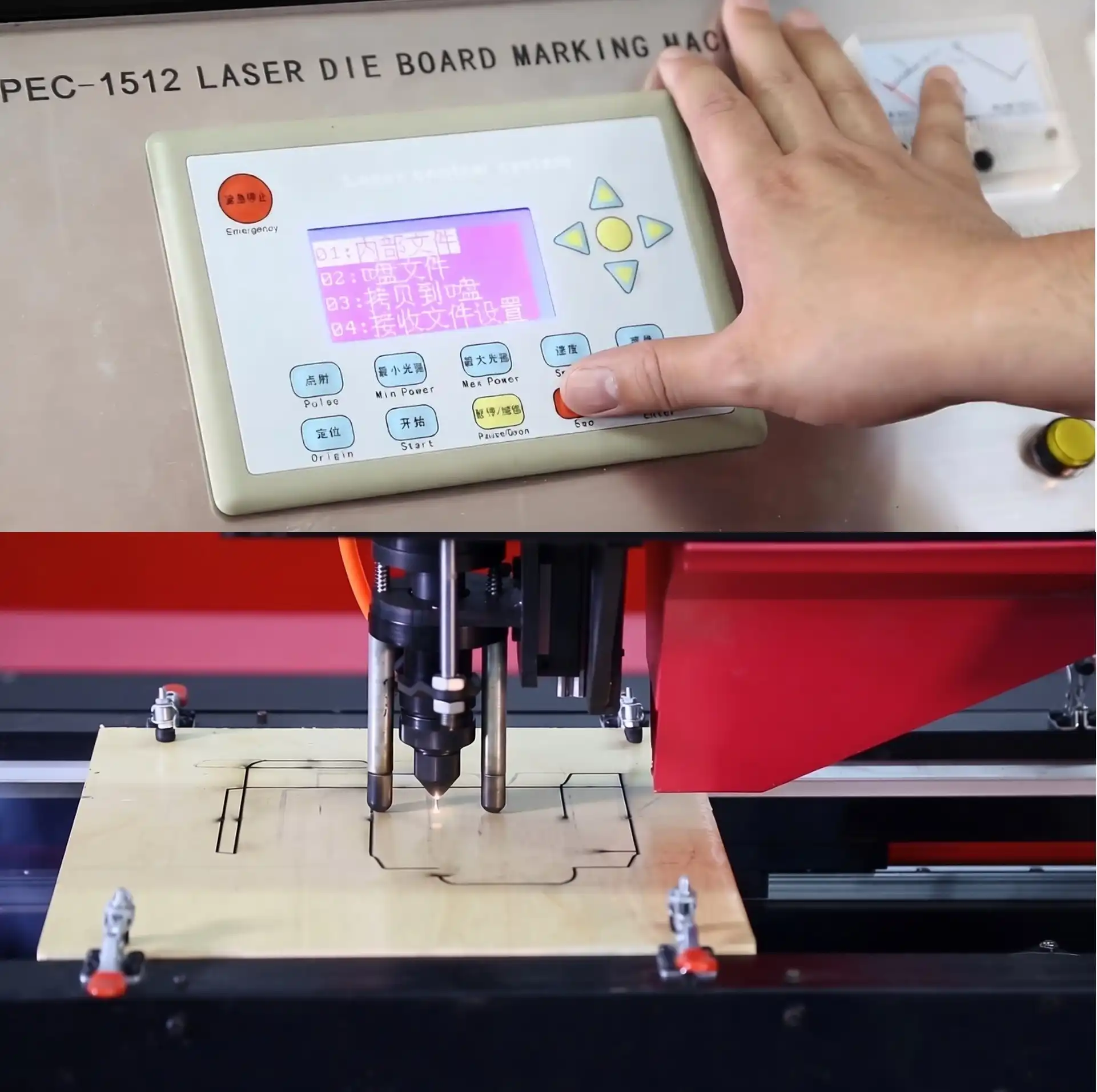
These days, sealed CO2 laser tubes with 300W to 600W power are used. Before it gets to the item, the beam goes through a set of mirrors and aiming lenses. An auto-following system constantly checks the distance between the cutting head and the surface of the material. It changes the focal point in real time to keep the cut quality the same on boards of different thicknesses. When working with 15mm, 18mm, 20mm, or 25mm hardwood surfaces, this closed-loop feedback system is very important.
Computer numerical control (CNC) devices read vector files from design tools and turn graphics into precise instructions for moving parts. When combined with Panasonic servo motors, imported ball screws allow for setting accuracy of less than 0.01mm. The tempering heat-treated lathe bed doesn't change shape even when it's being used continuously, so it can be used over and over again for thousands of cuts.
Advantages Over Conventional Die Making
In traditional die board manufacturing, the plan is done by hand with pencils, the board is cut with a band saw, and it is finished by hand, which is very time-consuming. Each step adds to the total number of measurement mistakes. Through straight digital-to-physical conversion, laser devices get rid of these factors. The non-contact process doesn't wear down tools, which cuts down on a big source of upkeep costs and downtime.
Setup time is cut down by a huge amount because workers don't have to change tools or make tweaks to the jig. By loading a different design file, a packing company can quickly switch from cutting 0.45 mm kerfs for fragile folding cases to 1.42 mm channels for heavy-duty shipping boxes. Because of this, smaller run numbers and fast prototyping can be done without hurting the bottom line.
Another important difference is that energy economy. Small to medium-power shielded lasers use about a tenth as much electricity as high-wattage industrial cutters but can cut through the same materials just as quickly. Using compressed air directly instead of inert gases in bottles cuts costs even more over time.
Real-World Applications of Laser Die Cutting Across Industries
Many types of manufacturers have added laser die cutting board cutters to their main production processes, which has led to measured gains in quality and efficiency.
Packaging and Printing Operations
Laser-cut dies are used by companies that make corrugated boxes to make complex window designs, handle cutouts, and fold lines for custom packing. This technology works great for making dies for short-run custom boxes that are too expensive to use standard steel rule dies for. A local packaging supplier said that after putting their first laser system, die shipping was 40% faster. This meant that they could take on rush orders that they had turned down before.
Precision die boards are used by label and sticker converters to kiss-cut, which means to separate printed labels from backing sheets without cutting through the lining. Laser-cut dies have sharper edges for longer than machine made ones, which means they last longer and need to be reordered less often.
Advertising and Signage Production
Manufacturers of point-of-sale displays are always under pressure to come up with designs that stand out and have complicated shapes. Laser die cutting can make complex shapes and small features that can't be done with regular saws. By bringing die production in-house, one display company cut prototype wait times from five days to eight hours. This sped up the review process with clients and increased the number of orders that were actually filled.
Another growth application is cutting textiles for flags and fabric prints. In some production settings, the same laser platform that cuts wood die boards can also be used to cut cloth directly, making the best use of all the equipment.
Electronics and Automotive Components
Laser-cut dies are used to punch exact forms out of foam, rubber, and composite materials by companies that make gaskets and seals for electronics assembly lines. When parts need to line up with automatic placement tools, consistency in dimensions is very important. Laser-cut tools make it possible for six-sigma quality processes to be repeated.
When cutting felt, vinyl, and sound damping materials for car interior trim, providers use similar methods. Tooling costs are cut down and development times are shortened when die designs can be changed quickly during the creation of a new car.
Custom Fabrication and Short-Run Production
For low-volume work, laser devices are cost-effective, which is why job shops and contract makers like them. They can serve niche markets and special orders successfully since they don't have to spread out the cost of expensive steel rule dies over many big production runs. A business that makes wooden games and craft items said that laser die cutting made it possible to make whole new types of products that weren't possible before because they were too expensive to make.
Laser Die Cutting vs. Traditional and Alternative Cutting Technologies
When purchasing cutting tools, it's helpful for procurement workers to know how laser die cutting technology stacks up against both established and new options.
Mechanical Die Cutting and Sawing
Smaller companies that make dies still use band saws and scroll saws a lot. Skilled workers must physically follow layout lines with these tools, so accuracy depends on how well each person does their job. When cutting thick stock, blade movement causes taper, which changes the kerf width from the top to the bottom. Laser systems don't have this problem because the beams are straight.
Steel rule dies allow for fast production of huge amounts, but they require a big investment up front for making and storing the dies. Many businesses need higher minimum order amounts to cover the cost of the dies. Laser cutting moves the economy toward smaller amounts by getting rid of the costs of making tools for each design.
Why More Packaging Manufacturers Are Choosing Laser Die Cutting
Laser die cutting is becoming a preferred solution for packaging and advertising manufacturers that need higher precision and lower operating costs. Compared with traditional knife cutting or mechanical die cutting, laser systems deliver cleaner edges, faster processing, and greater flexibility for customized shapes. Perfect Laser’s machines can cut die boards up to 25mm thick while also handling MDF, plywood, acrylic, PVC, and bamboo materials with stable performance. With advanced testing systems, strong R&D support, and international certifications, Perfect Laser helps businesses improve production efficiency while reducing maintenance and material waste.
Environmental and Sustainability Considerations
Modern CO2 laser cuts that use compressed air get rid of the greenhouse gas emissions that come from using bottled help gases. Without removing fluids, there are no problems with treating drainage and no risks of exposure. Precise material utilization cuts down on scrap production, which helps companies cut down on waste and keep costs down for raw materials.
Energy use studies show that well-designed laser devices use less energy. When extra systems like hydraulics and dust collection are taken into account, a 400W laser usually uses less overall power than mechanical tools of the same size. This edge in economy grows over time, which helps lower the total cost of ownership.
Selecting the Right Laser Die Cutting Solution for Your Business
Matching the powers of tools to the needs of operations ensures the best return on investment and avoids costly over- or under-specification while considering laser die cutting as a primary solution.
Assessing Production Requirements
Initialize by figuring out how many die boards are being used now and in the future. How many different styles does your business handle every month? In what range of thicknesses does the die board laser cutter need to work? A box converter that mostly works with 18mm boards and sometimes with 25mm specialty boards needs different specs than a print shop that only works with 15mm stock.
The size of the work area has a direct effect on how much material is used and how fast it moves. As a standard, beds range in size from 900x900mm to 1200x1800mm. Bigger forms mean that fewer sheets need to be changed during production, but they need more floor room and cost more to buy at first. Match the size of the bed to the size of your usual base, leaving room for fixings and edge space.
Power choice strikes a mix between cutting speed and the cost of the tools. At modest feed rates, a 300W laser can handle most typical die board jobs. When you upgrade to 400W or 600W tubes, you can cut thick materials faster and get more done in less time. Higher-wattage systems, on the other hand, use more power and make more waste heat, so they need stronger cooling systems.
Evaluating System Features and Reliability
Professional-grade equipment is different from entry-level tools in important ways. Imported linear guides and precision ball screws make sure that the parts are placed correctly and stay the same size over time. Servo motor drive systems make motion control smoother than stepper systems, which lowers vibrations that can hurt the quality of the cut.
One of the most important parts of die board cutting is the auto-focusing device. This technology constantly changes the distance between the lens and the object as the cutting head moves over uneven surfaces. This keeps the focus at its best throughout the job. Without this feature, workers would have to measure and set focus by hand at several points, which would take a long time and be prone to mistakes.
The complexity of the control system affects how well operations run. Advanced DSP controllers with LCD touchscreens and USB connections let you work without an internet connection, so you can do other things on your design desk while the cuts are happening. To make sure the system works with your current design processes, look for one that supports popular vector formats like DXF and PLT.
Manufacturer Selection and Support Considerations
The quality of the engineering and the choice of parts have a big impact on how reliable the equipment is. Perfect Laser has been specializing in laser and CNC making for more than twenty years, learning a lot about how to use these technologies in the industrial, advertising, and packing markets. Their die board laser cutting machines have frames that have been heat-treated to make them resistant to damage caused by heat, a single-head cutting system with an optical path for easy maintenance, and a flexible functional design that makes service easier.
The manufacturer's help options should be carefully looked at. With overseas installation help, everything is set up correctly and operators are trained, which cuts down on the time it takes to become fully productive. As apps change and production needs shift, lifetime technical advice continues to be useful. Check to see if the number of replacement parts in stock and the time it takes for service to arrive meet your needs for operating consistency.
Perfect Laser has more than 10,000 installations around the world, which shows that the market accepts it and that product growth is well along the way. Their two research and development sites and 63 patents show that they are committed to always getting better, not just making the same products. When choosing die board laser cutting providers, give more weight to companies that show they have both a deep understanding of technology and a long-term customer support system.
Maintaining Performance and Avoiding Common Pitfalls in Laser Die Cutting
For consistent output quality and the most uptime from your tools, you need to do routine upkeep and solve problems before they happen to optimize laser die cutting results.
Routine Maintenance Protocols
As part of daily inspections, the die board laser cutter's cutting head should be checked for dirt and debris buildup on the lenses and valves. Even small amounts of pollution lower the quality of the beam, which makes cutting less efficient and edges less smooth. Set up ways to clean lenses using the right chemicals and lint-free materials, and teach everyone how to do it right.
Maintaining the cooling system is very important for the life of a CO2 laser. Every day, check the water temps and flow rates and look into any changes right away. According to the maker, the water and filters in a chiller should be changed every three to six months, but this can change based on the weather. Hard water layers inside laser tubes lower the output power and shorten the life of the tubes. This is why it is important to control water quality.
Lubrication of the motion system keeps ball screws and linear guides from wearing out too quickly. Follow the instructions for greasing; for example, every 500 hours of use, new grease is usually needed. Check the tightness of the drive belts and look for signs of wear. If necessary, fix or replace the belts. When belts aren't tight, they can lead to placing mistakes that show up as wrong dimensions on finished die boards.
Safety Protocols and Compliance
For the safety of both the workers and the building, laser systems need strict safety rules. Make sure there is enough air flow to get rid of the burning leftovers that are made when you cut wood. Local exhaust air with the right filtering stops smoke from building up and gets rid of particles that are harmful to the lungs.
Operator training must include how to shut down in an emergency, how to use safety interlocks correctly, and what materials are not allowed. Do not try to cut PVC or vinyl-based products because the thermal breakdown process creates harmful dioxins and hydrochloric acid. Put up material suitability charts near tools to keep them from being misused by mistake.
Over time, measurement correctness is kept up by regular calibration. Use precise test patterns to set baseline measurements and write down the results so that you can look at trends. If there are deviations from the standard, it means that there is mechanical wear or alignment drift that needs to be fixed before the parts move out of specification.
Troubleshooting Common Cutting Issues
Burn lines on the sides of cuts usually mean that the machine is using too much power, feeding too slowly, or not having enough assist air pressure. Gradually lower the laser power while keeping an eye on the quality of the cut-through. If the heat input stays too high, speed up the journey. Check to see if the air help ports are blocked and that the compressor output meets the needs of the system.
Full cuts mean that the power isn't getting to the right places or there are focus issues. Check the focal point to make sure it fits the width of the material, and use a power meter to confirm the laser tube's output. All optical parts in the beam path need to be cleaned because dirt and other particles soak up energy before it gets to the subject. Even if the sights are clean, if the output power is low, it could be because the laser tube is old or there are problems with the power source that need to be fixed.
Changes in kerf width can mean that the motion system isn't working right or that the beam quality is getting worse. Check the mechanical parts for locking, backlash, or fastening hardware that isn't tight. Follow the manufacturer's instructions for setting the mirror and lens to make sure that the beam alignment hasn't moved. Problems with the quality of the beam may mean that the laser reflector is contaminated and needs to be serviced by a professional.
Conclusion
Laser die cutting technology has huge benefits for businesses that package, print, and make unique items. These systems are great options to standard ways of making dies because they are accurate, flexible, and cheap to run. Implementations in the real world across a wide range of businesses show measurable gains in quality, productivity, and economic success. Procurement workers can easily choose and use laser die cutting solutions that support long-term business goals if they understand basic technology principles, application needs, and best practices for maintenance. This technology is now a good choice for a wide range of businesses, from small job shops to large production facilities, thanks to improvements in control systems, the dependability of parts, and the infrastructure for supporting manufacturers.
FAQ
1. What kinds of materials do laser die makers work well with?
When it comes to cutting plywood and MDF up to 25 mm thick, CO2 laser die board cuts are the best. They also work with other wood-based products, like chipboard and hardboard. Acrylic, paper, wood, and some fabrics can often all fit on the same bases. When cutting chlorine-containing materials like PVC and vinyl, be careful not to release dangerous gases. Different types of lasers are needed for reflective metals—fiber lasers instead of CO2 systems.
2. How fast is laser die cutting compared to other ways of cutting?
Laser systems can cut complicated patterns 30 to 50 percent faster than skilled band saw operators, mostly because they don't need to do the planning and tool placement steps by hand. The benefit grows as the plan gets more complicated, since the laser's speed stays the same no matter how complicated the path is. Industrial band saws may be able to match laser speeds for straight cuts in thick materials, but lasers are better for finishing the job, including setup.
3. Can laser die cutting handle both prototyping and production volumes?
To answer your question, laser devices are cost-effective for both uses. Because they don't need special tools, single samples are just as cost-effective as hundred-unit runs. A lot of businesses use laser cutters for trials and small runs, but they save standard steel rule dies for large production runs, where the cost per unit drops below that of laser cutting—usually over 10,000 identical units.
Partner with Perfect Laser for Superior Die Board Cutting Solutions
Perfect Laser sells the best die board laser cutting tools on the market, which are designed to work with printing and packing. Our systems can cut die boards that are up to 25 mm thick and have kerf widths ranging from 0.45 mm to 1.42 mm. The quality is the same from the top to the bottom. The custom auto-following focus system makes sure even results are achieved on rough materials, and the imported guide rails and Panasonic servo motors make sure precise placement and long-term dependability.
Perfect Laser has been using lasers and CNC machines to make things for 20 years and now has over 10,000 users around the world. They do this by providing customer-focused engineering and lifelong technical support. Our flexible equipment design makes upkeep easier, and using compressed air means you don't have to pay for gas on a regular basis. Based on your production needs, you can choose from 300W, 400W, or 600W versions. Email us at [email protected] to talk to one of our skilled application engineers about your die cutting needs. Find out why sophisticated makers looking for a reliable laser die cutting source always choose Perfect Laser for accuracy, speed, and great value.
References
1. Smith, J.R. (2021). Advanced Manufacturing Processes in Packaging Production. Industrial Press Publishing.
2. Chen, L. & Rodriguez, M. (2022). "Comparative Analysis of Thermal and Mechanical Cutting Technologies," Journal of Manufacturing Science, 44(3), 287-304.
3. Williams, K.T. (2020). Laser Applications in Industrial Fabrication. Technical Engineering Publishers.
4. Anderson, P. et al. (2023). "Energy Efficiency Assessment of Modern Cutting Systems," International Manufacturing Review, 18(2), 145-162.
5. Thompson, R.D. (2022). Die Making Technologies for Contemporary Packaging. Packaging Institute Press.
6. Kumar, S. & Zhang, W. (2021). "Precision Cutting Methods: Performance Metrics and Selection Criteria," Manufacturing Technology Quarterly, 29(4), 412-429.

share your inquiry, get the quotation accordingly.
第一张审核员说包含其他公司不能用_1755049724891.webp)
Perfect Laser – Global Manufacturer of Reliable Laser Solutions